Last checked: November 2, 2026. Thai rules change often, so always confirm with the official source before you travel or apply.
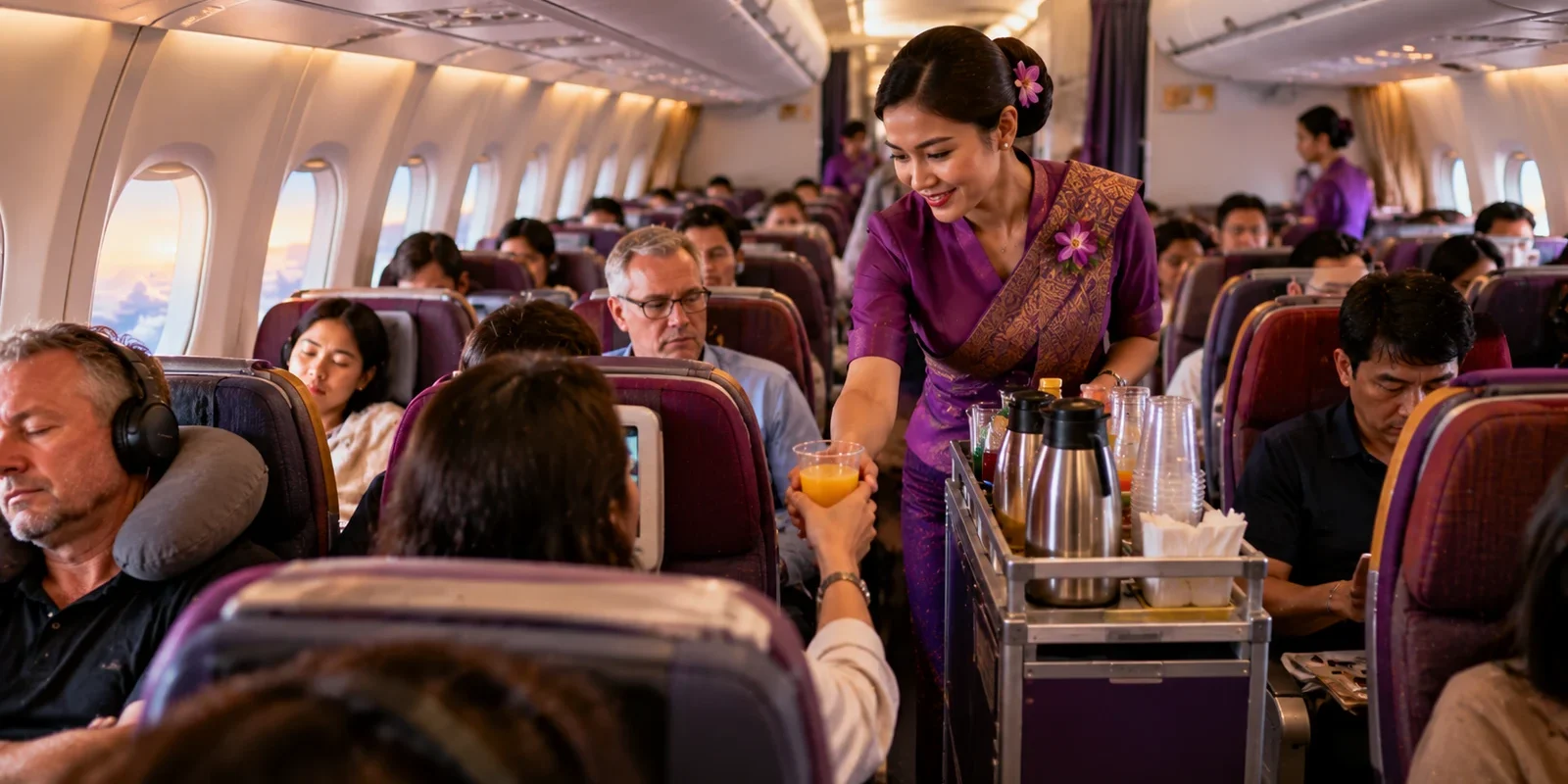
I once arrived in Thailand feeling as though I had spent the whole flight beside a kitchen door. The old article behind this post complained about service and seats near the galley on a long-haul journey. I would not use one traveller’s bad night to judge a crew or an airline forever. It does make a useful starting point for Thai Airways seat tips and the small choices that make a long flight easier.
Thai Airways seat tips start with the aircraft, not a universal row number
Seat maps change with the aircraft and cabin layout. A row that was quiet on one trip may sit beside a galley, toilet or bassinet position on another. Open the seat map for your actual flight after booking and check it again shortly before departure. Look at where queues might form and whether the seat has limited recline. If you travel with someone, decide whether sitting together matters more than a particular view or extra legroom.
Seats beside the galley can mean light, conversation and trolley movement. They can also mean easier access to crew and sometimes more space nearby. The right choice depends on whether you sleep lightly, need to stretch or prefer quick access to facilities. If the cabin is full, a carefully chosen ordinary seat is often more realistic than hoping to move after boarding.
Before paying for a seat
Check what is included in your fare and whether seat selection costs extra. Read the current terms for changes and refunds; do not rely on a screenshot from a previous year. An aircraft swap can alter the seat map. If you paid for a specific seat feature and the replacement does not provide it, keep the receipt and ask the airline how it handles that difference.
I also check the time of the flight in local time, the length of any transfer and whether I will arrive ready to travel onward. A perfect seat does not compensate for a connection that leaves no room for delays. If you need a special meal or assistance, request it through the airline in advance and confirm it before departure. Do not expect a crew member to improvise a medical requirement in the air.
Pack for the seat you have
My small cabin bag holds a layer for cool air, a refillable bottle that can be filled after security, medicines, charging cable, earplugs and a pen. I keep important items under the seat only if permitted and if they do not block my feet or an exit. A large bag on the floor makes a cramped seat worse. If you need to retrieve something from the overhead bin during flight, wait until it is safe and do not disturb a sleeping neighbour more than necessary.
For sleep, I lower screen brightness, use headphones at a considerate volume and keep the aisle clear. If you have a seatmate, agree early on who would prefer the armrest or when the window shade can be changed. These tiny conversations prevent much of the irritation that grows over a long night.
Service: ask clearly, complain fairly
Cabin crew serve many people in a confined space. If a meal is missing or a seat mechanism fails, describe the problem and ask what can be done. A quiet, specific request is easier to answer than a general accusation. If something cannot be fixed on board, note the details and follow up through the airline’s customer service after landing.
A useful complaint includes the date, flight number, seat, what happened, when you raised it and the response. State what remedy you seek. Do not name or photograph a staff member publicly because you were disappointed with a meal or a delay. If the issue concerns a covered delay, cancellation or denied boarding, CAAT publishes airline safety and travel checks and the regulator’s current passenger-rights pages explain the formal route. Different issues have different remedies.
When your chosen seat is changed
Airlines sometimes substitute aircraft or adjust seating for operational reasons. Check your boarding pass at check-in rather than discovering the change at the gate. If an aisle seat matters for mobility, say so as soon as possible and explain the need. Keep proof of a paid seat reservation. A gate agent may have more options before boarding than cabin crew do once every passenger is seated.
I try not to start the holiday by treating an imperfect seat as a personal insult. I plan carefully, speak up when a real problem arises and put the disappointment in proportion. The goal is to arrive in Thailand safely, with enough energy left to enjoy the first day.
FAQ
Are seats by the galley always bad?
No. They may be noisy or bright for a light sleeper, but some passengers value their location. Check the map for the specific aircraft and think about your own priorities.
Can I move to an empty seat after takeoff?
Ask the crew first. Seating may be restricted for operational or safety reasons, and a seat that looks empty may be assigned to someone boarding later on a multi-leg journey.
What if I paid for a seat and it changed?
Keep the payment confirmation and boarding pass, then ask the airline about its current refund or adjustment policy. Explain the particular feature you purchased and did not receive.
How do I make a complaint useful?
Write a short chronology, include documents and request a specific response through the airline’s official channel. Use a regulator’s process where the issue falls under its rules.
More from Personal Thailand
If you enjoy practical reporting and personal perspectives on Thailand, you can support my work and explore member-only content through either platform:
- Subscribe to Personal Thailand on X — creator membership with access to applicable subscriber-only posts and benefits.
- Join or support Personal Thailand on Buy Me a Coffee — browse available memberships and support options.
These are separate services with different charges and membership benefits. Paid access may be required; subscribing on one does not automatically grant access on the other. The main information in this article is free to read above.