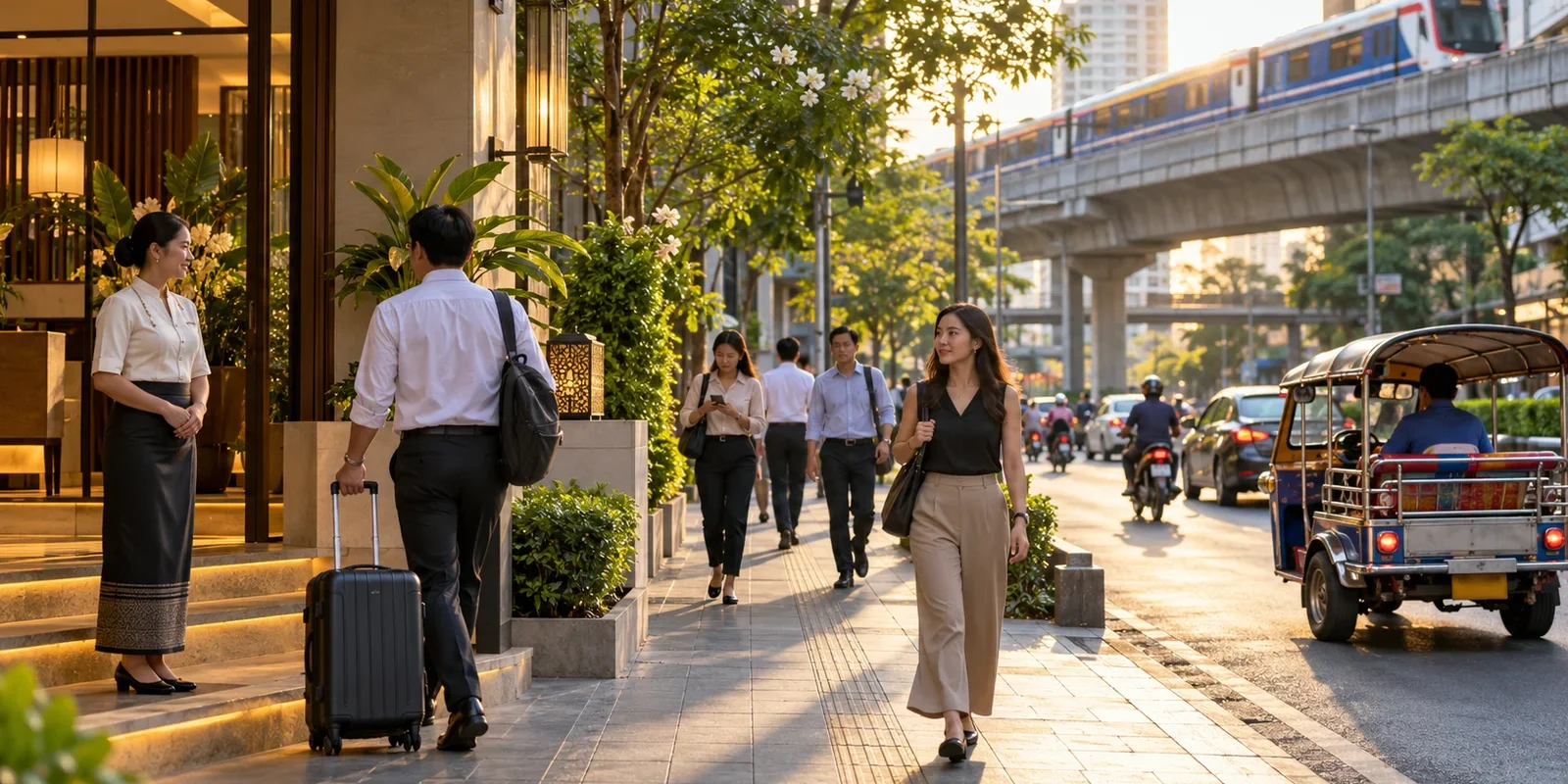
When choosing where to stay in Bangkok, I would start with the journeys you expect to make each day. A hotel that looks central on a map may still leave you with an awkward walk, difficult road crossing or expensive late-night ride. Safety is better assessed through the actual building, route and current conditions than through a promise that one district is always safe.
Updated 31 October 2026: This older page has been rewritten. Historical events and past advice should not be read as current alerts or rules. For our latest updates, follow @PersonalThai on X (Twitter). For decisions involving laws, visas, health or safety, also check the responsible authority.
Old warnings do not describe every visit
This article brings together older Bangkok safety posts, including questions about whether the city was safe during a particular period. Those historical alerts are not current descriptions of every neighbourhood. Check present official advice and any local disruption before deciding on accommodation.
No area can be guaranteed free of crime, traffic hazards or unexpected events. Equally, a single old incident does not make every nearby hotel unsuitable. The useful task is to match the location to your needs and verify the details you will rely on.
I would avoid rankings that name the safest district without explaining the evidence or the type of traveller. A family with a pushchair, a solo visitor returning late and someone with limited mobility may need different practical arrangements.
Map your real daily journeys
List the places you expect to visit most: work, a hospital, family, museums or transport connections. Check the route from the hotel entrance, not only the distance between map pins. A station on the opposite side of a major road may not be as convenient as it appears.
Look at how you will reach the accommodation with luggage and how you will return after evening plans. If rail is part of the plan, check current operating times and the final walk. Do not assume a route that works at lunchtime will be equally practical after the service ends.
For a first stay, fewer complicated transfers may be worth a slightly higher room price. Compare the total cost and effort of the location, not just the nightly rate.
Where to stay in Bangkok safely: compare neighbourhoods by purpose
A station-connected part of Sukhumvit may suit someone with regular journeys along that corridor, but the specific soi and walking route still matter. Silom or Sathorn may work for another itinerary, while a riverside stay can involve different transport decisions. These are planning possibilities, not safety certifications.
The old-city area may appeal if much of your visit centres on historic sights. Check how you will reach other parts of Bangkok and return in the evening. A charming small property can still be inconvenient if the route does not fit your needs.
An airport-area hotel can make sense before an early departure, but confirm which airport and the actual transfer arrangement. “Near the airport” is not enough when the journey requires a long detour or a shuttle that does not run when you need it.
Read recent reviews for specific details
Look for repeated comments about entrances, lighting, noise, staff availability and the walk from transport. Separate a guest’s personal preference from a concrete problem. “Too quiet for me” means something different from “the entrance was difficult to find and no one answered.”
Check the dates and whether the review concerns the same building or room type. Properties can have several wings or annexes. Ask the hotel directly if the detail affects your decision, and keep the response with the booking.
Do not rely only on a high average score. A property can be well liked while lacking the particular accessibility, reception hours or family arrangements you need. My hotel-price comparison guide explains why the full booking matters more than an attractive headline discount.
Ask about the building before paying
Confirm how entry is controlled, when reception is staffed and how to contact someone after hours. Ask about lifts, steps and accessible routes if relevant. Do not infer accessibility from the word modern or from a photograph of the lobby.
Check cancellation terms and the exact room offered. If the listing is unclear about whether you are booking a hotel, apartment or another arrangement, ask before sending a deposit. Make sure the provider and payment recipient can be connected to the property.
On arrival, familiarise yourself with exits and the route from your room. If you notice a blocked exit or another serious concern, raise it promptly and consider changing accommodation if it cannot be resolved. A prepaid booking is not a reason to ignore an unsafe condition.
Think about the street at night
Choose a return route you can follow without relying on a stranger’s shortcut. Keep the hotel address available and arrange transport through a service you can verify. If walking, pay attention to traffic and crossings rather than treating a pavement as continuous everywhere.
If a route feels unsuitable, use another option. You do not need to prove a neighbourhood is dangerous to decide that a particular walk does not work for you. This can be especially relevant when tired, carrying bags or travelling with children.
For general risk planning beyond accommodation, read understanding safety in Thailand. Good hotel choices are one part of the trip, not a guarantee against every problem.
Keep plans flexible when conditions change
Heavy rain, demonstrations or road works may affect a normally convenient route. Ask the property about access and check official local information. Do not assume a social-media photograph shows the current conditions outside your hotel without checking its date and location.
If an event affects the area, contact the hotel before travelling there and ask about practical alternatives. Keep messages and receipts if you need to discuss a booking change with the provider or insurer. Coverage and refunds depend on the terms, so obtain a clear answer rather than making assumptions.
FAQ
Which Bangkok area is the safest?
There is no universal answer supported here. Assess the specific hotel, walking route, transport access and current conditions against your needs. A broad district name cannot tell you whether a particular entrance or late-night journey will suit you.
Is staying near a train station always best?
It can be convenient, but check the actual walk, crossings, lifts and operating times. A nearby map pin does not guarantee an easy journey with luggage, a pushchair or limited mobility.
Should I avoid a whole area because of an old warning?
Check what the warning concerned and when it applied. Historical protests or incidents do not automatically describe current conditions. Use current official advice and specific property information before deciding.
What should I check immediately after arrival?
Confirm how to contact reception, identify exits, check the room’s basic security and save the address for your return journey. Raise serious concerns promptly rather than assuming every issue must be accepted because the room was booked in advance.
More from Personal Thailand
If you enjoy practical reporting and personal perspectives on Thailand, you can support my work and explore member-only content through either platform:
- Subscribe to Personal Thailand on X — creator membership with access to applicable subscriber-only posts and benefits.
- Join or support Personal Thailand on Buy Me a Coffee — browse available memberships and support options.
These are separate services with different charges and membership benefits. Paid access may be required; subscribing on one does not automatically grant access on the other. The main information in this article is free to read above.