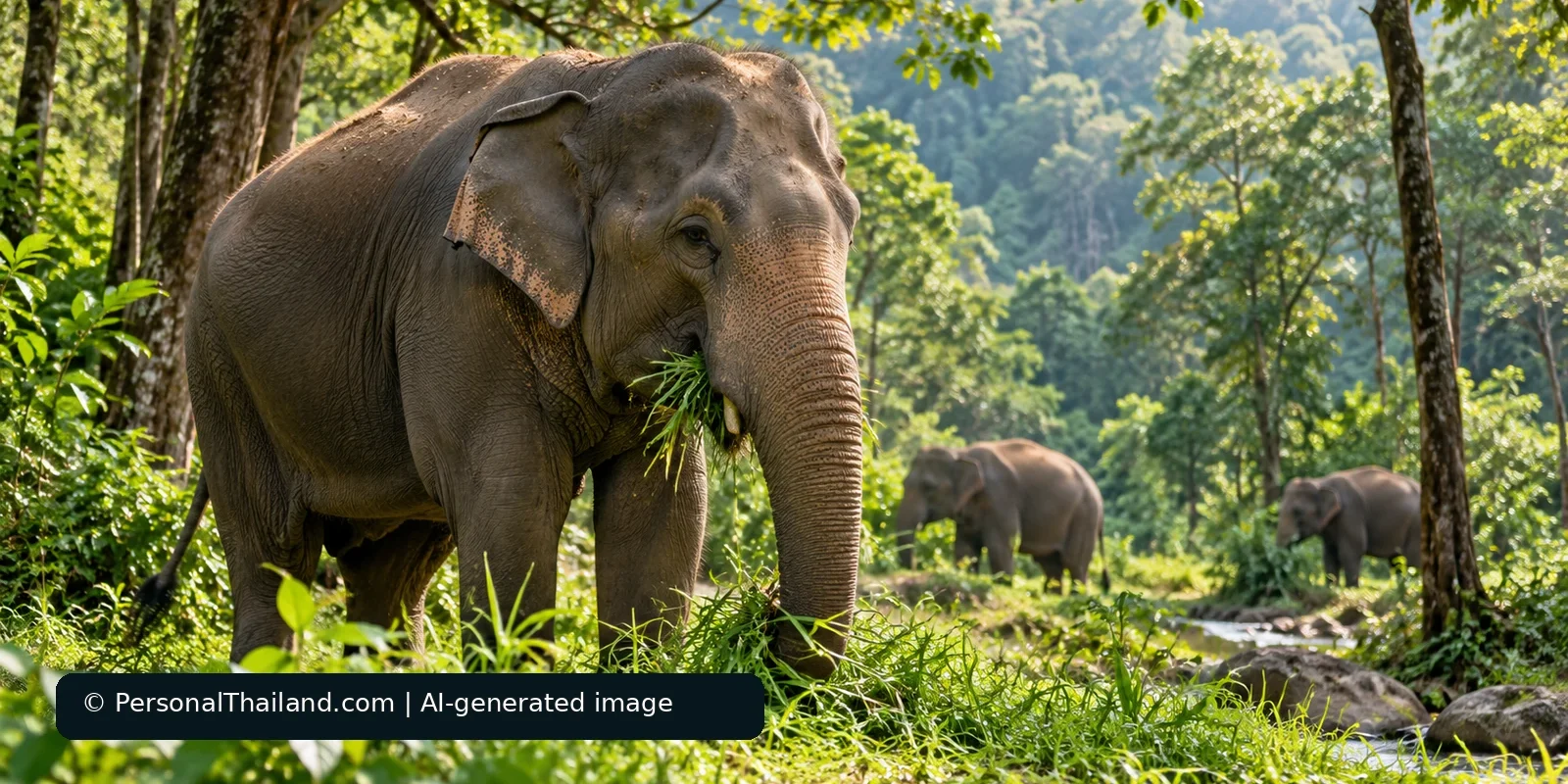
There is a big difference between seeing an elephant in Thailand and helping an elephant. A tourist might be offered a bunch of bananas to feed one, a photograph beside a young elephant, or a visit to a place described as a “sanctuary.” These experiences can feel kind. But a friendly-looking encounter does not tell you how the animal lives when visitors are gone.
Years ago, elephant handlers and elephants were sometimes encountered in Bangkok’s tourist areas, where visitors could pay to feed the animals. This older article urged people not to participate. The practical message still deserves attention: choose experiences that put an elephant’s welfare ahead of close contact, rather than assuming that paying for food helps.
Why feeding an elephant in the street is not a good tourist activity
An elephant needs far more than a snack from a passer-by. It needs appropriate food, room to move, rest, veterinary attention when required, and opportunities for natural behavior. Urban traffic, noise and confined environments are not a substitute for these needs. Buying food from someone who presents an elephant on a street can also create demand for more encounters of the same kind.
You do not need to confront handlers or make accusations about individual people. Simply decline to buy food or a photograph, give the animal space and continue your journey. In particular, keep children away from an elephant’s trunk, feet and mouth. An elephant is an enormous animal, even when it seems calm.
Do not judge a sanctuary by its name
The word sanctuary is not proof of high standards. Some venues advertise washing, riding, hugging or close-up feeding as “care.” These are precisely the types of activities visitors should examine critically. World Animal Protection’s elephant-friendly visitor guide recommends venues that allow elephants to move, socialize, forage and behave naturally without being forced into tourist interaction.
Ask what the visit actually includes. Will you watch elephants from a respectful distance, or must they approach people repeatedly throughout the day? Are animals free to choose whether to enter an area? Can they spend time with compatible elephants? A polished booking website cannot answer these questions on its own.
Six questions to ask before booking
- What will I be paying to do? Prefer observation and education over a guaranteed ride, bath, hug or photograph touching the animal.
- How do elephants spend the hours without visitors? Look for movement, shade, forage, appropriate food and opportunities for social contact rather than long periods of restraint.
- Is visitor contact voluntary for the animal? Repeated forced interactions are a warning sign even if they are marketed as gentle.
- What is the venue’s animal-care policy? Ask about veterinary support, new acquisitions, breeding and care for older animals. Beware vague answers.
- Who has assessed the venue? Seek a credible, recent independent assessment, not only testimonials from excited visitors.
- What has changed recently? A venue’s activities and practices may change; verify the current situation before paying.
World Animal Protection maintains a 2026 overview of elephant welfare in Thai tourism. Its findings provide context for why a “no riding” label by itself is not enough.
What about an elephant encounter in the wild?
Observing wild elephants can be unforgettable, but the animal’s space comes first. Never offer food to attract an elephant closer, block its route, attempt a selfie next to it or leave your vehicle to approach one. Follow the local park authority’s instructions and keep noise low. If an elephant is on or near a road, remain at a safe distance and give it a clear route to move away. Your guide or ranger, not a social-media trend, should determine what is safe.
Supporting people and animals without paying for exploitation
Responsible elephant protection also involves the people who care for elephants. Mahouts, veterinarians and local communities need viable livelihoods. Choosing genuine observation-led venues and community-focused conservation activities is a better way to direct visitor spending than paying for tricks or pressured close contact. If you wish to donate, check the organization’s registered details, project reports and current work before transferring money.
Sometimes the most valuable experience is the least dramatic one: standing quietly, watching an elephant choose where to walk and what to eat, and leaving without touching it. That is still a remarkable way to remember Thailand.
Quick decision before you pay
If the highlight of an attraction is what you can make an elephant do for you, look for a different experience. If the highlight is watching elephants behave like elephants while people keep an appropriate distance, you are asking better questions. No short checklist can certify a venue, so use recent independent welfare guidance and verify conditions before visiting.