In February 2009, PersonalThailand warned about the danger of bushfires, drawing a comparison with devastating fires in Australia and expressing frustration about outdoor burning in Thailand. The article was a reaction to a particular news cycle. Its allegations about how often police intervened were not backed by a systematic record, and the reported events should not be read as an emergency alert for today.
Nevertheless, the underlying issue remains important. Fires, agricultural burning and other sources of pollution can affect visibility, public health and daily life. A useful modern guide should distinguish a dangerous nearby fire from regional smoke and explain how to check current information before reacting.
What causes smoke during Thailand’s dry season?
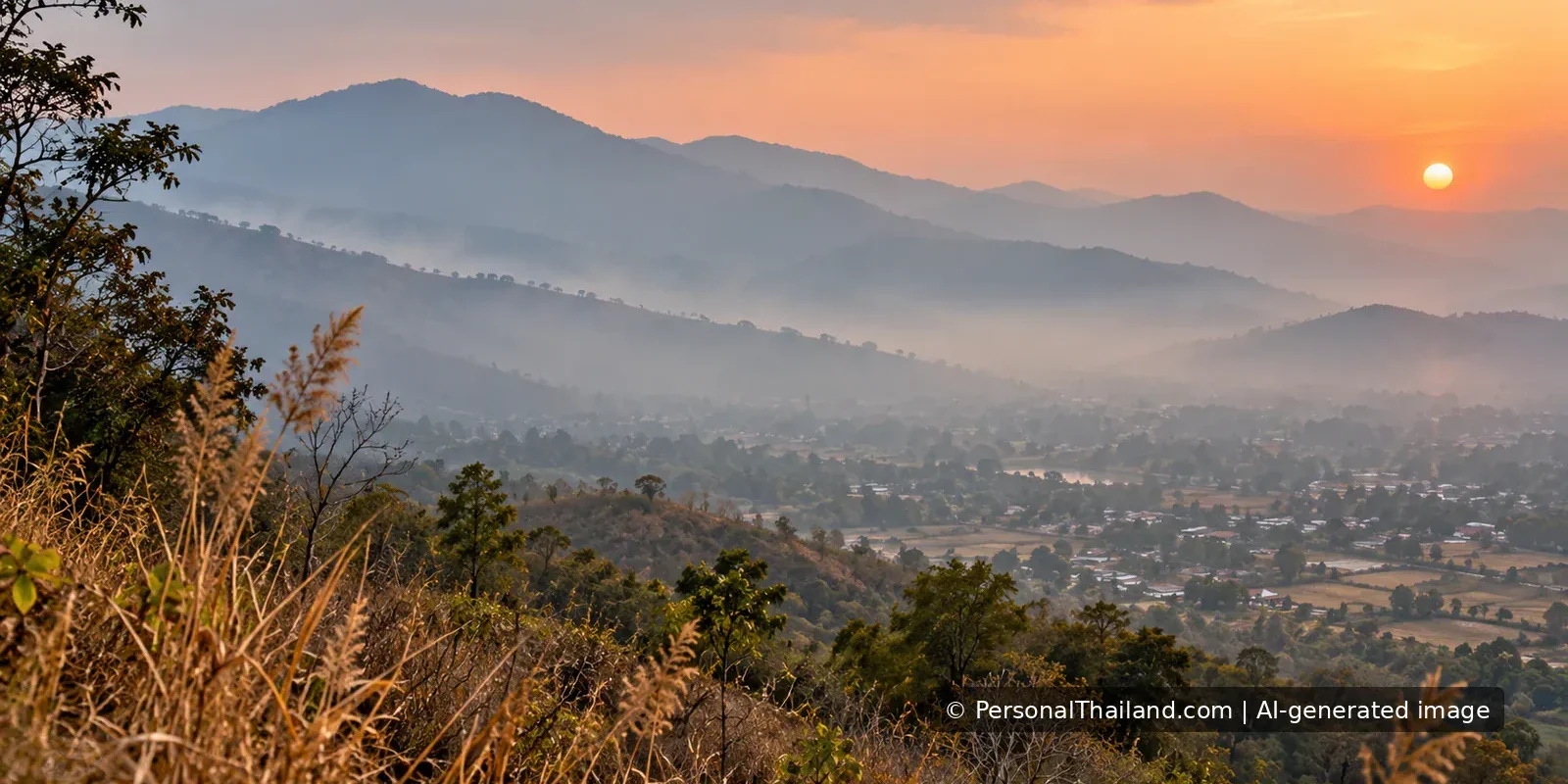
Vegetation can become easier to ignite during prolonged dry conditions. Forest fires, burning of agricultural residues and other open fires can contribute to regional haze, while urban emissions may add to the pollution. The mix varies by geography, weather and day. Smoke observed in a city does not prove the flames are in that city.
In January 2026, the Thai government’s Public Relations Department reported increased surveillance and efforts to tackle forest fires and haze, especially in northern provinces. That dated report demonstrates the ongoing policy concern; it is not a declaration that an active fire threatens every northern destination in October.
Wildfire alerts and air-quality readings are different
An active fire warning identifies an incident and the possible need to keep away or evacuate. A pollution reading describes the quality of the air at a monitoring location and time. You might experience poor air quality from distant smoke without seeing any nearby flames. Conversely, a rapidly spreading local fire can require immediate action even before regional averages change much.
Thailand’s Pollution Control Department provides Air4Thai, an official system for regional air-quality information. Check the location, reporting time and relevant pollutant rather than assuming a single reading represents your entire route. When comparing figures from different services, confirm they use the same units and averaging periods.
What does PM2.5 mean?
PM2.5 refers to fine particles with an aerodynamic diameter of 2.5 micrometres or smaller. Such particles can penetrate into the respiratory system. The World Health Organization’s guidance on wildfires and health explains that wildfire smoke contains a mixture of pollutants and that fine particulate matter is a major public-health concern.
Smoke exposure can irritate the eyes and airways and worsen certain respiratory or cardiovascular conditions. The level of concern depends on pollution intensity, duration and personal vulnerability. Children, older people, pregnant travellers and people with existing health problems may need particular care, but everyone can benefit from reducing heavy exposure.
How to reduce exposure on smoky days
- Consult current official air-quality and local fire information before long outdoor activities.
- Reduce strenuous exercise outdoors when smoke or particle readings are concerning.
- Keep windows closed when outside air is visibly smoky, while maintaining safe ventilation when needed.
- Use an appropriate particle-filtering air cleaner indoors if available and maintained correctly.
- Follow local health authority advice for masks and cleaner-air spaces rather than assuming any cloth face covering removes fine particles.
- Seek medical care for severe breathing difficulties, chest pain or other concerning symptoms.
Turning an air conditioner on does not automatically filter smoke effectively: the ventilation and filtration setup matter. Avoid bringing additional smoke indoors through cigarettes, incense or unnecessary burning while outdoor pollution is elevated.
Understanding satellite hotspots
Thailand has access to satellite-derived hotspot maps, including the fireDNPX platform. These systems help identify areas of possible heat activity, but a hotspot alone does not reveal the full size, danger or legal cause of a particular fire. Clouds, overpasses and timing can complicate interpretation.
It is therefore sensible to use hotspot maps with official incident information and local observations. Do not drive toward a marked point to investigate, and do not assume that a missing satellite detection proves a forest trail is safe.
What travellers can do
When planning a northern Thailand itinerary, look at expected outdoor activities, accommodation and how easily plans can change. A visitor with asthma who expects long days of trekking may make a different choice from someone attending indoor meetings. Carry prescribed medication and discuss concerns with a clinician before travel if necessary.
For residents, supporting community fire prevention, following burning restrictions where applicable and reporting a dangerous incident through verified local emergency channels can be practical contributions. Do not confront suspected burners or spread accusations against a community without evidence.
Keep the 2009 warning in its historical place
The old article’s comparison with Australia reflected concern, but Thailand has varied forests, landscapes and management challenges. A direct one-to-one claim about fire risk or firefighting performance would require stronger evidence than an anecdote. The useful lesson is preparedness: check official monitoring, understand the difference between haze and flame, and protect your health when conditions warrant it.
The best decisions are local and time-specific. An archive can explain why people worried about fires in 2009; it cannot tell you whether the air is healthy outside your hotel today.