
Editorially refreshed 17 October 2026. This article replaces outdated material with practical travel information; attraction rules and transport conditions may change.
Chiang Mai blends historic Lanna architecture with river communities and mountain scenery. The best itinerary connects those experiences at a comfortable pace.
Quick takeaway: Choose a realistic itinerary, verify transport and opening arrangements before travel, respect local communities and avoid relying on outdated price lists.
A city with two very different travel rhythms
Chiang Mai is more than a northern stopover. Its walled historic core, riverside communities, mountains and contemporary cafés offer different kinds of days, even within a short visit. The old post described the city as Thailand’s second largest, a ranking that depends on how city boundaries and population are counted. Instead of relying on that claim, this guide focuses on what travellers can actually see and plan.
A first visit works best when you split your time between the compact Old City, one mountain or nature outing, and a neighbourhood beyond the busiest temple streets. Leaving some free time makes the city easier to enjoy than scheduling every hour around a checklist.
Explore the Old City thoughtfully
The historic centre contains active Buddhist temples, small streets, cafés and guesthouses. Walking short sections is a good way to notice courtyards and traditional architectural details, but the midday heat can be uncomfortable. Start early and pause often. Choose two or three temples rather than racing through every possible stop.
Temples are places of worship, not simply photographic backdrops. Dress modestly, remove shoes where required and follow signs about areas that visitors may enter. Be especially careful with photography around people praying or ceremonies; ask before taking close portraits.
Doi Suthep and Chiang Mai’s Lanna heritage
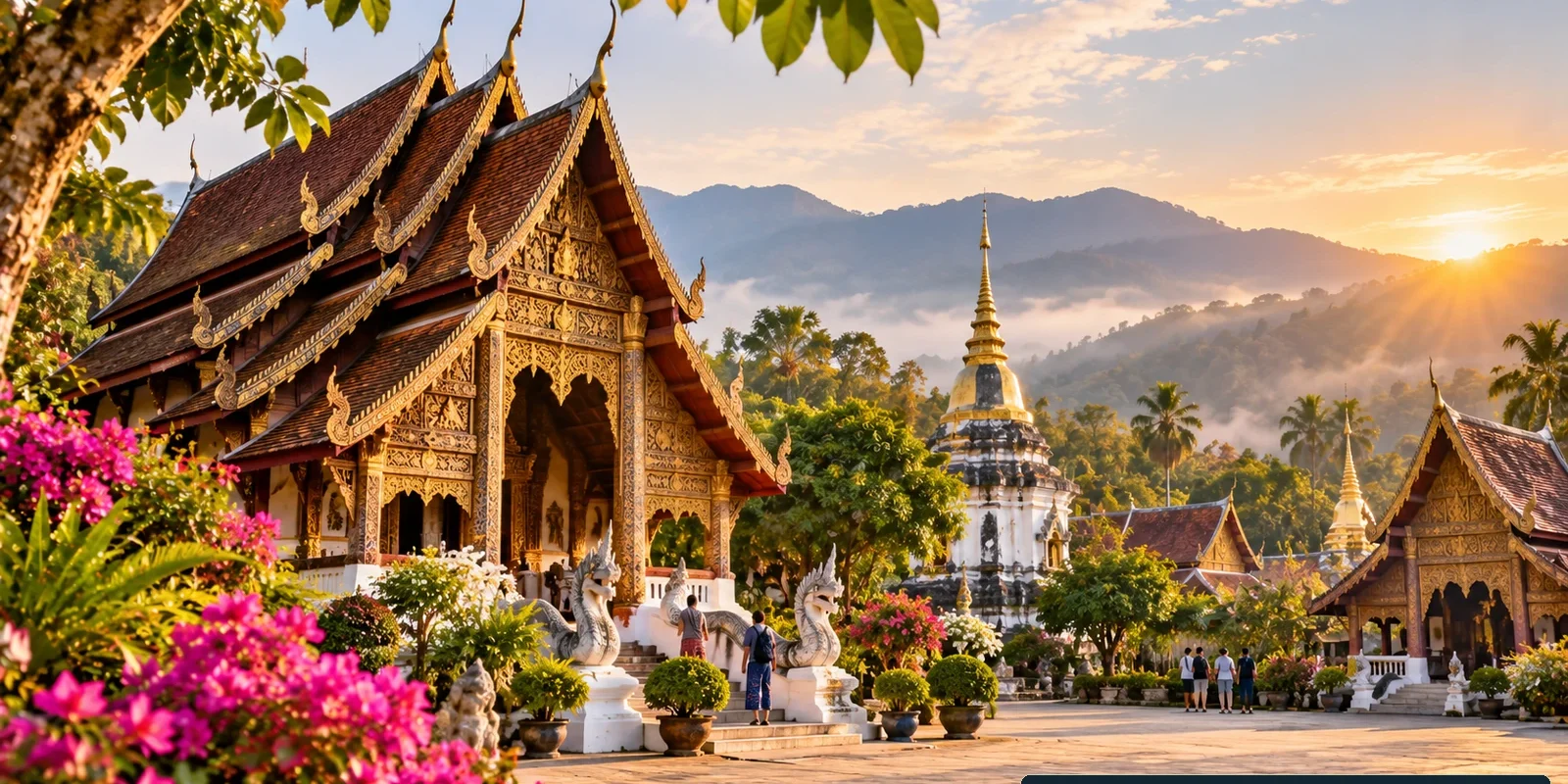
Wat Phra That Doi Suthep is one of Chiang Mai’s best-known landmarks. The Tourism Authority of Thailand describes its golden pagoda, Lanna architecture and naga-lined approach. The mountain setting is part of the attraction, although cloud, haze and rainfall can affect views of the city.
Allow travel time to climb into the hills, check the conditions on the day and wear comfortable shoes. Avoid assuming that a fee, tram schedule or vehicle service shown in an older blog post is still current. Ask the official attraction or a reputable local operator when precise arrangements matter.
Look across the Ping River
The Wat Ket neighbourhood offers a different historical perspective from the busy Old City. Tourism Authority material describes the riverside community’s mix of trading history, architecture and local heritage. It is well suited to a slower walk, especially for visitors interested in how the city developed around the river and long-distance commerce.
Respect residential lanes and avoid turning someone’s doorway into a photo stop. This is also a useful area to experience Chiang Mai beyond an all-temple itinerary, with neighbourhood-scale businesses and everyday activity.
Art, metalwork and contemporary Chiang Mai
Wat Si Suphan, in the Wualai area, is another reason to look closely at local craftsmanship. The Tourism Authority describes its decorated ordination hall and the area’s association with silverwork. Rules about entering particular sacred areas can be site-specific and must be followed rather than assumed.
If you enjoy design, combine a traditional craft-oriented stop with contemporary galleries, a market or an independent café. A respectful visit can support locally made work, while a careful shopper checks materials and prices before paying for expensive crafts.
Should you make a mountain day trip?
Chiang Mai province includes hills and more remote landscapes, but a beautiful photograph is not evidence that every viewpoint can be visited easily in one day. Road conditions, driving time, visibility and rain affect what is realistic. Choose one region rather than promising yourself multiple distant stops.
If you book transport, agree on the route and included stops in advance. On winding mountain roads, do not let a rushed itinerary determine the pace. Travellers driving themselves should check the vehicle, licence requirements and insurance before leaving the city.
When to go, and what to pack
Cooler months are popular for outdoor exploration, while hotter or wetter periods change the rhythm of a trip. Air quality in northern Thailand can also vary substantially, particularly during parts of the dry season. Check current air-quality readings and forecasts, rather than assuming a specific month always guarantees blue skies.
Bring sun protection, water, light rain gear when appropriate and shoes suited to uneven temple surfaces. The biggest improvement to a short Chiang Mai stay is not another attraction but a bit of flexibility.
Getting around without unnecessary stress
The Old City is often manageable in sections on foot, while riverside areas and mountain attractions need more planning. Compare local transport options, confirm a quoted price where needed, and check the pickup point before leaving your accommodation. Never rely on a very old article for a fixed fare.
Leave extra travel time when returning to an airport or transport connection. For those travelling with children or mobility limitations, ask about steps and accessibility at temples and historic sites before visiting.
A balanced three-day Chiang Mai itinerary
On day one, stay close to the Old City and focus on temples and a calm dinner. On day two, prioritise Doi Suthep, leaving time for the drive and changing conditions. On day three, explore Wat Ket or Wualai for a different view of Chiang Mai’s cultural life.
That is a framework, not a required route. Some visitors will enjoy a food-focused weekend more than a temple-heavy visit; others may choose to spend a whole extra day in the hills.
Frequently asked questions
Is Chiang Mai only about temples? No. Historic neighbourhoods, craft traditions, food and nearby natural areas are all part of the experience. Do you need a car? Not necessarily for the centre, but more distant day trips need transport planning.
Can you visit Doi Suthep in a few hours? Sometimes, but do not schedule it as a guaranteed short detour. Traffic, transport choice, crowds and weather all affect how long the visit takes.
Official sources and further reading
- Tourism Authority of Thailand — Wat Phra That Doi Suthep
- Tourism Authority of Thailand — Wat Ket Community
- Tourism Authority of Thailand — Wat Si Suphan
Editorial note: The original URL and historic publication date must be retained. This material is general travel information, not a guarantee of availability, weather, access or price.



1 Comment