Editorial update: 17 October 2026. This travel guide replaces a historical post with researched, practical visitor information. Prices, opening times, transport schedules and access rules can change.
At a glance: Explore Chiang Rai in northern Thailand, from Wat Rong Khun and Baan Dam to mountain scenery and the Golden Triangle, with practical planning tips.
Why Chiang Rai deserves a longer visit
Chiang Rai is Thailand’s northernmost province, and its character is very different from the bustle of Bangkok or the beach resorts of the south. Mountains, Lanna heritage, temples, contemporary art and small communities share a landscape that rewards travellers who are willing to slow down. The provincial capital is a practical base for local attractions, while the wider province offers viewpoints and border-region scenery that can take much longer to reach than a map suggests.
A 2007 version of this article listed exact population figures and dated festival announcements. Those are not reliable travel-planning tools today. What remains useful is the original idea: Chiang Rai combines culture, nature and a strong sense of place, with enough variety to justify several days rather than a single rushed stop.
Wat Rong Khun and the art side of Chiang Rai
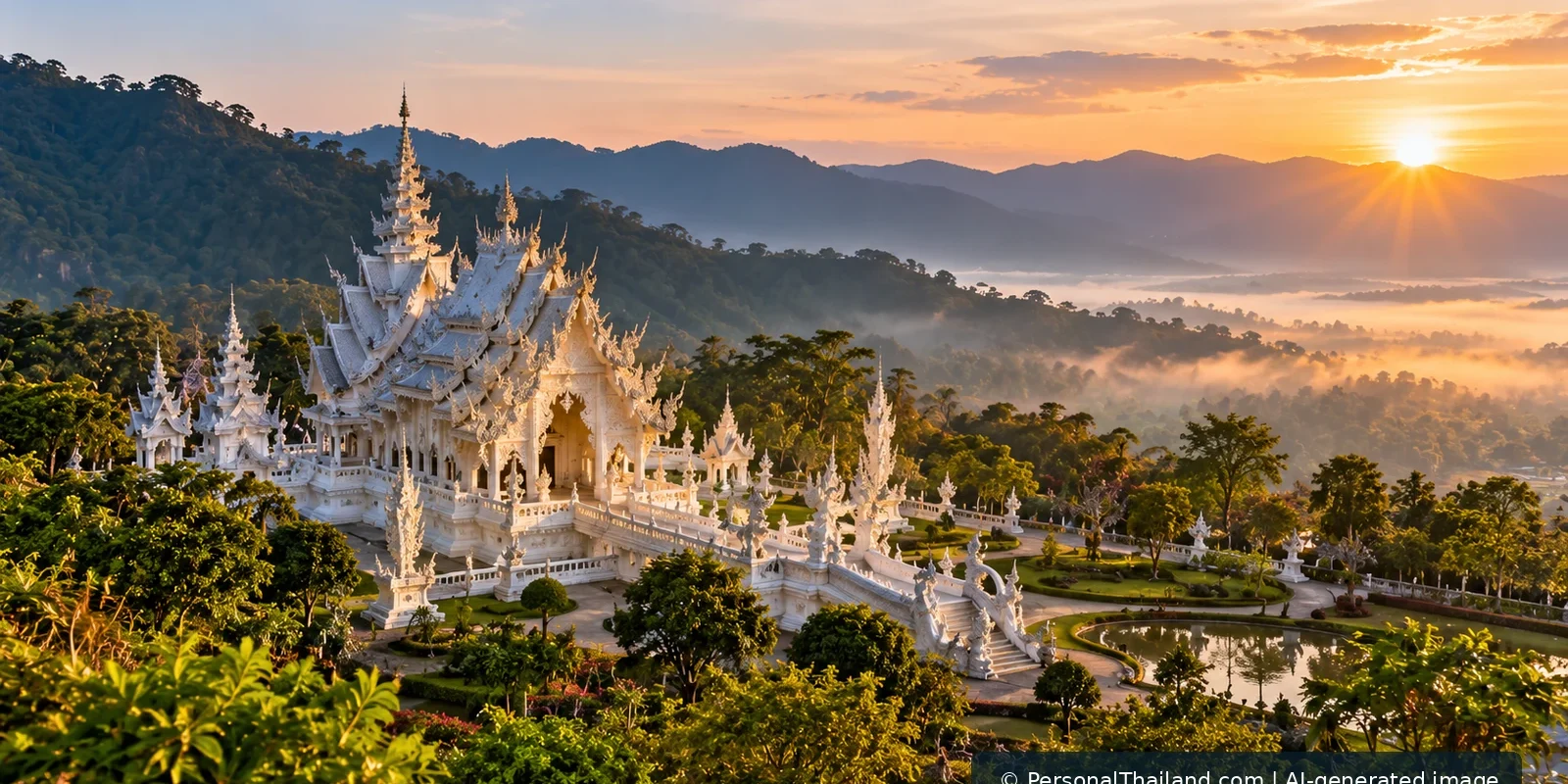
Wat Rong Khun, widely known as the White Temple, is one of the province’s best-known sights. The Tourism Authority of Thailand describes its distinctive white architecture and identifies artist Chalermchai Kositpipat as its creator. It should be approached as a creative contemporary landmark rather than as a generic ancient temple. Allow time to look at the detail instead of treating it as just a five-minute photo stop.
Chiang Rai has other art experiences too. The Baan Dam Museum is associated with the work of Thawan Duchanee, while Wat Rong Suea Ten offers a very different visual impression. These are not interchangeable attractions. Check each venue’s current visitor rules and treat active worship spaces with appropriate care, including clothing that covers shoulders and knees where requested.
Golden Triangle, Mae Sai and the Mekong
The Golden Triangle is the border region where Thailand, Laos and Myanmar meet, with views around the Mekong and a long history of trading routes. It is possible to enjoy the scenery and learn about the region without assuming that every nearby international border is open to casual visitors. Entry procedures, permitted crossings and visa rules can change independently of sightseeing operations.
Mae Sai is another well-known northern stop, especially for travellers interested in markets and local geography. However, a visit to a border town should not be confused with an entitlement to leave and re-enter Thailand. If your actual purpose involves immigration, verify your category and route with official authorities before setting off; blog anecdotes about easy visa runs are not reliable instructions.
Mountain views and changing conditions
Doi Pha Tang, Phu Chi Dao and the Doi Tung area are among the landscapes highlighted by Thailand’s tourism authority. They offer hill-country experiences that feel quite different from the city. Misty mornings are appealing, but good visibility cannot be guaranteed. Cloud, rain and seasonal smoke can change conditions quickly, so check weather and local access shortly before your trip.
If you have only a short stay, resist the temptation to combine every mountain viewpoint and temple on one day. Roads may be winding, and estimated travel times can become optimistic when fog or heavy rain arrives. Consider hiring a suitable local driver if you are uncomfortable with mountain roads. Avoid stopping in unsafe roadside locations simply to take a photograph.
How to organise two or three days
For a relaxed first day, explore the city area, local food and one or two cultural attractions. On a second day, choose between the White Temple and other art sites or a more nature-focused trip. Reserve a third day, if available, for the Golden Triangle or a mountain destination. Treat these as example themes, not a fixed itinerary; the ideal order depends on your hotel, travel style and current conditions.
Some travellers arrive via Chiang Mai, but the two cities are not adjacent neighbourhoods. Distances deserve proper planning, particularly if you plan to return the same day. Compare the total journey, not just the price of a ticket or hire vehicle. Confirm what is included when booking a private tour and ask whether entry tickets, meals and waiting time are extra.
Responsible cultural travel
Northern Thailand includes communities with diverse ethnic backgrounds and traditions. Avoid trips that treat residents as props for photographs. Ask before photographing people, pay fairly for local products and support activities that allow hosts to explain their own customs. A respectful visit is often more memorable than a staged attraction.
At temples, remove shoes where instructed and avoid climbing on religious monuments. In natural areas, stay on established paths and bring rubbish back with you. These practices are small but valuable, especially around delicate hill environments and actively used religious sites.
Practical questions
Is Chiang Rai the same as Chiang Mai? No. They are different provinces, each with their own attractions and transport planning.
Can I visit the Golden Triangle without crossing a border? Yes, the scenic area can be visited as a domestic sightseeing destination; international entry rules are a separate matter.
How many days should I allow? Two to three days gives more flexibility than a single rushed outing, although longer trips are useful if you want remote mountains.
Official sources and further reading
These pages were used to check the destination descriptions. Always consult the operator or relevant authority for current services and fees.
Planning note: This guide does not guarantee access, prices, safety or travel times. Verify current arrangements before visiting.