Songkran should be a time to see family and enjoy the holiday, not a reason to accept an unsafe journey. I would rather arrive later than travel with a tired driver or get on a motorbike without proper protection. The figures matter, but only when we explain what they count and turn them into sensible choices. Songkran road deaths were lower in 2026 than the three-year average, but each one is still a family’s loss.
Updated 31 October 2026: This older page has been rewritten. Historical events and past advice should not be read as current alerts or rules. For our latest updates, follow @PersonalThai on X (Twitter). For decisions involving laws, visas, health or safety, also check the responsible authority.
Songkran road deaths: what the 2026 figures say
Thailand’s government reported 242 deaths, 1,242 road crashes and 1,200 people admitted to hospital during the intensified Songkran monitoring period of 10–16 April 2026. Those are figures for that defined campaign period. They are not an annual total or a prediction for the next holiday.
The old headline on this page asked whether another 2,500 people would die. That number should not be carried forward as a current seven-day estimate. This rewrite replaces the alarming question with dated official reporting and practical travel advice.
For wider context, WHO’s 2023 global road-safety report estimated 18,218 road deaths in Thailand in 2021. Different years, methods and reporting windows cannot be casually combined. A campaign count and a modelled annual estimate answer different questions, even though both point to a serious road-safety problem.
Plan the driver, not just the destination
For a family trip, agree who will drive and when they can rest. Do not schedule a long departure immediately after a full workday simply because everyone wants to reach home before morning. Build time for breaks and be prepared to stop if the driver becomes sleepy.
If you are a passenger, speak up early about fatigue or unsafe driving. Offer a practical alternative: a rest stop, an overnight stay or a different qualified driver. Waiting until the situation becomes frightening makes the conversation harder for everyone.
I would also avoid making the return journey depend on a promise that someone will “probably be fine” after a celebration. Decide on sober transport before alcohol is involved. My Songkran drink-driving guide explains why planning the ride home belongs at the start of the day.
Motorbikes need more than confidence
A short ride is still a road journey. Wear a properly fitted helmet and make sure the rider is licensed and insured for the vehicle and circumstances. Do not treat holiday clothing or a nearby destination as a reason to skip protection.
Water, crowds and sudden movement can make an already demanding ride less predictable. If you are inexperienced, Songkran is not the time to learn in busy streets. Choose transport that matches your ability rather than accepting a rental because it appears convenient.
Passengers need protection too. Do not agree to carry more people or luggage than the vehicle is intended for. For the everyday checks that remain relevant after the festival, see motorbike safety in Pattaya.
Prepare the vehicle and passengers
Check tyres, lights, brakes and the vehicle’s condition before a long trip. If something needs attention, arrange it before departure instead of hoping the holiday traffic will be slow enough to compensate. Keep luggage secure so it does not become a distraction or block visibility.
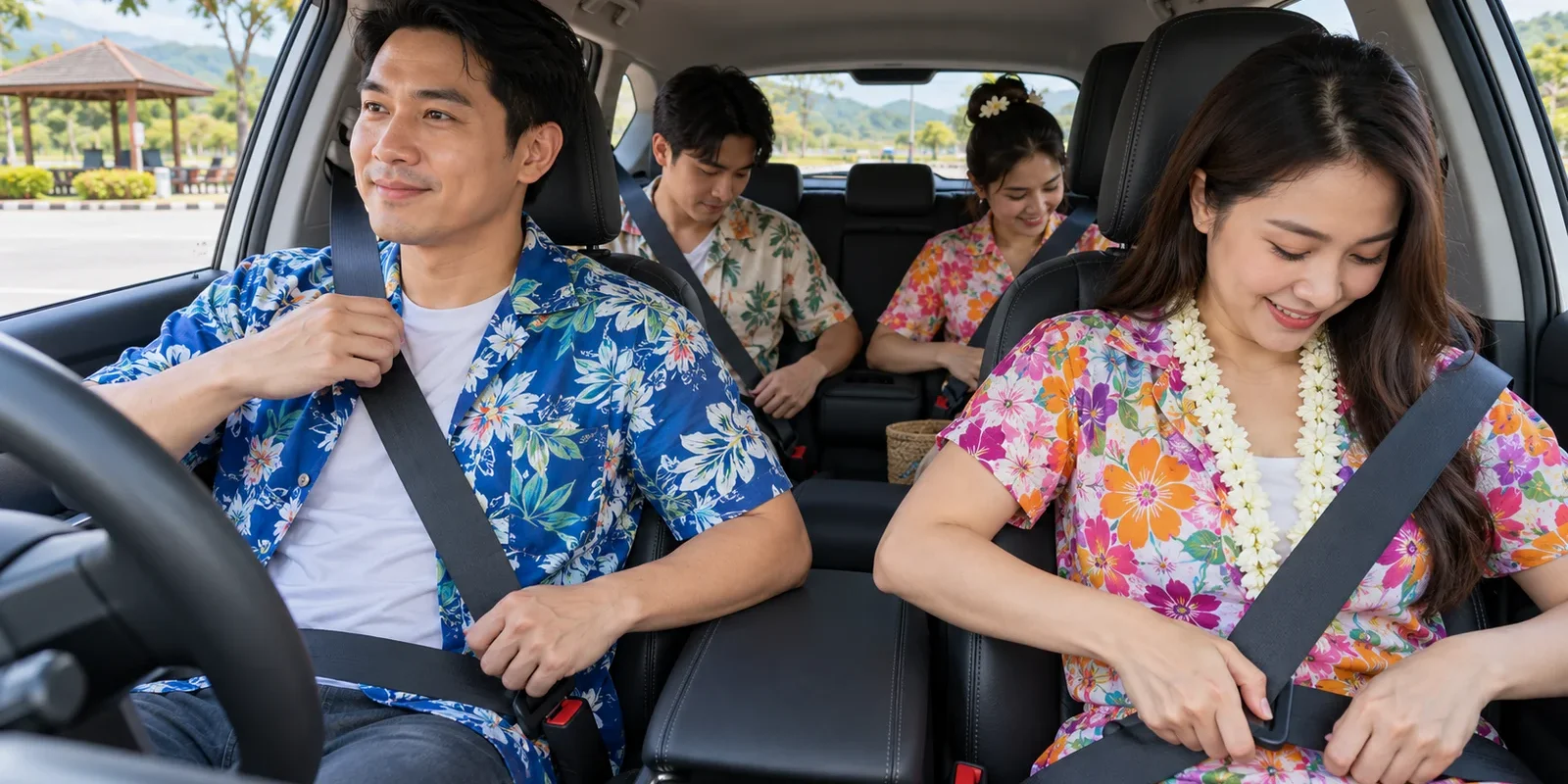
Use seat belts and appropriate child restraints. Plan seating before everyone arrives with bags and food. A full vehicle is not a reason to leave someone without a proper place to sit, and an adult holding a child is not a substitute for suitable protection.
Keep essentials accessible without requiring the driver to search for them while moving. Let a passenger handle directions and messages. If travelling alone, stop safely before changing the route or responding to a call.
Give the journey more time
Busy roads, checkpoints, local celebrations and weather can change the pace of travel. Build a margin into the plan instead of trying to recover every delay by driving faster. Tell the people waiting for you that arrival time is approximate.
Choose rest stops where the driver can genuinely pause. A quick purchase while remaining tired is not the same as adequate rest. If continuing safely is doubtful, the cost and inconvenience of stopping are easier to manage than the consequences of a crash.
Avoid fixed appointments immediately after a long drive where possible. A timetable with no flexibility can pressure everyone into poor decisions. The same applies to a flight connection or a bus departure at the end of a family visit.
Celebrate away from moving traffic
Choose places where water activities do not push people into traffic or surprise riders. Do not throw water at someone trying to control a moving vehicle. A joke that makes a driver lose concentration can have consequences far beyond the people taking part.
Watch children closely near roads and agree on a safe meeting place for the group. Wet surfaces and crowds can make it harder to see a child stepping out. A quieter celebration can be a good choice for families who do not want to spend the day in dense street activity.
If a crash happens nearby
Protect yourself from traffic before trying to help. Call emergency medical services on 1669 and give the location, number of people involved and any obvious immediate danger. Follow the operator’s instructions rather than attempting care beyond your ability.
Do not crowd the scene or publish images of injured people. Make space for responders. If you witnessed the event, offer a factual account when asked and distinguish what you saw from what others said afterwards.
FAQ
Were 2,500 people killed during Songkran 2026?
That is not the official seven-day figure used here. The government reported 242 deaths for 10–16 April 2026. The old headline has been replaced because readers need a clearly dated count, not an unsupported carry-over prediction.
Does a lower campaign total mean the roads are safe?
No. A change in one reporting period does not remove individual risk or make unsafe behaviour acceptable. Consider the driver, vehicle, route and conditions for your own journey, and avoid comparing statistics without checking their definitions.
Is a short motorbike trip an acceptable exception?
Distance does not remove the need for a helmet, appropriate licensing, insurance and a capable sober rider. If those conditions are not met, choose another way to travel. Convenience is not a safety measure.
What is the most useful thing a passenger can do?
Support safe decisions early: insist on a sober, rested driver, wear a seat belt and accept delays or an overnight stop. Avoid distracting the driver or treating a later arrival as a failure that must be corrected through speed.
More from Personal Thailand
If you enjoy practical reporting and personal perspectives on Thailand, you can support my work and explore member-only content through either platform:
- Subscribe to Personal Thailand on X — creator membership with access to applicable subscriber-only posts and benefits.
- Join or support Personal Thailand on Buy Me a Coffee — browse available memberships and support options.
These are separate services with different charges and membership benefits. Paid access may be required; subscribing on one does not automatically grant access on the other. The main information in this article is free to read above.