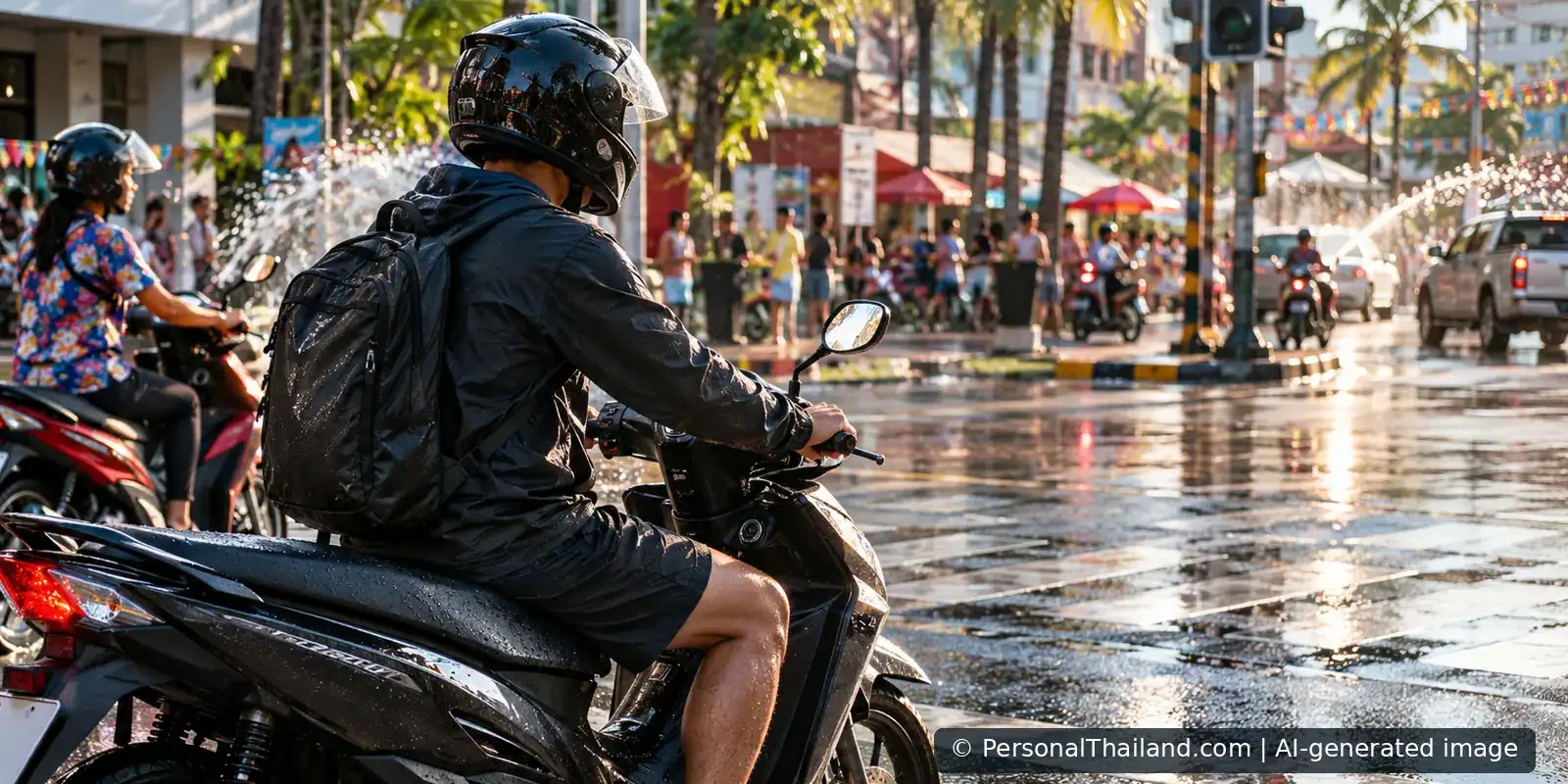
Songkran is Thailand’s traditional New Year celebration. It brings families, travellers and communities together, but the holiday also creates heavy road traffic and more opportunities for unsafe decisions. The sensible message from an old PersonalThailand article remains relevant: if you plan to drink alcohol, do not drive. The accident totals quoted in that 2008 post were a snapshot from that year, not a current forecast or live statistic.
Why the roads deserve extra attention at Songkran
Public holidays change driving patterns. People travel between Bangkok and their home provinces, buses carry more passengers, and festival areas may have pedestrians, water play and short road closures. Risk depends on location, weather, driver behaviour and the route; it is not correct to describe every street in Thailand as dangerous throughout the celebration.
In its 10 April 2026 Songkran road-safety announcement, the Thai government described a coordinated accident-prevention effort and called on travellers not to drink and drive, to get sufficient rest and to follow traffic laws. Those measures illustrate the continuing safety priority without requiring us to recycle a 2008 death count.
Decide how you will get home before the first drink
If a celebration includes alcohol, arrange a sober designated driver, a licensed taxi, a ride through a reputable transport service or accommodation within easy reach. Do not make the transport plan after everyone is tired and ready to leave. Agree on a meeting place and keep a backup option in case a booked vehicle is delayed.
Motorcycles deserve particular caution. Even a short ride between a party and a hotel exposes riders to intersections, turning vehicles, wet road markings and crowds. A helmet is essential, but it cannot make impaired riding safe.
Alcohol is not the only factor
Sleep loss, speeding, distraction and poor visibility also increase road risk. A driver who has not consumed alcohol can still be unsafe if exhausted. Allow time for breaks and avoid driving through unfamiliar crowded streets simply to save a few minutes. When water is thrown near moving traffic, maintain space and avoid sudden manoeuvres.
The Royal Thai Police’s Songkran 2026 safety notice emphasised traffic enforcement, considerate water play and respect for personal boundaries. These are practical reminders for everyone taking part, Thai residents and visitors alike.
A safer travel checklist for families and friends
- Before departure: check road alerts and planned route stops, and share arrival plans with someone you trust.
- Before celebrating: arrange sober transport and decide where to leave vehicles.
- For children: supervise water play away from moving traffic and identify a family meeting point.
- For motorbike riders: wear a helmet, avoid alcohol entirely and do not carry more people than the bike can safely accommodate.
- For long journeys: avoid drowsiness, use seatbelts and take breaks.
- After an incident: move to safety when possible and contact appropriate emergency services rather than blocking the road.
Celebrate the tradition without confusing the message
Songkran is not an imported Indian celebration; it is Thailand’s own traditional New Year, with cultural and religious practices alongside modern water festivities. Respect temples, communities and people who do not wish to be splashed. In busy areas, remember that a passing motorbike rider or driver may be navigating traffic rather than participating in water play.
Where to find current information
Travel restrictions, enforcement arrangements and traffic plans can vary by province and year. Check the latest announcements from local police, transport operators and the Department of Disaster Prevention and Mitigation before a journey. A previously published campaign’s dates are evidence of what happened then, not a standing timetable for next year’s Songkran.
One practical habit makes a difference regardless of the year: decide that drinking and driving do not go together, then help the rest of your group get home safely too.