
Last reviewed: October 2026.
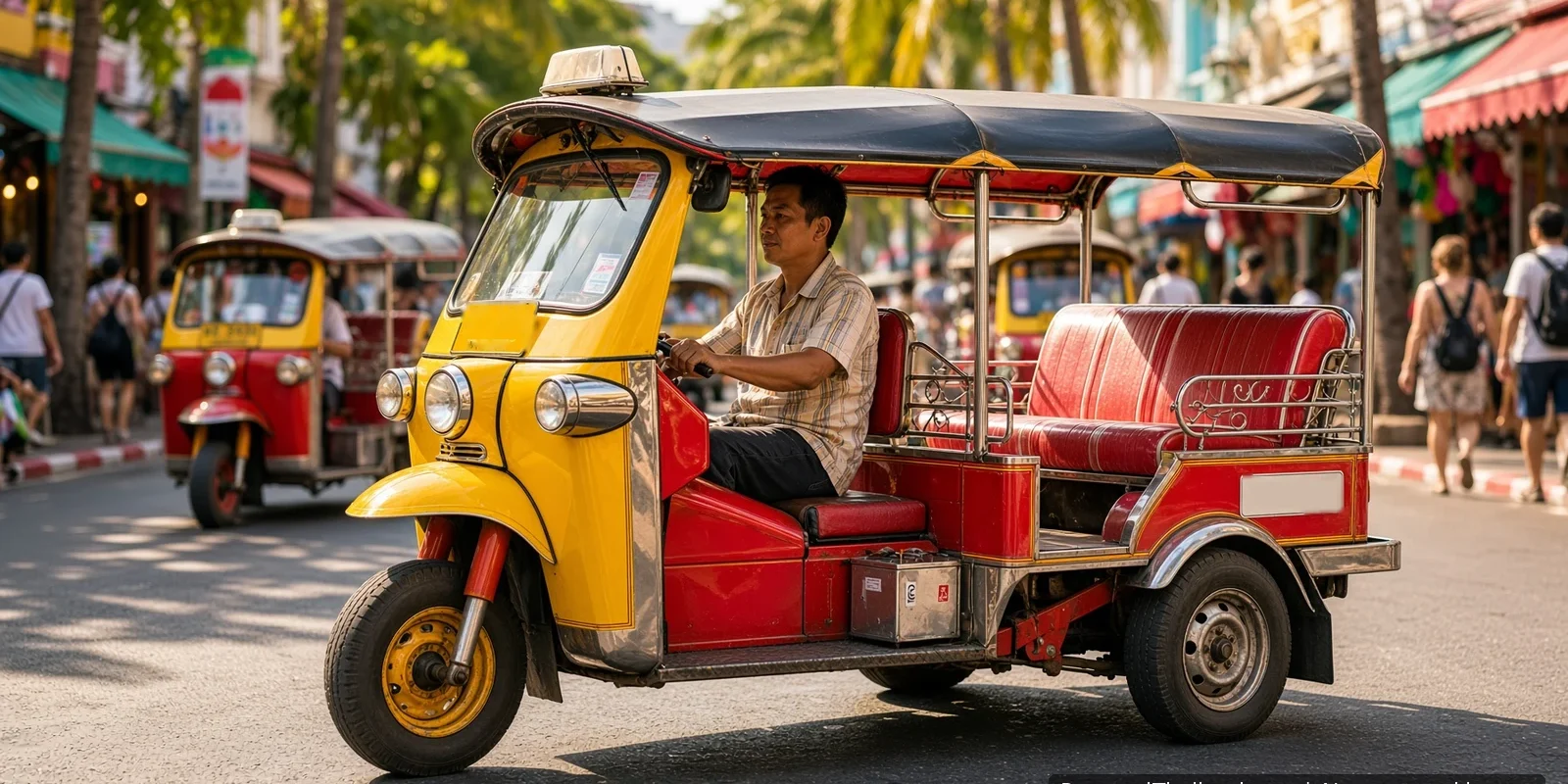
Getting around Phuket can be straightforward, but one frustrating tuk-tuk ride can leave a visitor with an unpleasant memory. Phuket’s tuk-tuks are usually small, brightly coloured vehicles, and many journeys are priced by agreement rather than by a running meter. The useful question is not whether every driver can be trusted. It is how to choose transport, settle the fare and arrive safely without an argument.
Agree on the complete price before boarding
Before getting in, tell the driver your exact destination and ask for the total price for your group. Check whether that price includes all passengers, bags and any intermediate stop. If the answer is vague, ask again or politely decline the ride. A quoted amount is not necessarily a regulated or universal fare, and a short distance does not guarantee a low price.
Point to the destination on a map, especially if there are several hotels with similar names. For a multi-stop trip, agree on the route and waiting time in advance. If you plan to return by the same vehicle, treat the return journey as a separate price unless both parts have been clearly agreed.
Compare Phuket transport options fairly
- Tuk-tuk: convenient for some short trips, especially with a small group, but check the price before leaving.
- Licensed taxi or car booked through your accommodation: useful with luggage, in heavy rain or for an airport transfer; confirm the full cost.
- App-arranged ride: where a legitimate service is available, review the fare estimate and confirm the plate and driver against the booking before entering.
- Public transport: may be suitable for certain routes, but check current stops and operating arrangements locally rather than assuming every beach has a direct service.
- Walking: can be sensible for a short trip, but assess traffic, crossings, heat and weather before setting off.
A motorbike is not automatically a safe or cheaper substitute. Thailand’s road risks, licensing requirements, helmet rules and insurance exclusions make spontaneous motorcycle rental a poor solution for an inexperienced rider. Travellers should not swap a disputed tuk-tuk fare for a serious road-accident risk.
How to handle pressure or a disagreement
Stay calm and avoid threats, shouting or physical confrontation. If a driver proposes additional shopping stops, a different destination or a revised fare, you can say that you want to travel directly to the agreed address. If you are uncomfortable before departure, do not board.
During a disagreement, prioritize getting to a safe public place. Keep a note of the vehicle description, approximate time and location if you can do so safely. For immediate police assistance, Thailand’s police emergency number is 191; the Tourist Police assistance line is 1155. Do not put yourself in danger to collect evidence or recover a small sum.
Watch for shopping detours and unusually cheap offers
An offer of an astonishingly cheap private tour may come with pressure to visit shops or other businesses. It is fine to refuse detours. A genuine sightseeing arrangement should make its stops, waiting time and final price clear from the outset. If shopping is part of the proposed route, decide whether that is actually the kind of trip you want.
Australian government travel guidance warns that some tuk-tuk or taxi drivers may direct visitors to commission-paying shops. It also recommends agreeing the fare and route before entering an unmetered vehicle. That is sound advice in Phuket without assuming anything about the honesty of a particular person or family.
Airport and hotel transfers
After a flight, it is easy to make a hurried decision with tired children or heavy cases. Before departing, identify an official transport counter or the pickup instructions supplied by your accommodation. If a car has been pre-booked, verify the driver’s name, vehicle and meeting point. Avoid handing over your passport as security for transport or a rental vehicle.
For families or people with limited mobility, ask in advance about step height, seatbelts, child restraints and luggage space. The cheapest available vehicle is not always the appropriate one.
What about the old Phuket tuk-tuk allegations?
This article originally appeared in January 2010 as a strongly worded complaint, including historical fare anecdotes and allegations about control of local drivers. Those claims are not established here as facts about Phuket in 2026. Prices, operators and local transport arrangements can change. The purpose of this updated guide is to help visitors make informed, low-conflict decisions today.
A five-point check before your next ride
- Show the destination on a map.
- Agree the total fare and any stops before boarding.
- Choose a vehicle suitable for your passengers and bags.
- Keep your valuables secure and verify app-booked vehicles.
- Walk away from pressure rather than escalating a disagreement.
Phuket has many transport choices. Comparing them calmly and agreeing the terms in advance is more useful than treating an entire group of drivers as the problem.
Official travel advice: Australian Smartraveller — Thailand; U.S. Department of State — Thailand; UK Government — emergency assistance.




lol that was i was planning to do 🙂
Please help wake up the goverment, join the facebook group “ban tuk tuk`s on Phuket” let us hear your story as well,
Spread the group invitation to all your friends.