In April 2010, people planning to fly from Thailand to Europe faced a problem nobody at an airport check-in desk could solve: a volcanic ash cloud drifting over European airspace. A short PersonalThailand post written on 15 April captured the uncertainty while airports in Britain and other northern European countries were shutting down. It was a developing warning, not a complete record of the flights that eventually operated.
What happened in April 2010?
The eruption of Iceland’s Eyjafjallajökull volcano produced an ash cloud that spread across parts of Europe. Aviation authorities restricted airspace because volcanic ash can present a danger to aircraft engines and other systems. The resulting restrictions did not merely affect flights starting in Iceland. They disrupted travel across a much larger network, including long-haul journeys between Southeast Asia and Europe.
EUROCONTROL’s published review of the April and May 2010 ash-cloud disruption confirms that national authorities progressively closed sections of European airspace from 15 April onwards, the day after the eruption intensified on 14 April. Its report distinguishes decisions made by governments and air traffic authorities from the coordination work of EUROCONTROL. That distinction matters: a rumour about an airport closing was not the same as a confirmed cancellation of every flight from Thailand.
Why travellers in Bangkok could be affected
An airline may have a perfectly serviceable aircraft and crew waiting at Suvarnabhumi, yet still be unable to depart if its destination airport cannot receive the flight or its permitted route is unavailable. Connections make the problem even more complicated. A traveller flying Bangkok–London–another city may find that one segment operates while another does not. The return journey can also be disrupted if the incoming aircraft remains stuck elsewhere.
In 2010, travellers relied heavily on airline call centres, departure boards, traditional news outlets and increasingly social media to understand the situation. The original post discussed likely closures while events were unfolding. Those predictions should remain part of the archive, not be presented now as a verified list of cancellations.
What to do when a flight is cancelled today
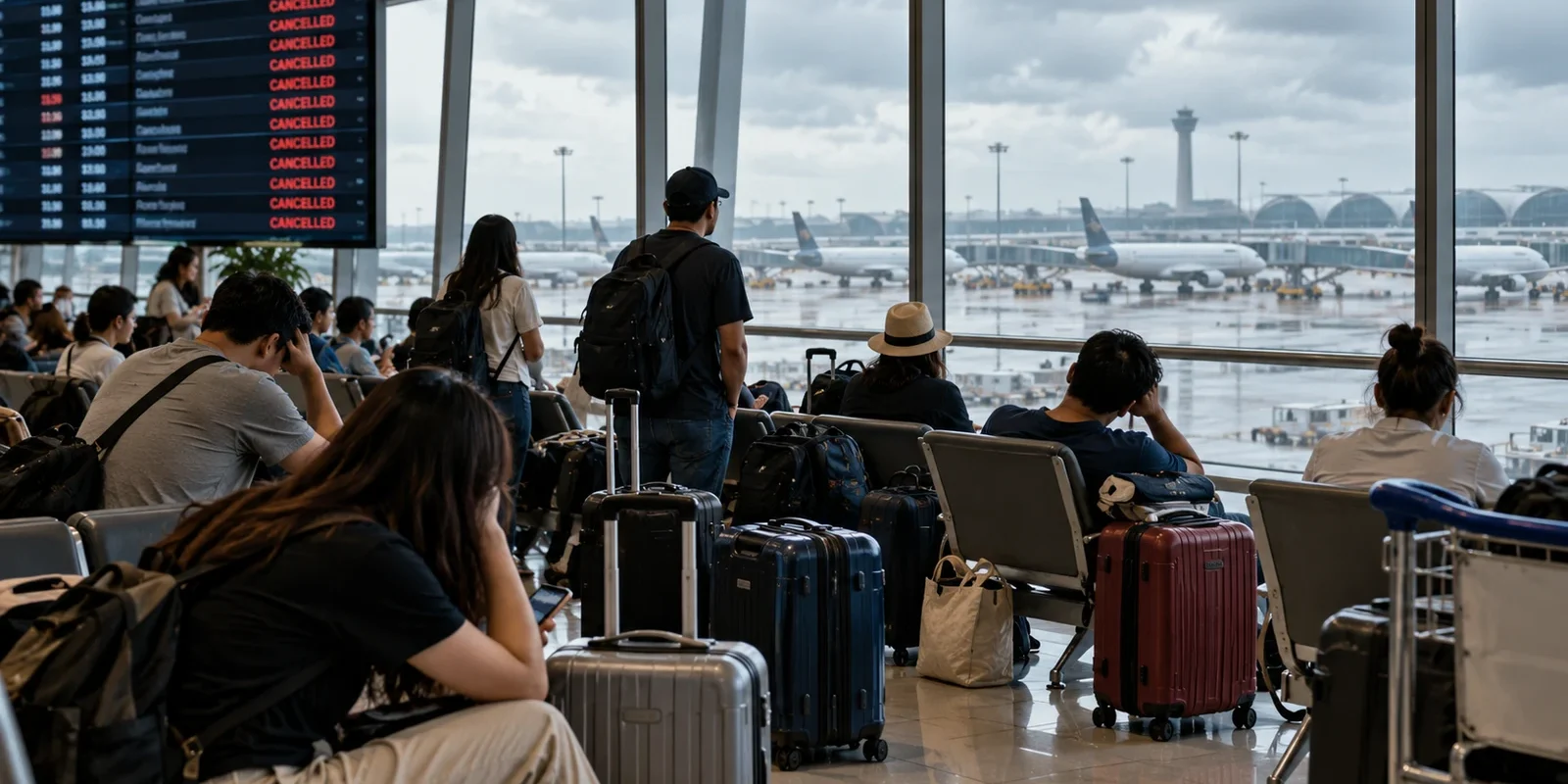
Start with the airline’s own booking channel. Confirm whether your specific flight has been cancelled, delayed or rerouted, rather than relying on an image of a crowded airport. Check the status of every connection on a single itinerary and every flight booked separately. Keep screenshots or email copies of changes, along with ticket numbers, receipts and any written advice from airline staff.
Ask the carrier which alternatives are available. A replacement itinerary may use a different hub, a later departure or a different operator, but do not assume a proposed connection is guaranteed until it is ticketed. If you are comparing a refund with a rebooking, check the conditions carefully: accepting one option may affect the other.
Passenger rights also depend on the flight, operating airline, departure country and applicable law. Thailand’s Civil Aviation Authority explains the country’s passenger-rights framework, including Regulation No. 101, which took effect in May 2025. That modern regulation did not govern the April 2010 event. For a trip involving Europe, applicable European rules may also require separate examination.
Four practical ways to reduce disruption
- Allow a buffer. Avoid connecting separate tickets with only a minimal transfer interval, especially when travelling to a wedding, cruise, examination or other fixed-date event.
- Read the insurance policy. Some plans cover particular disruption causes; others exclude certain events or pay only specified expenses. The wording matters more than the headline.
- Keep essentials accessible. Medication, contact details, chargers and important documents belong in hand luggage that you can reach during an unexpected overnight stay.
- Preserve evidence. Save official notices, booking confirmations and expense receipts before airline webpages or app notifications change.
What the 2010 crisis taught travellers
The biggest lesson is that an international aviation network can stop functioning normally even when the airport beside you looks calm. Natural events can disrupt routes thousands of kilometres away. Rumours may spread faster than operational decisions, so verified airline notices and aviation authority updates should take priority over social media speculation.
For people travelling between Thailand, Sweden, Britain or elsewhere in Europe, contingency planning is usually more useful than trying to predict which airport will close next. Confirm your exact itinerary, know whom to contact and avoid paying for a supposedly guaranteed alternative before checking the booking. The dramatic 2010 ash cloud is history; the principle of preparing for an uncertain travel day remains relevant.