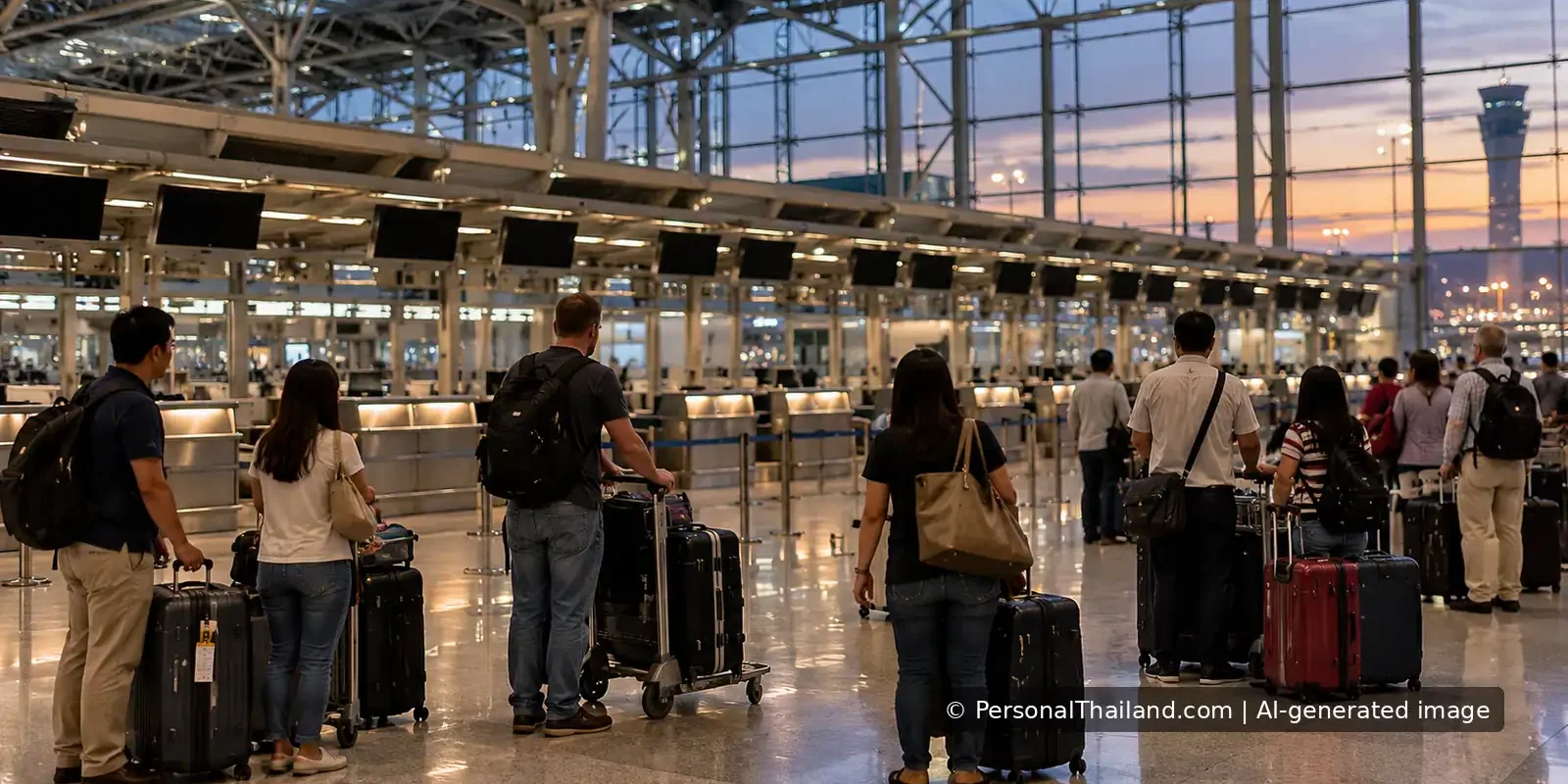
On 25 November 2008, PersonalThailand posted an urgent warning that Bangkok’s main international airport had closed. The author encouraged travellers to contact their airline rather than rush to a terminal with disrupted flights. That was advice for an extraordinary historical event, not a warning about the airport’s status today.
The closure of Suvarnabhumi Airport during anti-government protests became one of Thailand’s most visible travel disruptions of the decade. Looking back is useful because it shows how quickly flight schedules, ground access and onward connections can change—even when the weather is fine and aircraft are available.
What happened at Suvarnabhumi in November 2008?
Protesters associated with the People’s Alliance for Democracy entered and occupied parts of the airport complex. Flight operations were disrupted and travellers could not simply proceed with normal departures. A Reuters archive record dated 26 November 2008 describes anti-government protesters tightening their grip on Bangkok’s international airport and thousands of tourists being stranded.
Contemporary photographs and reports document the impact on passengers. The precise number of affected flights changed as the disruption developed; the old blog’s claim that exactly 700 flights had been cancelled should not be treated as a verified, final count. Similarly, emergency telephone numbers printed in a 2008 post are not reliable contacts for the present.
Why closing an airport creates such a wide problem
An airport does more than let planes take off. It coordinates airside operations, security, passenger screening, ground transport, baggage and airport access. If people cannot reach the terminal, staff cannot operate normally or the security perimeter is compromised, an airline may be unable to keep its advertised timetable.
The effects spread beyond the immediate airport. A connecting passenger may miss a second flight; an aircraft intended for another route may be stranded or repositioned; and hotels and local transport may receive last-minute changes. Travellers in other Thai provinces can also be affected if their connection was supposed to pass through Bangkok.
A practical checklist during a flight disruption
- Confirm the flight’s current status with the operating airline, using its official website or app.
- Check airport updates separately: a terminal notice and an airline cancellation are not always the same thing.
- Keep digital and offline copies of the booking, payment confirmation, passport details and receipts.
- Ask the airline about rebooking, alternative departure points and refund options.
- Do not travel toward a closed or restricted site merely because a map application shows a road.
- If a separate connection is at risk, contact the second carrier or booking agent promptly.
Be careful with unofficial social-media accounts offering last-minute airline assistance. A genuine disruption can attract scammers who ask for unusual payment methods or personal documents. Use contact details obtained independently from the airline’s verified channels.
What passenger rights apply today?
Current Thai passenger-rights measures are not the same as the rules that existed during the 2008 crisis. The Civil Aviation Authority of Thailand states that Regulation No. 101 took effect on 20 May 2025 and covers specified domestic and international scheduled flights. The form of assistance depends on which carrier operates the service, the itinerary and the reason for the disruption.
Extraordinary circumstances can affect whether compensation must be paid, but that does not mean passengers should accept a vague refusal without checking the actual applicable rule. Ask the operating airline to explain the options in writing and keep a record of the response. Review the CAAT guidance for the route involved rather than assuming a single rule applies to every country or ticket.
Hotels, onward journeys and travel insurance
When a flight cannot depart, the cheapest room may not be the best option if roads are restricted or a new departure airport is being considered. Choose accommodation that is accessible and can be cancelled or extended if possible. Preserve receipts for essential purchases, although reimbursement depends on the applicable terms and circumstances.
Insurance deserves attention before a trip, not just after a disruption. Policies differ in whether they cover political unrest, missed connections, cancellation and extra accommodation. Read the precise exclusions and claim procedures; a label such as “comprehensive” does not guarantee every cause is insured.
What the 2008 closure teaches travellers
The airport occupation of November 2008 is a historical episode, not evidence that Bangkok airports are closed today. It demonstrates why official, dated information matters when travel plans suddenly change. Calm decisions, direct airline confirmation, flexible bookings and reliable documentation help far more than recycled telephone numbers or alarming posts without timestamps.
For a future journey through Thailand, make the practical plan in advance: know your airline’s official contact channel, allow sensible connection margins and decide how you would handle an extra night. That preparation is valuable even if the trip proceeds exactly as planned.