This page began as a complaint about how a murder victim’s body was shown to onlookers and photographers on a Phuket beach. Thai funeral customs place great weight on dignity for the dead, and that respect should start at the scene, in the news and on social media, not only at the temple. I would put quiet support for the family ahead of curiosity, whether you are attending a funeral or deciding what to share online.
Updated 31 October 2026: This older page has been rewritten. Historical events and past advice should not be read as current alerts or rules. For our latest updates, follow @PersonalThai on X (Twitter). For decisions involving laws, visas, health or safety, also check the responsible authority.
Respect for victims starts before the funeral
When someone dies in a crime or an accident, the people first on the scene decide how much of that person is exposed. Police, rescue workers and journalists can keep onlookers back, cover the body and keep cameras at a distance. Readers have a part too: an image of a dead person can stay online for years and reach the family before any official call does.
I would not share photographs of a victim, even when they are already circulating, and I would report graphic posts to the platform. If you saw what happened, give your account to the police rather than to social media.
Thai funeral customs: start with the family’s own practice
Thailand has families with different religions, regional traditions and personal preferences. A description of a Buddhist funeral does not cover every funeral in the country. Confirm what kind of ceremony you have been invited to and which part the family would like you to attend.
This page replaces an older judgement about how death was treated. It does not claim that one country’s grieving customs are more respectful than another’s. Respect is better shown through attention to the people affected than through criticism of a ceremony you do not yet understand.
Avoid assuming that a quieter or more conversational atmosphere means people care less. Grief does not have one acceptable outward form. Let the family set the tone rather than measuring it against a funeral you attended elsewhere.
Confirm the place and time
Ask for the temple or venue, the pavilion or room if relevant, and the part of the ceremony open to guests. A funeral may involve several events, and arriving at the right venue on the wrong evening can create confusion. Save the location and a contact before travelling.
If you are accompanying a friend, ask them to explain the basic sequence beforehand. You do not need a complete lesson in religious practice. Knowing when to arrive, where to sit and whom to greet can make the visit calmer for everyone.
Let the host know if accessibility or another practical need affects your attendance. Do so quietly and early where possible. The family may be managing many tasks, so a specific question is easier to answer than a general request to arrange the whole visit for you.
Dress simply and considerately
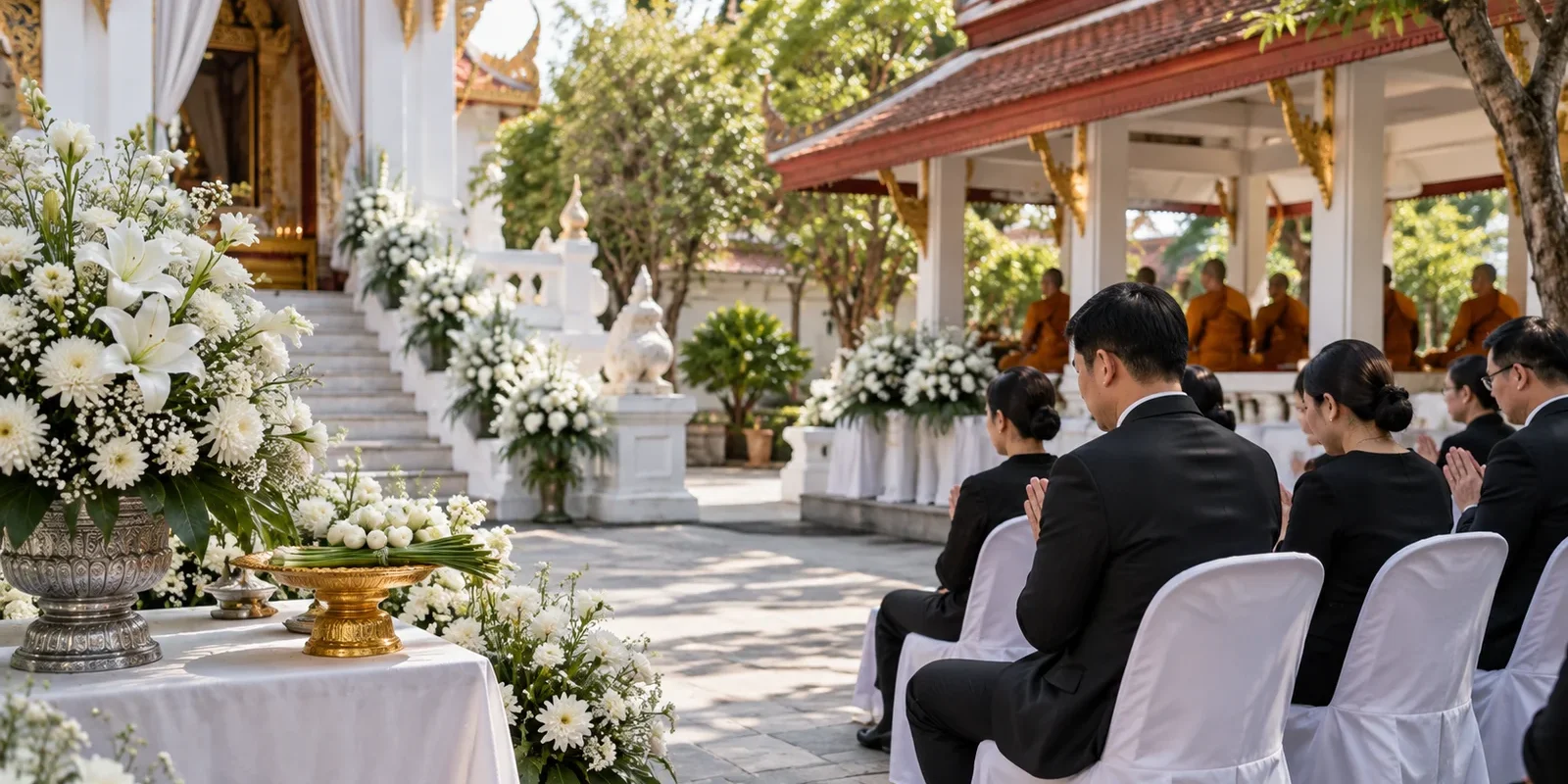
Thailand Foundation’s overview describes black and white, with modest clothing, as common choices for Thai funerals. Follow any specific request from the family. Choose something comfortable enough for the venue and duration without making your appearance the focus of the occasion.
Think about footwear if you may need to remove shoes, and bring what you need for the weather without creating a large amount of luggage to manage. If you are helping with practical tasks, ask whether different clothing would be more suitable.
Do not criticise another guest’s outfit or treat your understanding of etiquette as authority over the family. A person may have arrived directly from work or under difficult circumstances. Your role is to offer support, not inspect other mourners.
Greet the family without demanding their attention
Offer a brief condolence and identify yourself if necessary. The family may appreciate a short personal memory, but they may not have time for a long conversation. Follow their lead and avoid asking for details about the death out of curiosity.
If you do not know what to say, a simple expression of sympathy is enough. You do not need to explain why the death happened or offer a lesson about moving on. Silence can be kinder than an attempt to solve grief with a phrase.
For wider cultural context, see respectful Thai etiquette for visitors. At a funeral, the family’s preferences should remain more important than a generic rule.
Participate only as you are comfortable
At a Buddhist ceremony, a non-Buddhist guest can offer respectful silence without copying every religious gesture. Thailand Foundation explicitly describes this as an acceptable way to attend. Ask a companion if you are unsure when to stand, sit or move with the group.
Do not feel obliged to imitate a ritual you do not understand. Equally, avoid turning a personal decision not to participate into a public explanation of your beliefs. Quiet respect allows people with different convictions to share the occasion.
If a part of the ceremony is private, accept that boundary. Being invited to one event does not automatically include every family gathering afterwards. Ask rather than following simply because other guests are leaving together.
Gifts and contributions are not an entrance fee
Financial contributions may be welcomed, but there is no universal amount and some families decline them. Ask a trusted person familiar with the family if you want guidance. Give within your means and avoid making the amount a public statement.
If considering flowers or a wreath, check what the family and venue accept before ordering. A well-intended gift can become another task if it does not fit the arrangements. Practical help may be more useful when it answers a need the family has actually identified.
Do not attach conditions to a contribution or use it to request access to private details. The purpose is support. A small considerate gesture can be more appropriate than an expensive one that draws attention to the giver.
Protect privacy at the ceremony
Keep your phone quiet and ask before taking any photograph. Do not photograph the deceased, people in distress or private documents simply because other guests have cameras. The family’s permission and the context matter.
Before posting anything online, ask whether the family has announced the death and whether they want the information shared. Some relatives may not yet have been told. A public tribute should not become the way someone unexpectedly learns of a loss.
For an understanding of Thailand’s religious variety, see faith communities in Thailand. Avoid describing one family’s ceremony as the only authentic way to grieve.
FAQ
Must I attend every part of a Thai funeral?
No. Ask which event the family would appreciate you attending and what is open to guests. A considerate visit at the agreed time is better than assuming you must follow every private stage of the arrangements.
What should I say to the family?
A brief, sincere expression of sympathy is enough. If appropriate, share a kind memory without demanding a long conversation. Avoid intrusive questions about the death or advice about how the family should feel.
Is a money gift compulsory?
No universal payment is required by the guidance used here. Families differ, and some decline contributions. Ask discreetly if you want to help and give only what you comfortably choose, without treating it as a fee for attending.
Can I attend if I am not Buddhist?
Yes, when invited. You can show respect through quiet presence without performing religious gestures that do not fit your beliefs. Ask about the specific ceremony and follow the family’s practical guidance.
More from Personal Thailand
If you enjoy practical reporting and personal perspectives on Thailand, you can support my work and explore member-only content through either platform:
- Subscribe to Personal Thailand on X — creator membership with access to applicable subscriber-only posts and benefits.
- Join or support Personal Thailand on Buy Me a Coffee — browse available memberships and support options.
These are separate services with different charges and membership benefits. Paid access may be required; subscribing on one does not automatically grant access on the other. The main information in this article is free to read above.