A PersonalThailand post from March 2008 promoted wholesale roses and wedding flower boxes shipped from growers. Its headline saving and promise of effortless international delivery were sales claims, not a verified comparison with every florist. Flowers can still be a lovely part of life in Thailand, but buying them well starts with clarity about what is being ordered, when it is needed and where the arrangement must arrive.
Start with the event, not a photograph
A bouquet for a birthday is a different purchase from flowers for a wedding reception. For an event, think about the ceremony, guest tables, entrances and any arrangements that need to move between venues. A single inspirational photograph may not show the actual size, materials or number of stems used.
Before requesting quotes, list the arrangements you need and which are optional. If you prefer a natural, loosely arranged look, explain that clearly. If you want identical table settings, discuss whether the supplier can reproduce the design consistently across the whole order.
Ask about the flowers actually available
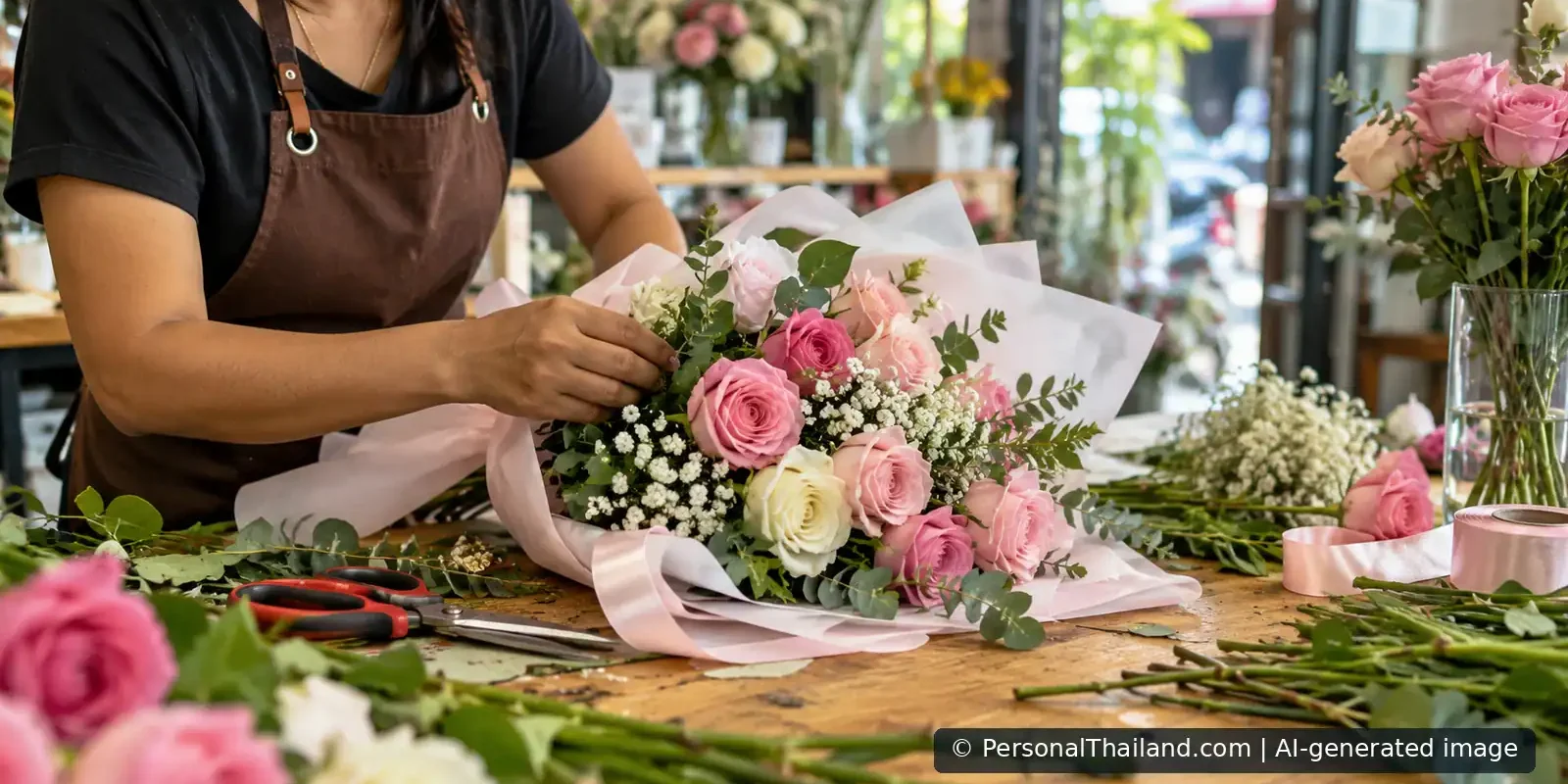
Roses differ in colour, stem length, opening stage, fragrance and how they handle transport. Imported varieties may be offered alongside locally sourced flowers, and availability can vary by season and supplier. A florist should tell you when a requested flower is uncertain and propose a visually comparable alternative with your approval.
Colour names such as ivory, blush or champagne can look different in real light than on a phone. Ask for images of recent arrangements by the same supplier, not just catalogue photographs. For large events, request a sample or a detailed design proposal where the cost justifies it.
Freshness involves more than cutting from the grower
The 2008 advertisement suggested that buying directly from a grower always means fresher flowers and large savings. Neither conclusion follows automatically. Care during harvesting, temperature-controlled transport, hydration, storage and final delivery all matter. A nearby florist who handles stems properly may produce a better result than a shipment that spends too long in transit.
Ask how flowers will be packed, when arrangements will be assembled and who takes responsibility if a delivery is delayed or damaged. A clear written agreement is more valuable than a vague guarantee that everything will be “fresh.”
Compare quotations fairly
One quote may include vases, set-up staff, transport, installation and collection after the event; another may cover only loose stems. Ask suppliers to separate the flower cost from labour, rentals and delivery. This makes it easier to see what is actually being compared.
Also ask whether a deposit is refundable, what happens if the venue changes, whether substitutions are permitted and who approves last-minute changes. Wedding schedules can shift. Make sure the supplier has a reliable contact person on the day.
Planning deliveries in Bangkok, Phuket or elsewhere
Thailand’s heat can affect flowers during outdoor ceremonies and road transport. The venue may have limited access for delivery vehicles or may require arrangements to be set up within a narrow time window. Agree on the time, unloading point and person responsible for accepting the order. For an island venue, ferry or flight logistics can complicate delivery even when the flowers were packed carefully.
Keep a smaller contingency arrangement if a particular decorative element is critical. It is usually better to specify an acceptable range of flowers or colours than to demand an impossible replacement with only a few hours’ notice.
Can flowers be shipped internationally from Thailand?
International shipping is not simply a matter of putting roses in a fast parcel. The destination country may restrict plant material to reduce the risk of insects and plant diseases. Requirements can depend on the type of flower, the exporting country, the purpose of import and the treatment used.
For example, Australia’s agriculture department distinguishes personal-use flowers brought by travellers from commercial imports. Its commercial import guidance covers pre-export inspection, biosecurity measures and phytosanitary documentation. Those are Australian requirements, not a universal rule for every destination.
If ordering flowers for delivery abroad, verify the destination country’s current import conditions and whether the seller actually has the required export and cold-chain arrangements. If it cannot demonstrate compliance, purchasing from a florist close to the final destination may be safer and simpler.
A checklist before paying
- Confirm the supplier’s business identity, recent work and direct contact details.
- Specify flowers, approximate sizes, numbers of arrangements and acceptable substitutes.
- Obtain a complete written quote including delivery, installation and rental items.
- Agree on deadlines, deposit, cancellation conditions and responsibility for damaged goods.
- For cross-border shipments, check plant import and export rules before sending payment.
Flowers should add pleasure to an occasion rather than uncertainty. The practical value of the original 2008 post was the idea of comparing sources and organising deliveries; the modern version of that advice is to choose a transparent florist, check real availability and make the full logistical plan before promising anyone a perfect bouquet.