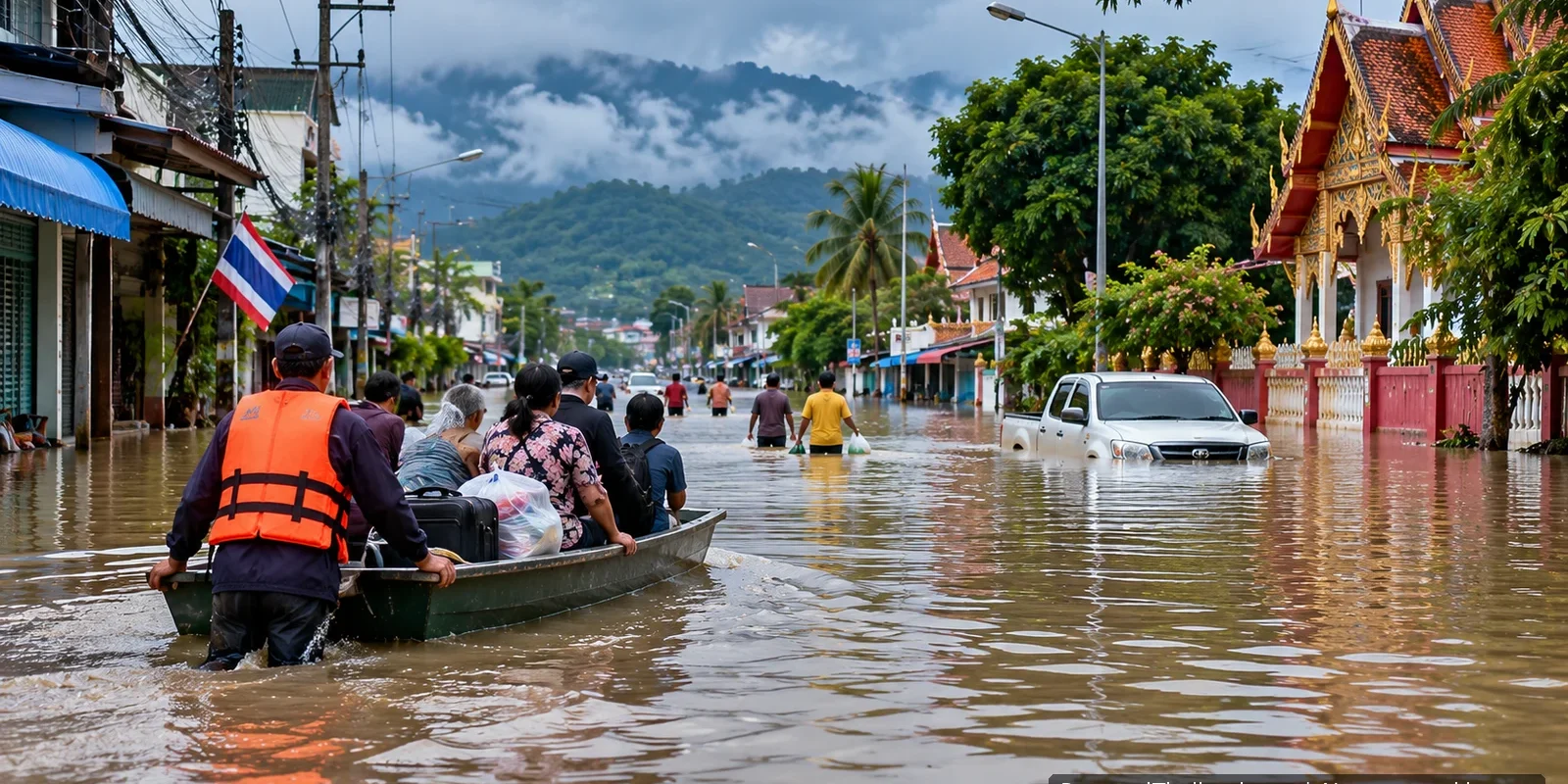
Heavy rain is a familiar part of life in many regions of Thailand, but flooding does not follow a single national timetable. Bangkok streets, northern river valleys and southern coastal provinces can experience very different weather and drainage conditions. For visitors and residents, the important question is not whether a flood is surprising. It is how to recognise danger and make a safe decision.
A PersonalThailand post from September 2009 argued that heavy development and blocked drains contributed to flooding. It correctly raised concerns about submerged hazards, but it also blamed particular groups without evidence and claimed water usually disappeared within an hour. Those are not reliable predictions for an individual street or province in 2026.
Why does water accumulate?
Flooding can follow intense rainfall, rising rivers, coastal tides or failures in local drainage. Paved surfaces make it harder for rain to soak into the ground; blocked drains can worsen local pooling. In some low-lying areas, water cannot flow out quickly when a river or receiving channel is already high.
The reasons vary by location. A short burst of rain on a Bangkok road is different from prolonged flooding caused by upstream runoff. A picture of water around a shopping mall does not show whether rural roads are passable, nor does a dry neighbourhood guarantee that surrounding bridges or access routes are safe.
Start with the official warning
The Thai Meteorological Department’s flood guidance advises following warnings and preparing to move people and important belongings away from rising water. Check forecasts and disaster announcements for the specific province and district, and pay attention to the time of issue.
An August 2026 Thai government update described flash flooding and the work of the Department of Disaster Prevention and Mitigation, or DDPM. It told people in at-risk areas to follow evacuation advice, avoid strong currents and take electrical dangers seriously. That notice illustrates the kind of official warning to look for; it is not an October-wide flood alert.
Do not walk casually through floodwater
Floodwater can conceal uncovered drains, holes, broken paving, debris and unexpectedly deep sections. The surface may seem calm even where flowing water underneath is strong. Contaminants from drainage systems can also create health risks. Avoid entering when you cannot judge the depth or footing.
Children should be kept away from flooded streets and canals. Animals displaced by rising water may seek dry ground, but do not assume every flood brings snakes or that a particular street is safe because none are visible. Focus on the risk you can assess: rising water, hidden obstacles and access to higher ground.
Electrical equipment is an immediate danger
Water around electrical cabinets, damaged wires or appliances requires special caution. Stay clear of fallen power lines and do not touch electrical equipment while wet. If water is entering a building and it is safe to do so from a dry location, follow qualified instructions about isolating the supply. Never reach through floodwater to operate a switch.
Do not attempt to drive a car or motorcycle through water of unknown depth. An engine can stall, a pothole may be hidden and moving water can move vehicles. Even when another driver succeeds, conditions can differ a few metres away or change rapidly.
Prepare before the heavy rain
- Keep essential medicines, a torch, drinking water and a charged power bank available.
- Place passports, insurance details and critical documents in a waterproof pouch.
- Know a route to higher ground that does not depend on one underpass or bridge.
- Ask accommodation staff about flood-prone entrances and the safest evacuation route.
- Check the needs of older travellers, children, pets and anyone with limited mobility.
- Save official emergency and weather information before connectivity becomes unreliable.
In hotels and apartments, ask the building manager about power systems and lifts if water begins to rise. A basement or low-level car park can become unsafe before a street-level entrance looks seriously flooded.
Can you continue your journey?
Separate a general weather forecast from confirmation that a specific road, boat route or airport is operating. Consult the transport operator and local authorities, and consider delaying a journey rather than relying on social-media assurances. An afternoon storm does not establish that a train will be cancelled; a short dry spell does not establish that a mountain road has reopened.
If an evacuation order is issued, follow it promptly. Moving early is generally easier than waiting until your route has become submerged. For non-emergency sightseeing, flexible plans are preferable to testing the depth of unfamiliar streets.
After the water recedes
Watch for slippery surfaces, contaminated mud and unstable electrical equipment. Do not reconnect power or enter a damaged property until the relevant systems have been made safe. Photograph damage where safe for an insurance claim, but avoid interfering with cleanup crews or exposing private information online.
The best response to flooding is neither panic nor the assumption that every puddle will vanish quickly. It is to use timely local warnings, keep out of uncertain water and take electrical and transport hazards seriously.