Last checked: November 5, 2026. Thai rules change often, so always confirm with the official source before you travel or apply.
Dress code Thailand questions usually begin with a very ordinary problem: it is hot, you have just left the beach, and the next stop is a café or an office. A shirt takes very little room in a bag and saves an awkward trip back to the hotel.
What is comfortable by the sea may not be suitable at a temple, an immigration office or a government building. Rules vary by place. There is no reason to pretend that every person in Thailand reacts the same way, or that every clothing choice carries a nationwide fine.
Dress code Thailand: beach and town are different
On a beach, swimwear belongs to the setting. Once you leave the sand for shops, a restaurant or the streets around a resort, put on a shirt and something over your swimwear. That is a practical courtesy to the people serving food, travelling to work and living in the neighbourhood. It applies to visitors of every gender.
A light T-shirt, loose trousers or a simple cover-up can go straight over wet clothes. Carry a small bag for them if you plan to swim again later. You do not need to dress for a business meeting to buy a bottle of water, but beachwear is not an automatic pass into every indoor space.
Restaurants, shopping centres and hotels may have their own entrance rules. If you are unsure, look for a notice or ask staff before sitting down. The person at the door did not make the heat; there is no point arguing with them about it.
Visiting temples
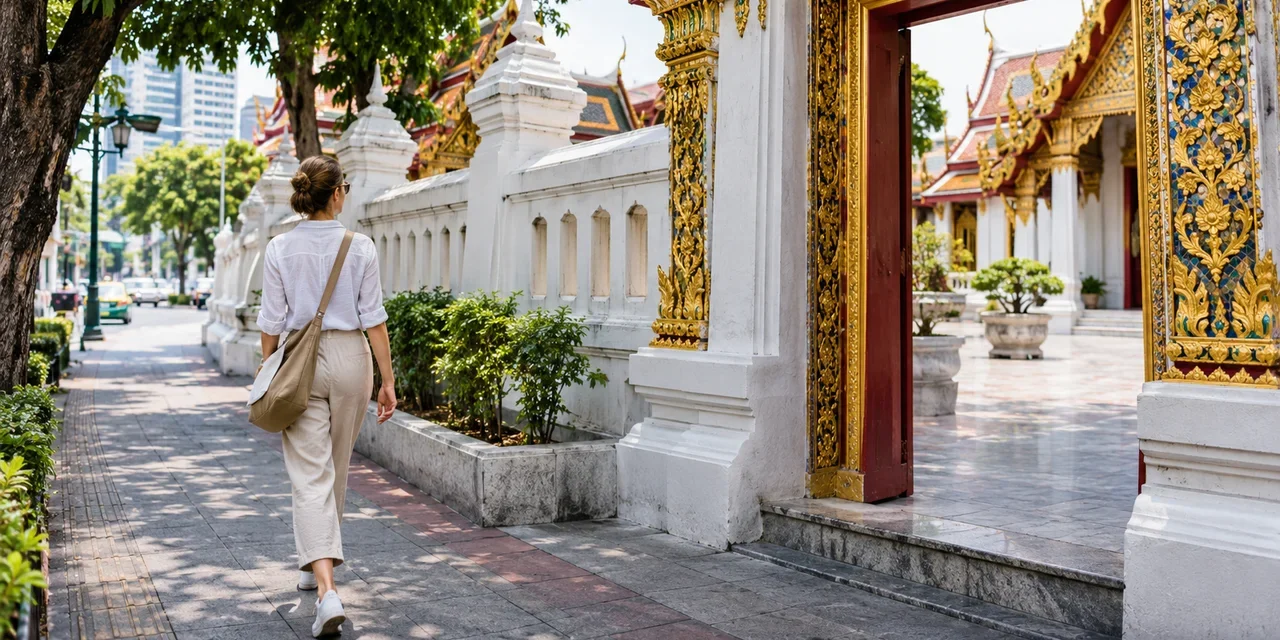
A temple is a place of worship as well as a visitor attraction. A sensible starting point is clothing that covers shoulders and knees, is not transparent and allows you to sit comfortably. Some temples have more specific requirements or provide a cover-up, but do not count on borrowing one.
Look for shoe-removal notices before entering a worship building. The Tourism Authority of Thailand advises visitors to dress politely and remove shoes before entering Buddhist temples. Rules can apply to particular buildings rather than every outdoor path in the grounds, so follow signs and staff on site.
If an outfit is questioned, ask what is needed. A light long-sleeved shirt or trousers in a day bag can solve the problem without turning a short visit into a debate. For a temple that is also part of a palace complex, check both sets of visitor instructions.
Palaces can be stricter
Thailand’s tourism authority advises visitors to royal palaces to wear shirts with sleeves and long trousers, or skirts covering the knees. Its advice also says to avoid items such as sleeveless tops, shorts and flip-flops. Check the particular venue before travelling because its current entrance policy is what matters on the day.
Do not assume a scarf tied around the waist will satisfy every rule, or that a rental counter will be open. If a palace is the first stop of the day, dress for that visit before you leave your accommodation. You can always change later.
Government offices and formal appointments
For immigration, police, a driving-licence appointment or another government visit, I would choose a sleeved shirt, neat long trousers or a modest skirt, and practical shoes. An individual office may state a more specific dress requirement; check the appointment instructions and follow any notice at the building.
The old article suggested your driving licence could depend on what you wear. A venue can set access requirements, but I have not found evidence for a universal national rule that an applicant loses a licence because of a particular casual outfit. Do not confuse being asked to dress appropriately with a published legal penalty.
If your application involves a photograph, also check any separate photo rules. A clothing decision that works for sightseeing might not satisfy an identification photo requirement. Bring what you need for both the appointment and the journey home.
Are there fines for being shirtless?
Some places may have local rules or venue policies, but the sources checked for this guide do not establish a single countrywide fine for going shirtless in every town. Check an actual local regulation and its current wording before repeating a number. A sign asking visitors to cover up is not, by itself, proof that a particular fine applies.
If an officer raises a concern, remain calm and ask what rule applies. You can request clarification or assistance from tourist police if needed. For other practical matters, see getting a Thai driving licence and understanding safety by region.
A small packing trick
Pack for your next stop, not just your first one. A light shirt, loose trousers and shoes that can be removed easily cover many combinations of market, temple and office. A reusable bag keeps them separate from a damp towel. Check the forecast too: a thin cover-up is useful in the sun and in strong indoor air-conditioning.
People have different budgets, bodies and needs. If a rule is difficult for you because of a disability, health condition or religious clothing, contact the venue in advance and ask what accommodation is possible. Courtesy should work both ways.
FAQ
Can I wear swimwear in a Thai town?
Swimwear suits the beach. Cover up when going into town, and follow the individual business’s rules.
Do all temples have the same dress policy?
No. Covering shoulders and knees is a useful starting point, but check the temple’s own signs and instructions.
Is there one nationwide fine for being shirtless?
I have not established a single nationwide fine. Local rules and venue policies should be checked separately.
Should I check a palace dress code before visiting?
Yes. Check the specific palace’s current visitor instructions and dress for that venue before leaving your accommodation.
More from Personal Thailand
If you enjoy practical reporting and personal perspectives on Thailand, you can support my work and explore member-only content through either platform:
- Subscribe to Personal Thailand on X — creator membership with access to applicable subscriber-only posts and benefits.
- Join or support Personal Thailand on Buy Me a Coffee — browse available memberships and support options.
These are separate services with different charges and membership benefits. Paid access may be required; subscribing on one does not automatically grant access on the other. The main information in this article is free to read above.