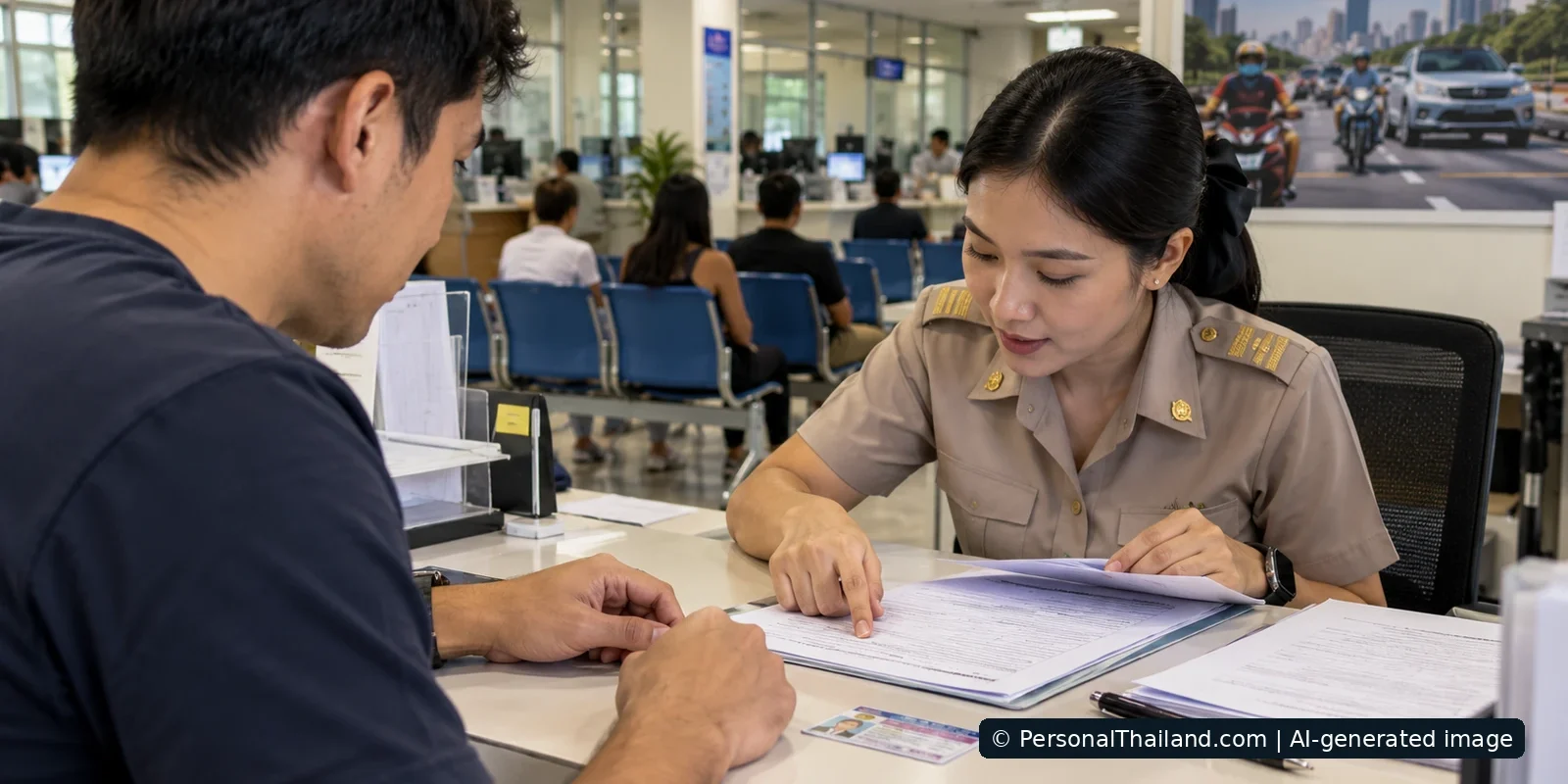
Applying for a driving licence in Thailand is more than a matter of bringing a passport and a photograph to a transport office. The correct route depends on whether you are a visitor, a long-term resident, or someone replacing a qualifying foreign licence. An older version of this article, published in 2008, listed documents and validity periods that should not be used as a modern application checklist.
First decide which licence arrangement applies to you
Visitors and residents do not necessarily follow the same process. Thailand’s official government information distinguishes recognised foreign driving documents from a local temporary-licence application for visitors. It describes certain International Driving Permits under the 1949 Geneva Convention and licences issued by other ASEAN countries as acceptable in the circumstances set out on that page. A licence that can be used at home does not automatically authorise driving in Thailand.
Check the actual licence class as well. Permission to drive a passenger car should not be assumed to cover a motorcycle, van, or commercial vehicle. If you plan to ride a scooter, verify that your documentation explicitly covers motorcycles. The rental shop handing over a key is not evidence that your licence, insurance, or riding arrangement is valid.
Documents: build a checklist for your category
Commonly requested material can include identity documents, evidence of address in Thailand, a medical certificate, and an existing licence if you are applying by conversion. Foreign applicants may need proof of residence in a format accepted by the relevant office. The Thailand Board of Investment’s long-term resident guidance explains how its visa holders may document an address, but that is a particular pathway rather than a universal rule for everyone.
Do not rely on the photograph dimensions, one-year validity claim, or age statements copied from a 2008 blog post. Ask the relevant Department of Land Transport office for the current document requirements, language or translation rules, appointment availability, test arrangements, and accepted medical-certificate validity for your own application type.
What might happen at a transport office?
Depending on the application category, applicants may have to complete physical-fitness checks, a knowledge component, or a driving assessment. Converting a foreign licence and obtaining a first licence are not always identical. Thailand’s government visitor-licence explainer describes a temporary-licence process, but its detailed charges and timing date from its 2023 update and are not a quote for your application in 2026.
Before travelling to an office, confirm whether advance booking is required. Bring both originals and any copies the office specifies. Make sure the names on your passport, visa, residence evidence and existing licence are consistent. If an address or translation is rejected, ask for the precise requirement rather than paying an unofficial intermediary to guess.
Practical mistakes that can cost more than the fee
- Wrong vehicle category: car and motorcycle licensing and insurance must be checked separately.
- Confusing an IDP with a Thai licence: an IDP is linked to the underlying national licence; it is not simply a Thai replacement card.
- Assuming tourism and residence rules match: a short visitor’s permit and a resident’s licensing process may differ.
- Using expired paperwork: check the dates and names on every supporting document.
- Relying on an old online fee: obtain the charge from the issuing authority for the specific service.
Driving safely after you receive the document
Having the correct licence is only the start. Consider the traffic environment, weather, night visibility, and whether you are comfortable with local junctions and lane patterns. Use a properly fitted helmet when riding a motorcycle, drive sober, and do not treat a rental agreement as insurance proof. Confirm the policy’s authorised drivers, vehicle type and exclusions before collecting any vehicle.
If you have recently moved to Thailand, a few supervised lessons with an established driving instructor can be worthwhile even when you already know how to drive. A short period learning local road behaviour is preferable to discovering the differences in busy Bangkok traffic.
Before you apply
Write down your visa or visitor category, nationality, existing licence categories, planned vehicle and Thai address. Use those details when checking the official requirements. Save a copy of the latest instructions and the office appointment confirmation. The aim is to arrive with the right documents for your case—not a generic checklist from nearly two decades ago.