
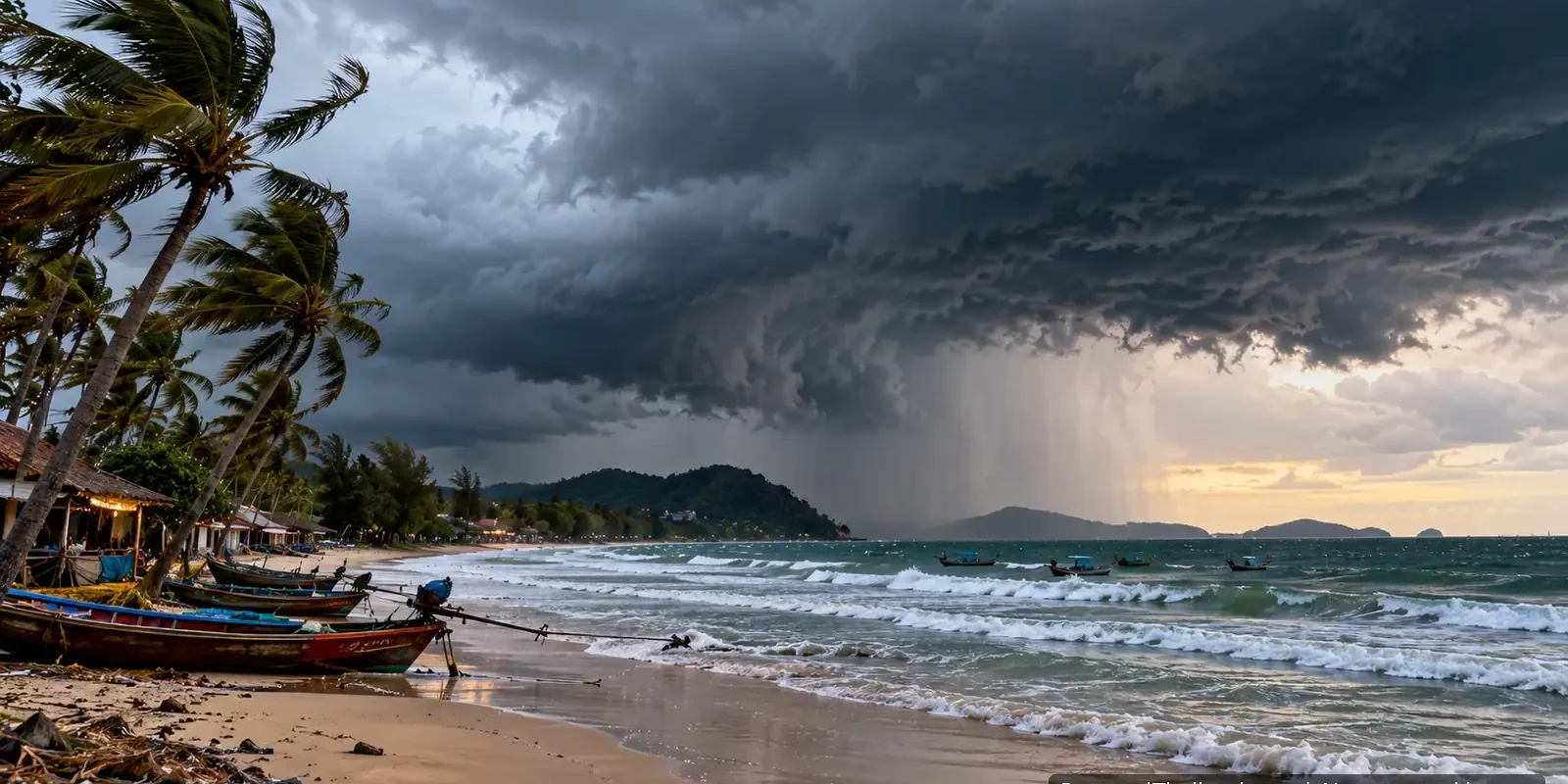
A storm warning in Thailand can affect a holiday, a road journey or an ordinary working day. Heavy rain may flood a small urban road while a nearby district remains relatively dry, and the forecast for an inland province may differ sharply from conditions on the Andaman coast. The most useful habit is to look for the precise place and time named in an official advisory.
The original version of this article warned readers about a storm passing through northern and northeastern Thailand in October 2007. That was a dated weather bulletin, not a live alert. The list of provinces printed in an old post must never be reused to describe conditions today.
Why province-specific warnings matter
Thailand has several distinct weather regions. Northern mountain provinces can experience intense local rain, landslides and runoff, while low-lying areas may have drainage problems after extended rainfall. Northeastern provinces can be affected by storms arriving from different directions. Coastal weather can raise separate marine concerns for boats and island ferries.
A warning for a province is not a prediction that every road in that province will flood. Similarly, the absence of heavy rain outside your window does not prove that an area along your intended route is safe. Check both your starting location and the places you will pass through.
The Thai Meteorological Department lists weather information by province. Its warning section also provides access to official alerts, forecast maps and storm tracking. These are better starting points than screenshots of old news headlines shared without a date.
Read the timestamp before sharing an alert
Weather warnings are revised as conditions change. A bulletin may state when it was issued, the expected impact period and when another update is due. All three details matter. An advisory issued the previous evening may have been replaced by a later message with different affected districts.
Before forwarding a warning, identify the issuing authority, exact publication time and named locations. If the message lacks that information, find the original from the responsible agency before passing it on. A dramatic storm photograph from another country is not proof of a local emergency.
What to do before a road journey
Plan a route that does not depend on a single small bridge, low-lying road or mountain pass when intense rain is forecast. Ask your accommodation or transport operator whether it has received local closure notices. Route apps can display traffic slowdowns, but they are not substitutes for a local road closure order.
- Check the forecast: Review the official daily and seven-day forecast options and any more specific storm advisory.
- Build flexibility: Keep a margin for delays and avoid scheduling a non-refundable connection after a risky road transfer.
- Protect essentials: Store passports, medication and electronics in water-resistant packaging if your route could involve heavy rain.
- Carry power: Charge your phone before departure and bring a safe power bank if needed.
- Know when to stop: If visibility becomes poor or a road is submerged, seek a safe alternative rather than trying to push through.
Flooded roads are difficult to judge
Water depth is hard to assess when a road is covered with muddy runoff. There may be an open drain, damaged pavement, a strong current or electrical equipment hidden below the surface. Do not drive or walk into moving floodwater because another vehicle has already passed through.
Rain can also damage slopes and loosen debris. Near mountain roads, watch for official landslide or road closure notices. A road that appears passable at the bottom may be blocked farther uphill. If local authorities ask you to evacuate, follow their instructions promptly rather than waiting to finish the planned sightseeing.
Island and sea travel need a separate check
Do not assume a sunny morning in Phuket guarantees comfortable conditions for every ferry route. Winds, swell and rain bands can affect water conditions at another location or time of day. Ask the ferry operator about the actual sailing and review the Thai Meteorological Department’s marine forecasts where applicable.
If an operator postpones or cancels a trip for safety reasons, avoid pressuring the crew to sail. Ask what refund, rebooking or alternative transport conditions apply under your purchased ticket. Do not rely on an invented general rule that every passenger is automatically entitled to the same remedy.
Make a simple plan for accommodation
Check whether your guesthouse or hotel has an accessible indoor space away from exposed balconies and loose outdoor furniture. Learn the nearest safe exit and ask staff whom to contact if heavy rain blocks the usual route. If you are travelling with children or anyone with reduced mobility, discuss how to leave quickly if the property faces a specific warning.
After a storm, avoid damaged wires, unstable structures and floodwater. Wait for local clearance before returning to an evacuated site. Do not enter a closed area merely because tourist photographs make it look attractive.
Focus on location, timing and trustworthy updates
Thailand’s changing weather need not derail every trip. Most plans can be adapted sensibly by checking current official notices, keeping a flexible schedule and resisting the urge to travel through a known hazard. A warning for one set of provinces in 2007 says nothing about whether those same places are under a warning today.
For an active warning, always follow the latest Thai Meteorological Department and local authority instructions.





1 Comment