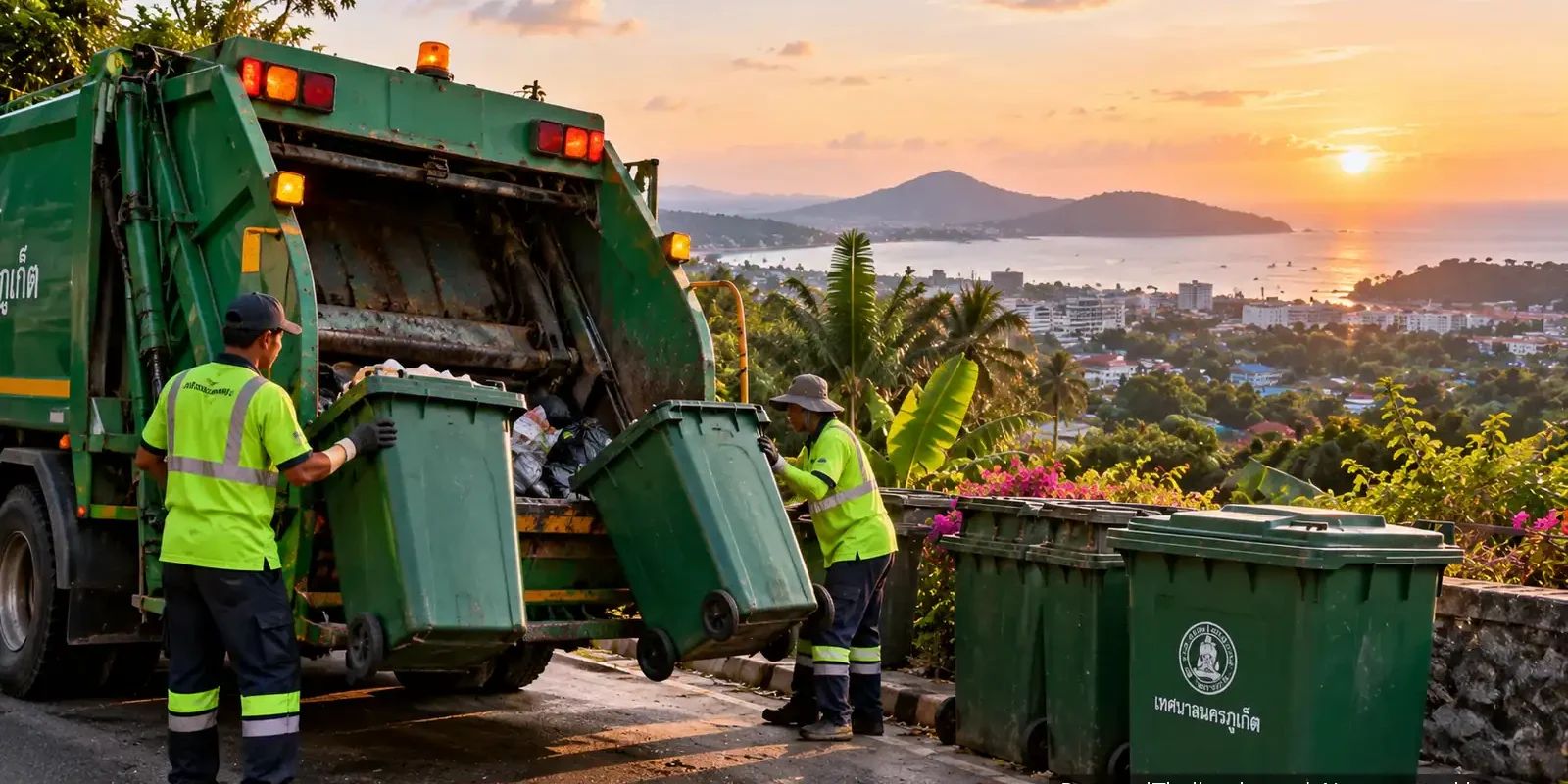
Phuket’s beaches and tourism businesses depend on a waste collection system most visitors never see. Every restaurant meal, construction project, hotel room and household produces material that must be reduced, separated, collected or disposed of somewhere. As the island develops, managing that flow becomes an environmental challenge as well as an everyday public service.
When this article first appeared in October 2007, it celebrated plans to generate energy by burning rubbish and made broad accusations about earlier waste dumping. The precise historic claims in that post have not been independently established here and should not be repeated as fact. Instead, it is more useful to examine the challenges documented in recent reporting and the practical role of waste reduction.
Why waste management is difficult on a tourist island
Popular destinations can generate waste from residents, hotels, shops, restaurants, markets and visitors on the same day. Collection vehicles need routes through congested roads, and treatment facilities must cope with changing volumes during busy travel periods. The issue is not unique to Phuket, but a limited land area makes siting and expanding waste infrastructure especially difficult.
A Reuters report published in January 2025 described a growing landfill and the strain created by tourism and construction. Local officials discussed expanding disposal capacity, reducing waste generation and planning a new incinerator. Those statements are a dated account of the situation in 2025, not proof that a specific plant was completed or is operating in October 2026.
What does a waste incinerator actually do?
Incineration uses controlled high temperatures to treat certain kinds of waste and substantially reduce the volume requiring further disposal. Some plants recover heat to generate energy. A properly managed facility is not the same thing as an open rubbish fire, and the existence of a plant does not automatically resolve every waste problem.
Incineration systems require suitable waste input, controlled operation, emissions management and a plan for residual ash. Some materials should be kept out of mixed municipal waste and handled separately. Operational performance depends on design, maintenance, oversight and actual waste composition.
Where waste-to-energy technology is proposed, useful questions include how much waste it can process, how the plant controls emissions, how residues are transported and which authority is responsible for monitoring. A project announcement is not the same as a verified operating licence or measured environmental performance.
Why recycling and separation still matter
Sorting waste at the source makes many later steps easier. Clean recyclable packaging can be handled differently from food scraps, while hazardous household waste, batteries and electronic waste may need dedicated collection channels. If everything is mixed together, a significant share of otherwise reusable material can become contaminated.
Thailand’s Pollution Control Department publishes public guidance on the 3Rs: reduce, reuse and recycle, together with separation and local waste-management resources. The underlying principle is straightforward: prevent waste where possible, use items longer and sort the remainder according to the collection options actually provided in the area.
Not every bottle or wrapper accepted in one district will be processed the same way in another. Follow the municipality, condominium, hotel or community’s current collection instructions rather than assuming a bin colour has one universal meaning throughout Thailand.
What visitors can do without complicated equipment
- Carry a reusable bottle: Refill from safe drinking-water sources where available, rather than accumulating single-use containers.
- Decline unnecessary packaging: A simple takeaway order may not need multiple bags, straws and plastic cutlery.
- Separate where possible: Use clearly labelled collection points and avoid contaminating dry recyclables with leftover food.
- Handle batteries carefully: Keep small batteries and electronic items out of ordinary mixed waste when special collection is available.
- Respect natural areas: Never leave rubbish on beaches, in mangroves or near canals; take it back to a proper disposal point.
What businesses and accommodation providers can improve
Hotels and restaurants can review food purchasing, leftover management, refillable amenities and collection arrangements. They should know who collects each waste stream and what happens to it after leaving the premises. A claim that waste is “recycled” is more meaningful when supported by an identifiable collection process.
Large properties can also reduce accidental mixing with clearer signs for guests and training for staff. Designated, accessible bins are more effective than simply asking visitors to behave responsibly while providing no suitable place to sort rubbish.
How to judge progress responsibly
Headlines sometimes focus on the newest incinerator, landfill expansion or clean-up campaign. These are only pieces of the picture. Evaluating progress requires evidence about amounts collected, waste avoided, diversion into recycling, pollution control and impacts on nearby communities. Without such measures, it is hard to tell whether a single project has solved an underlying problem.
A Thai government overview of waste-disposal challenges emphasises local-government responsibilities and the problems caused by inadequate capacity and management. It is national context, not a current audited scorecard for Phuket.
A cleaner Phuket takes more than one facility
Incineration may play a role within a broader waste system, but it is not a substitute for reducing needless waste, separating materials, preventing litter and monitoring disposal sites. Phuket’s challenge is to protect the places that attract visitors while supporting the people who live and work there throughout the year.
Specific project status, capacity and local collection rules should be confirmed with current Phuket authorities.