This guide replaces a 2010 PersonalThailand post about an unverified incident involving a pet seller at Bangkok’s Chatuchak market; it is not a warning that a current outbreak is occurring there.
Meeting animals is part of everyday life in Thailand. Dogs sleep under market tables, cats roam between buildings and monkeys attract visitors at several tourist sites. Most encounters are uneventful, but an unexpected bite or scratch needs attention. Rabies is rare among travellers and it is preventable after an exposure when treatment begins promptly. The important response is neither panic nor ignoring a small injury.
Why rabies still matters in Thailand
Rabies is a viral infection transmitted mainly through saliva from infected mammals, typically by bites and sometimes by scratches or saliva reaching broken skin or a mucous membrane. It affects the nervous system. Once symptoms develop, the disease is almost always fatal; before symptoms, effective post-exposure treatment can prevent the illness. The World Health Organization explains why early wound washing, vaccination and sometimes additional immune treatment are essential.
According to the CDC’s Thailand travel guidance, vaccination campaigns have reduced rabies in Thai cats and dogs, but a small risk remains. This distinction matters: a reduced national risk does not mean that a particular animal bite can safely be dismissed.
What to do immediately after a bite or scratch
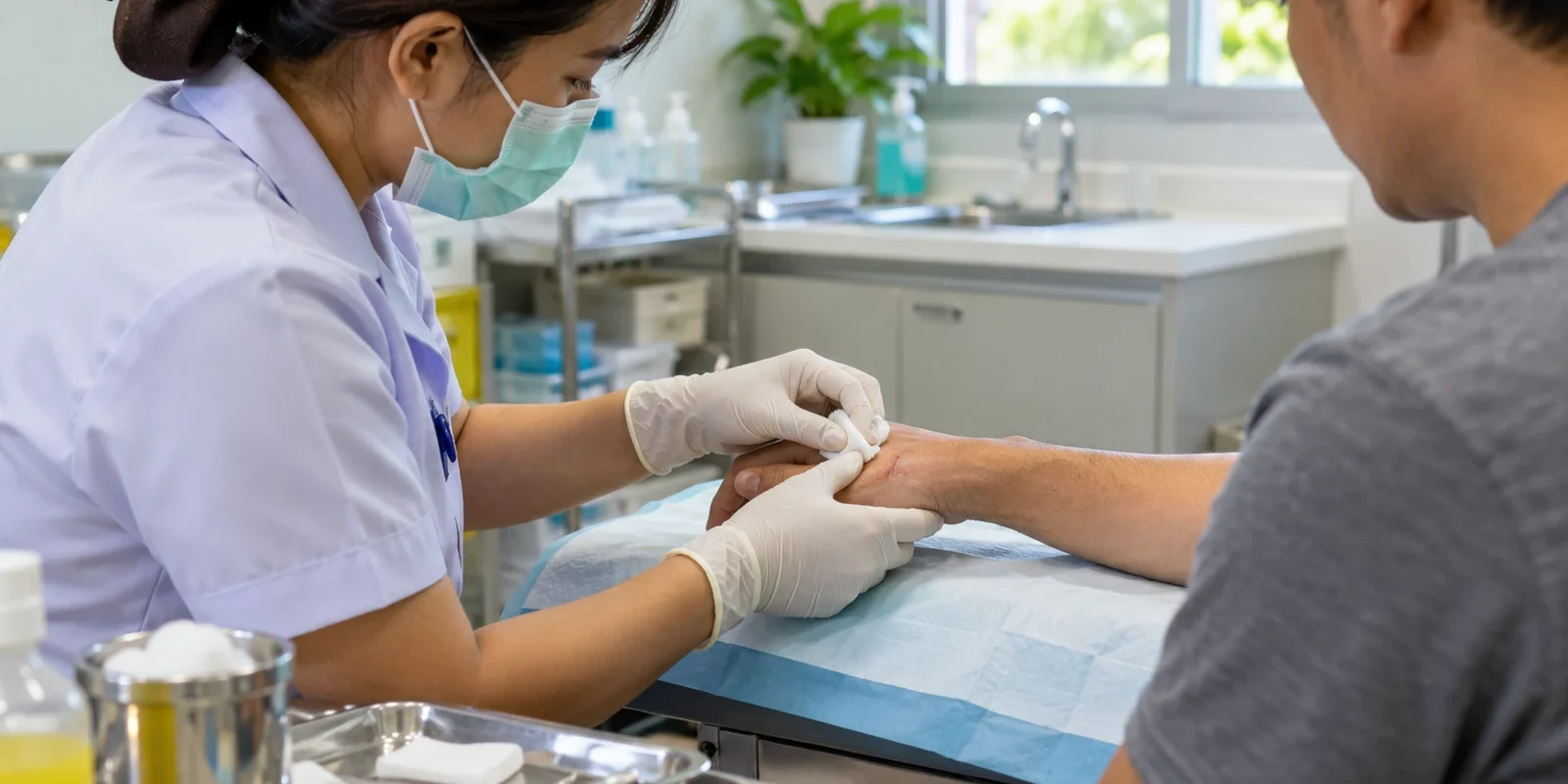
If a dog, cat, monkey or other unfamiliar mammal bites or scratches you, move away from the animal without making the situation worse. Wash the affected area thoroughly under running water with soap as soon as possible. WHO recommends washing for at least 15 minutes. The CDC’s travel guidance advises thorough cleaning and immediate medical assessment. Do not wait for pain, fever or a visible sign of infection before seeking care.
Attend a hospital or appropriate medical facility the same day so a clinician can assess the wound, risk of rabies, tetanus status and any need for antibiotics. Provide a clear account of when and where the encounter happened, whether the animal was known to you, the site of the bite and any previous rabies vaccination. A clinician may recommend a series of rabies vaccines and, for some serious exposures, rabies immunoglobulin or another approved antibody product.
There is no useful home test that lets a traveller decide a suspicious bite was safe. An animal that looks healthy at first may still need assessment by professionals. Equally, touching an animal with intact skin does not automatically count as rabies exposure. The correct decision depends on the details.
What if you were vaccinated before your trip?
Pre-exposure vaccination is worth discussing before travel for people who work with animals, expect repeated animal contact or plan to stay far from medical facilities. It can make post-exposure management simpler. But it does not eliminate the need for medical attention after a possible exposure. The CDC rabies chapter sets out the distinction between prevention before travel and treatment after a bite.
Tell the treating clinician when and where you received past doses, and bring any available vaccination record. Do not assume that a childhood series, an old travel injection or an undocumented course means nothing further is required.
Markets, pet shops and animal welfare
The original February 2010 article concerned a reported seller of dogs at Chatuchak Weekend Market. We cannot independently establish the incident details or identify the individual from a reliable source. It would therefore be irresponsible to present the old allegation as a current public health alert or to suggest that every market animal is infected.
Anyone considering buying or adopting an animal should ask for reliable vaccination and veterinary documents, understand the animal’s origin and arrange independent veterinary care. Avoid handling puppies, kittens or distressed animals simply to pose for photographs. Animal welfare and infection prevention go together: reducing stressful handling also lowers the chance of bites.
Monkeys and other unfamiliar animals
Monkeys may look accustomed to tourists, but familiarity does not make them safe to touch. Keep food out of sight around wild monkeys, avoid prolonged close contact and never encourage children to feed them. Do not try to retrieve a bag or food directly from an aggressive animal. If a monkey scratches or bites you, follow the same basic wound-cleaning and urgent-care principles and mention the species to the doctor.
Do not chase an animal to prove its identity or attempt to catch it yourself. If an incident occurs at a managed venue, tell the staff and follow public health or veterinary instructions. Photos taken safely from a distance, an accurate location and a description may help professionals without creating a second injury.
Practical takeaways for residents and visitors
- Do not touch unfamiliar mammals, including apparently friendly strays.
- Wash possible exposure wounds promptly and seek same-day medical care.
- Discuss pre-exposure vaccination if your activities increase the chance of contact.
- Keep vaccination records but do not rely on them as a substitute for an exposure assessment.
- Verify outbreak claims against health authorities rather than circulating an old market rumour.
Rabies is serious, but the essential message is practical and hopeful: quick first aid and timely clinical treatment are effective prevention. This advice is more useful today than repeating an unverified story from 2010.