
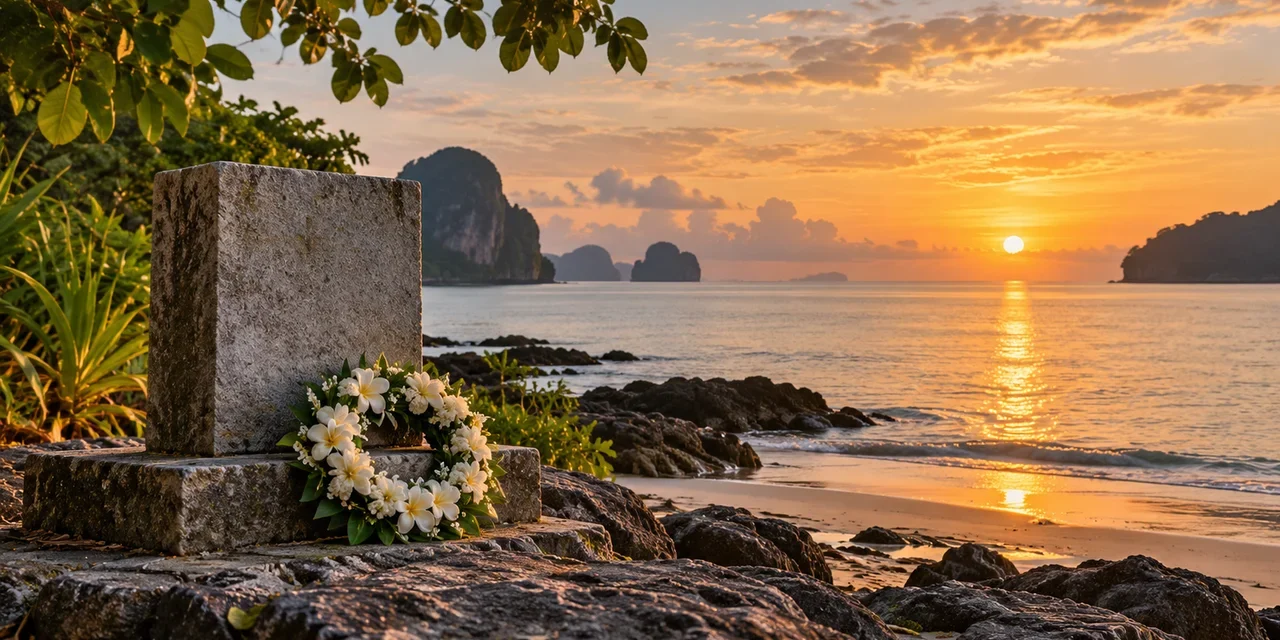
Remembering the 2004 tsunami in Thailand means remembering people, not simply the scale of a disaster. This page began as a five-year anniversary reflection, with concern for friends and an account of helping families obtain information. I want to preserve that human purpose while distinguishing the original recollections from independently documented history and useful advice for visitors today.
The 2004 tsunami in Thailand and the work that followed
On 26 December 2004, the Indian Ocean tsunami devastated communities around the region, including Thailand’s Andaman coast. The public health record describes a major international effort to identify those who died in Thailand. Thai and overseas specialists worked together, with information from families helping the process of matching missing people to formal identification records.
The CDC’s contemporary report explains how dental records, fingerprints and DNA were among the information used. Its figures describe a particular point in the response in 2005, not a final tally for every country or every later identification. I have chosen not to reproduce a casualty total here because a carefully explained account matters more than a large number without its date and scope.
Identification was not simply a matter of finding a photograph that looked familiar. It required reliable information, comparison and review. That distinction remains important when families face uncertainty after a disaster. Sharing private images widely may feel like action, but it is not a substitute for sending relevant information through the appropriate official route.
What the original reflection can tell us
The earlier text described helplessness while watching the news and trying to contact people in Phuket. It also recalled assisting with information and emergency calls. These are the author’s recorded recollections; this update does not independently establish the scale or official status of that work. Nor does it repeat the original allegations about obstruction or an unverified account of deaths inside a particular shop.
A personal memory does not need dramatic detail to convey why an anniversary matters. Waiting for news, not knowing which telephone number to try and worrying about someone far away are experiences readers can understand without being shown suffering. I would rather leave an uncertain detail out than attach it permanently to another person’s life.
The anniversary also belongs to people whose losses were less visible in overseas reporting. Thai residents, migrant workers, visitors and responders were part of the same disaster. Nationality may help explain which consular service assists a family, but it should not determine whose grief receives respect.
Visiting a memorial thoughtfully
Official Thai anniversary coverage identifies Ban Nam Khem Tsunami Memorial Park and Ban Nam Khem Tsunami Museum among the places of remembrance in Phang Nga. The police boat memorial in the Khao Lak area is another established site. Check current access, opening arrangements and any ceremonies locally before setting out; a report about a previous anniversary is not a timetable for this year’s events.
At a memorial, take your cue from the place and the people using it. Keep noise low, avoid obstructing visitors and ask before photographing anyone who may be there to remember a relative. A name on a memorial is not an invitation to search for private details or turn a family’s history into a holiday caption.
You can also choose not to take photographs. Read the information, allow time to reflect and support a local service respectfully if you wish. I would not plan a visit as a quick stop between entertainment bookings when the place calls for more attention than that.
Learn the route before you need it
For a coastal stay in 2026, ask the accommodation where the designated evacuation route leads and how to reach the assembly area on foot. Walk the beginning of the route in daylight if practical. Notice stairs, steep sections and alternative access, especially if anyone in your group has limited mobility.
A sign is useful only if you know where it takes you. Ask whether the route changes after dark, whether gates are normally open and how staff will communicate instructions. Keep shoes and essential items accessible, but do not create a plan that depends on collecting luggage before leaving.
Our guide to understanding travel risks in Thailand takes the same practical approach: identify the situation you are preparing for and the action you would take. You do not need to spend a holiday frightened to spend a few minutes learning the way to safer ground.
Natural warnings and official instructions
Thai official guidance reviewed in 2026 advises people near a beach or shore after a significant earthquake to move to higher ground. It also warns that an unusually rapid rise or retreat of the sea can indicate a tsunami, and that later waves may be larger than the first. Do not go closer to investigate or wait to film something unusual.
Follow local evacuation instructions promptly. Ask your accommodation which official warning channels it uses and how alerts reach guests. Do not assume that receiving no message on your own phone establishes safety. Equally, avoid forwarding an alarming screenshot without checking its event date, location and source.
Remain away from the affected shoreline until the authorities say it is safe to return. The first quiet interval is not a reliable personal all-clear. If you become separated from your group, use the agreed safe meeting arrangement rather than returning into a threatened area to search alone.
Include everyone in the plan
A useful plan accounts for the slowest person in the group, not just the quickest walker. Discuss assistance needs beforehand and ask staff what practical arrangements exist. Keep an offline copy of the accommodation address and a contact outside the immediate area who can receive updates.
Think about communication if electricity or mobile service is interrupted. A small battery pack can help, but a paper note with key contacts is useful too. Our article on preparing for power outages covers everyday preparations that may also make a disrupted journey less confusing.
Do not judge someone for finding a memorial or warning drill upsetting. People bring different histories to the coast. As the woman writing this page, I want preparedness and remembrance to leave room for those feelings rather than making everyone respond in the same way.
Keep remembrance accurate
The old five-year title explains when the original reflection was written; it does not describe the time elapsed today. This 2026 update keeps the event date clear and avoids announcing an anniversary programme that has not been verified. Future details should be checked with the organiser before anyone travels to attend.
FAQ
When did the tsunami strike Thailand?
The Indian Ocean tsunami struck Thailand’s Andaman coast on 26 December 2004. This page’s original five-year reflection belongs to an earlier anniversary.
Why did identification require international cooperation?
People of many nationalities were affected. Specialist records and information from families had to be compared through a formal identification process.
Should I wait for a phone alert if the sea behaves unusually?
Do not approach the water to investigate. Move towards the designated safer area and follow official instructions; a missing phone message is not proof of safety.
Are memorial opening times listed here current?
No opening schedule is asserted. Confirm access and any ceremony directly before visiting, particularly around an anniversary.
More from Personal Thailand
If you enjoy practical reporting and personal perspectives on Thailand, you can support my work and explore member-only content through either platform:
- Subscribe to Personal Thailand on X — creator membership with access to applicable subscriber-only posts and benefits.
- Join or support Personal Thailand on Buy Me a Coffee — browse available memberships and support options.
These are separate services with different charges and membership benefits. Paid access may be required; subscribing on one does not automatically grant access on the other. The main information in this article is free to read above.