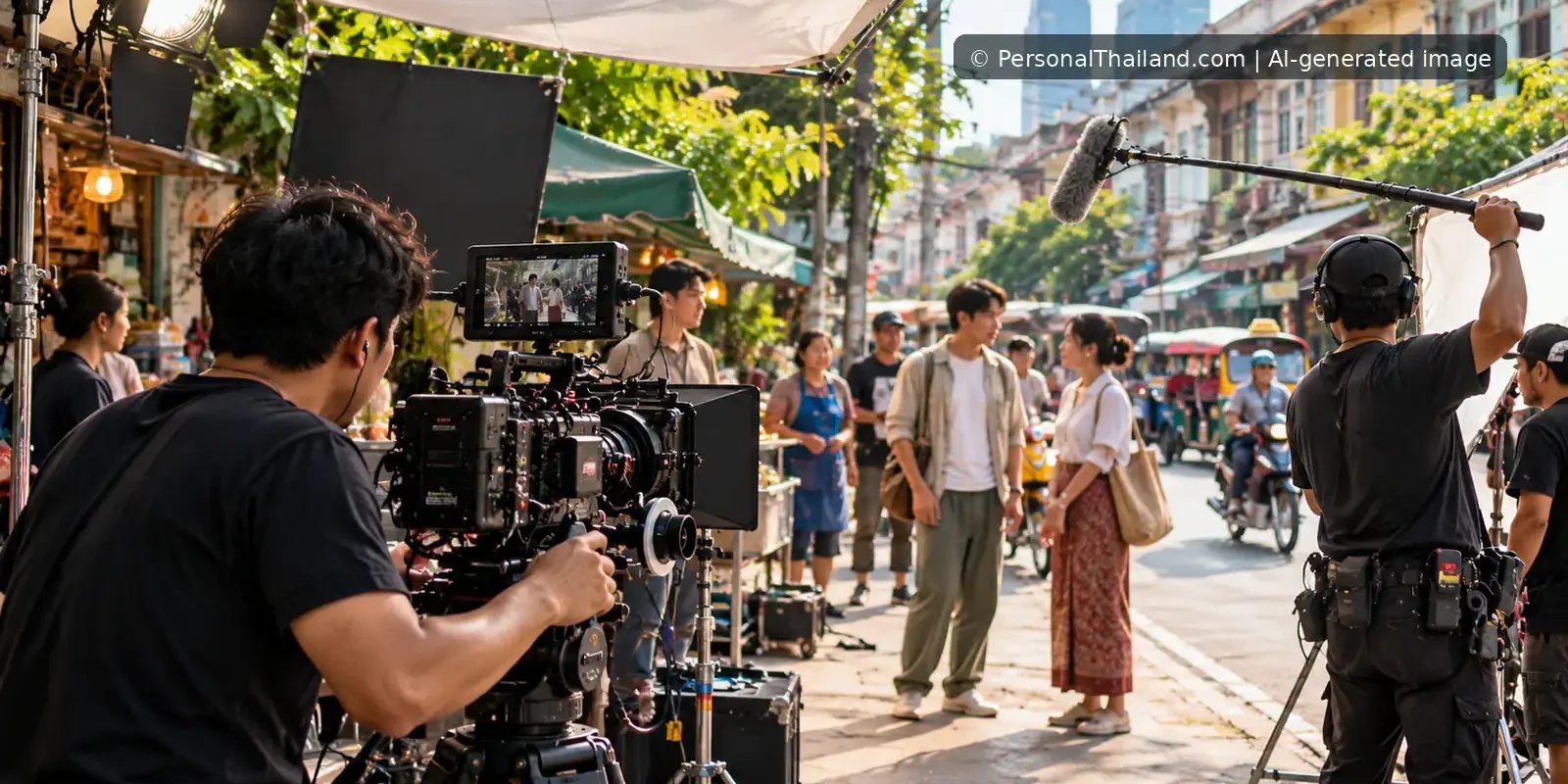
A day on a film set in Thailand sounds glamorous until you discover how much of it involves waiting, changing costumes, carrying your own belongings and coping with the weather. A short appearance in a music video or commercial can be an enjoyable experience, but it is still worth preparing as carefully as you would for any professional commitment.
In July 2007, Personal Thailand shared a first-person account of working on a music-video shoot. The writer described changing clothes without the privacy of a trailer, getting hot in the sun and wishing they had brought a better bag and more comfortable clothing. Those observations are the starting point here; they are not presented as a description of every Thai production or a guarantee of the facilities you will receive.
Know what you are agreeing to before the call time
When someone invites you to appear on camera, ask what kind of production it is, who is organising it and whether it is paid. A background role, a speaking part and promotional modelling are not interchangeable. Find out whether you will be visible in a commercial, television programme, music video or online advertisement, and ask how your image may be used.
Request the call time, estimated finish, precise location and the name of a responsible person on set. If you must travel outside Bangkok or to another province, confirm who pays for transport and whether you will be able to return independently if the shoot finishes later than planned.
What to pack for an outdoor shoot
Bring only what you can comfortably carry and keep under supervision, but do not rely on the production supplying every personal item. A practical bag might contain:
- Water and an easy-to-eat snack, unless the production has confirmed catering that meets your needs.
- Sun protection appropriate to your skin, along with a cap for waiting between takes.
- A lightweight change of clothes and comfortable footwear for off-camera time.
- A small towel, tissues and personal hygiene items.
- A charged phone, power bank and any essential medicines you normally carry.
- Copies of your booking instructions, a contact number and relevant agreement.
A secure bag can be useful if you need to remove a watch, sunglasses or other accessories, but do not leave cash, travel documents or valuables unattended. Some sets have changing areas and secure storage; others have more limited facilities, especially on remote outdoor locations. Ask in advance rather than finding out when the crew is already busy.
Prepare for heat, sun and rain
Much filming time is spent waiting while lighting, sound, cameras and other details are arranged. That waiting can be physically tiring in hot and humid weather. Stay hydrated, take permitted breaks in shade and tell the responsible crew member promptly if you feel dizzy or unwell. Do not assume you can stand in the sun for hours simply because the actual scene lasts only a minute.
Thailand also has periods of heavy rain. Keep personal belongings protected from sudden downpours and wear footwear suitable for the ground conditions. If a scene involves water, stairs, traffic or another hazard, ask how it has been made safe. You should not perform a stunt or hazardous action merely because someone calls it “background work.”
Costumes and privacy
Check whether the production supplies wardrobe or expects you to bring particular outfits. If it asks for multiple looks, pack clothes that are easy to change without relying on a private dressing room. Ask where changing can take place and whether a private area is available. Nobody should have to accept an unexpected costume requirement or exposure without informed agreement.
Keep track of personal jewellery and any items lent by the wardrobe department. Ask which accessories are needed on camera and whether your own clothing could be stained, damaged or altered. If something valuable is required for a scene, clarify who is responsible for it.
Understand payment and image use
Before filming begins, clarify whether payment is a fixed day rate, a per-hour arrangement or another documented amount. Ask whether there is compensation for overtime, late cancellation, travel or fitting days; do not assume any of these will be included automatically. Read paperwork concerning image rights and publicity, and request an explanation of clauses you do not understand.
Be especially careful if an unknown contact asks for an upfront fee to secure your casting position, personal banking credentials or identity documents without a legitimate reason. Verify the production through an independent company contact before sharing sensitive information.
What permits apply to film production in Thailand?
The Thailand Film Office describes how foreign production companies apply for filming permission, including the role of a local coordinator, filming schedules and supporting documents. Its application and guidebook pages explain the formal production-side process. These pages do not mean that every actor or extra has identical requirements, nor do they prove that an individual foreign national may work on a set without separate authorisation.
Where you are not Thai, your own right to undertake paid or unpaid work must be checked for the specific activity and immigration category. Thailand’s Department of Employment e-WorkPermit portal is a starting point for official procedures. Ask the hiring production or a qualified local adviser how your circumstances will be handled before accepting a role. A permit obtained by the film company should not be treated as a blanket personal work exemption.
What a normal day on set may involve
After check-in, you may wait for costume, hair and makeup or scene instructions. Once the camera is ready, the assistant director or another designated crew member may explain where to stand, when to move and what should remain silent during recording. A scene can be repeated for continuity or technical reasons even if nothing seems wrong to an observer.
Be polite to crew and other participants, follow the agreed instructions and ask before taking behind-the-scenes photos. Many productions restrict photographs to protect unreleased content, locations or other participants’ privacy. Do not post a clip from the set simply because you happened to record it on your own phone.
After the shoot
Keep a copy of your agreement and any written confirmation of payment. Return borrowed clothing and equipment through the correct person. If the production has promised a credit or approved portfolio material, ask when and how that can be obtained; not every brief background appearance includes a screen credit.
A film shoot can be memorable, particularly when you see how much planning goes into a short scene. The best lesson from the 2007 personal account still holds: simple preparation—comfortable clothes, sensible belongings, sun protection and clear expectations—can make the experience far more enjoyable.