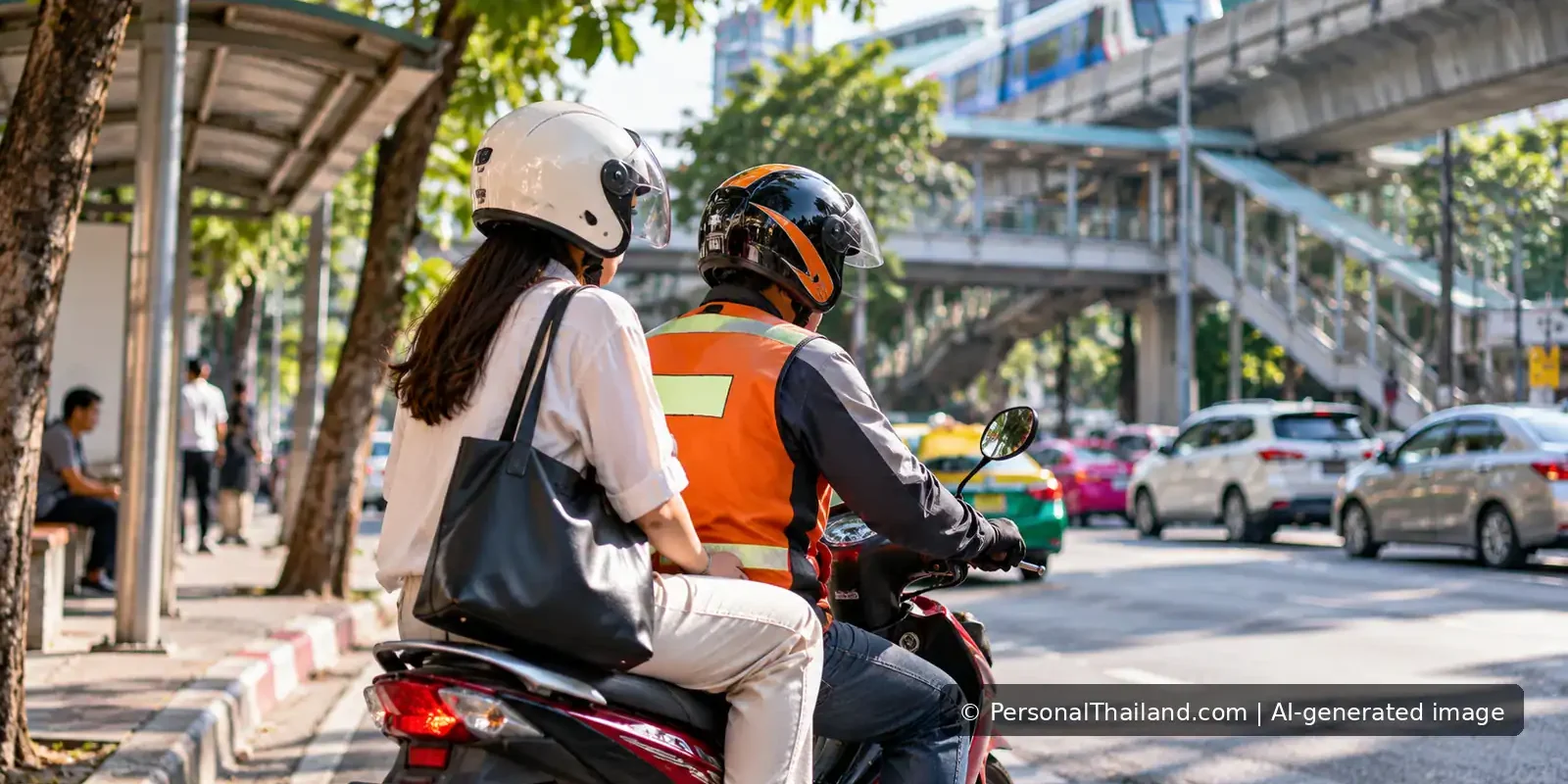
Bangkok motorcycle taxis can make a short journey through congested streets quicker than travelling by car. You may see riders waiting at neighbourhood stands, transporting commuters between major roads, train stations and residential lanes. The convenience is real, but so are the risks of riding in mixed traffic with relatively little physical protection.
A PersonalThailand article published in October 2009 welcomed what it described as a training initiative in Bangkok that gave successful motorcycle taxi riders yellow helmets. The author was pleased that safety was being discussed, while also worrying about motorbike maintenance and rider conduct. That description is a dated anecdote; a yellow helmet should not be interpreted as a current government certificate.
What is the most important safety equipment?
A properly fitting helmet is essential. A World Health Organization summary of Thai law explains that both motorcycle drivers and passengers are generally required to wear helmets, subject to legal exceptions. A helmet must fit and fasten correctly to offer meaningful protection during a fall or collision.
Check the shell and strap for visible damage. A cracked helmet, broken fastening or one that slides easily off the head is not good protection. If a passenger helmet is unavailable or clearly unsuitable, decline the trip and find another option. The distance being short is no guarantee against an accident.
Why passengers need particular care
Passengers may have less opportunity than drivers to anticipate sudden braking, lane changes or uneven road surfaces. A WHO road safety assessment identifies helmet use as a challenge in Thailand, especially among passengers riding behind the driver.
When seated, keep both feet on their designated rests and avoid leaning sharply or moving suddenly. Close-fitting clothing and secured bags can reduce the chance of loose material catching near moving parts. A phone, camera or handbag held loosely in one hand may be difficult to control when the motorcycle accelerates.
Choose the ride, not just the shortest route
- Use a clearly identifiable rider or established motorcycle-taxi stand.
- Confirm your destination and the expected fare before setting off.
- Look for a suitable passenger helmet and a motorcycle in visibly reasonable condition.
- Avoid drivers who appear distracted, exhausted, aggressive or impaired.
- Do not accept a ride carrying more passengers or luggage than can be seated safely.
- If your instincts tell you the journey is unsafe, choose another means of transport.
Rider identification and booking systems vary. A visible number or uniform can help describe a driver if a problem occurs, but it is not proof of a particular training record or a guarantee of safe riding. Keep a booking reference or note the stand location if useful.
What if the driver rides too quickly?
Ask calmly for a slower speed. If the rider continues to weave through narrow gaps, accelerates suddenly or ignores your concerns, request to stop at a safe place. Never grab the handlebars or jump off while the motorcycle is moving. Resolving a complaint after the trip has stopped is safer than arguing amid traffic.
In Bangkok, congested junctions, delivery vehicles and cars turning into side lanes create unpredictable situations. A motorbike may get through a queue more quickly, but the passenger has no control over nearby traffic and cannot judge the next driver’s actions.
Rain can make an ordinary trip risky
Thailand’s tropical showers can arrive quickly. Painted road markings, metal covers and wet surfaces can become slippery, while standing water may conceal potholes. Visibility may deteriorate for everyone, not only the motorcycle rider. Consider waiting for the rain to pass or taking a train, bus or car.
Do not travel through floodwater simply because a motorbike appears smaller than a car. Fast water can displace vehicles, and hidden drains are dangerous. If you must travel during poor weather, focus on an option that keeps you out of exposed traffic and uncertain water.
Children, suitcases and special needs
Carrying a small child, multiple shopping bags or a large suitcase makes a motorbike taxi a poor default choice. A child needs properly sized safety equipment and secure seating; an adult holding a child does not provide the same protection as an appropriate transport arrangement.
People with mobility limitations or conditions that make it difficult to balance should consider accessible or enclosed transport. A few saved minutes are not worth compromising stability or increasing a fall risk. Heavy backpacks can also shift unexpectedly as the motorcycle turns.
Safety does not depend on helmet colour
The original 2009 article raised a useful question about training. Public education and enforcement can encourage safer behaviour, but equipment, actual rider conduct and conditions matter on every journey. A coloured helmet is not proof that a driver is immune to mistakes or that a motorcycle has been inspected.
Bangkok’s motorbike taxis remain a visible part of daily transport. Use them selectively: check the helmet, assess the rider, secure your belongings, communicate clearly and choose another ride when the conditions are unsuitable. Arriving safely matters more than beating the traffic.