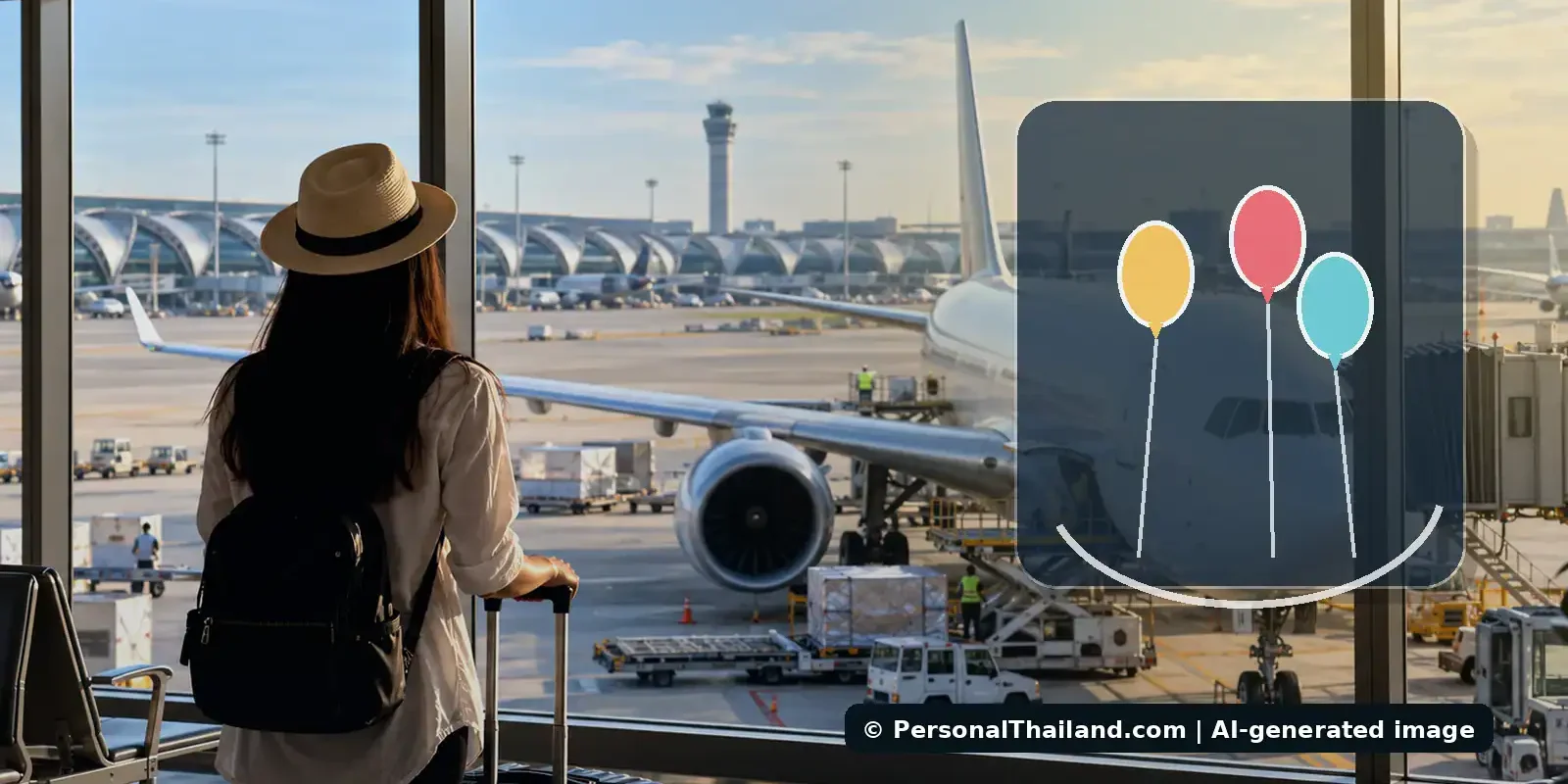
Airports need clear airspace. A balloon released near a runway may look harmless from the ground, but an object that moves unpredictably with the wind is a very different proposition for a pilot preparing to land. The same safety principle applies to sky lanterns, fireworks and other objects that can enter an aircraft’s flight path.
A September 2007 post on PersonalThailand described a proposed balloon-release protest near Bangkok’s Suvarnabhumi Airport. It linked the protest to concerns about aircraft noise and potential delays. That was a report about a historical local dispute, not a live demonstration or a prediction of disruption now. The enduring lesson is why public activity around airport approaches needs particular care.
Why even lightweight objects matter near runways
Flight crews depend on clear visibility and a predictable environment while taking off or landing. Loose objects can distract pilots, create a hazard if they enter operating areas, and require airport personnel to examine or clear a runway. Unlike a tethered display, a free-flying balloon or lantern can drift into an area that nobody at the release site intended it to reach.
The Thai government’s public information service reported an advisory issued by Suvarnabhumi Airport on 30 October 2025. The airport asked nearby organisations and communities to avoid releasing balloons, sky lanterns, fireworks or projecting laser beams into the sky during the festival period. That advisory was for a specific past event, but it clearly illustrates the categories of activities that aviation officials regard as hazardous.
Different objects create different hazards
- Free balloons: Wind determines their path after release, and large groups can be difficult to track.
- Sky lanterns: They may rise and drift for a considerable distance, sometimes carrying a flame.
- Fireworks: Bright flashes, debris and explosive material create additional risks near active flight paths.
- Lasers: Light directed towards an aircraft may interfere with a pilot’s vision.
- Drones: They are aircraft in their own right and are subject to separate rules and operating restrictions.
A Civil Aviation Authority of Thailand aeronautical supplement from November 2025 described how sky lanterns in Chiang Mai and Lamphun could drift to unpredictable heights and locations. That notice concerned northern Thailand, not Suvarnabhumi. It is useful evidence of the aviation hazard, but it must not be mistaken for a current Bangkok flight notice.
Protest rights and aviation safety are separate questions
Residents living beneath airport flight paths may have legitimate concerns about sleep, noise, property and the process for handling complaints. Organising a meeting, collecting evidence and requesting answers from responsible agencies is different from releasing objects into active airspace or blocking access routes.
In the original 2007 account, a potential protest was connected with requests for compensation near the airport. The historical text does not establish that a dangerous release took place or that any particular flight was delayed. Readers should therefore separate the residents’ underlying concerns from the unverified predictions made in the old post.
Before organising an event near an airport
Do not assume that a celebration, wedding, promotional display or protest is exempt from aviation precautions. Ask the appropriate local authorities and airport operators about the proposed activity, location, timing and any permission requirements. Do not infer that a ceremony is safe because another event elsewhere was allowed.
Rules can depend on the airport, district, object and date. An old festival announcement is not a standing authorisation. If organisers cannot confirm whether an activity is permitted near a flight path, they should choose a safer alternative that does not involve releasing airborne objects.
If you are catching a flight
When hearing rumours about a demonstration or balloon release, check the actual status of your airline’s flight and airport’s official passenger advisories. Avoid relying on a social-media photograph that may have been taken years earlier. Allow a sensible travel margin and use a verified airline contact to discuss a missed connection, rather than assuming there will be a delay.
Use the date and airport name when sharing any warning. Bangkok has more than one airport, and a temporary notice issued for Chiang Mai or Phuket should never be copied into a statement about Suvarnabhumi.
The sensible principle
Residents should have channels to raise concerns about airport operations, while flight crews and passengers need safe, obstruction-free airspace. Balloons and sky lanterns are poor tools for resolving that conflict. Check current permissions, choose ground-based alternatives and rely on official aviation information when planning activities or travel.