Editorially updated 17 October 2026. This article has been rewritten and fact-checked; verify changeable local details again before travel.
A simple greeting can be the easiest way to show respect while travelling in Thailand.
What does a Thai wai mean?
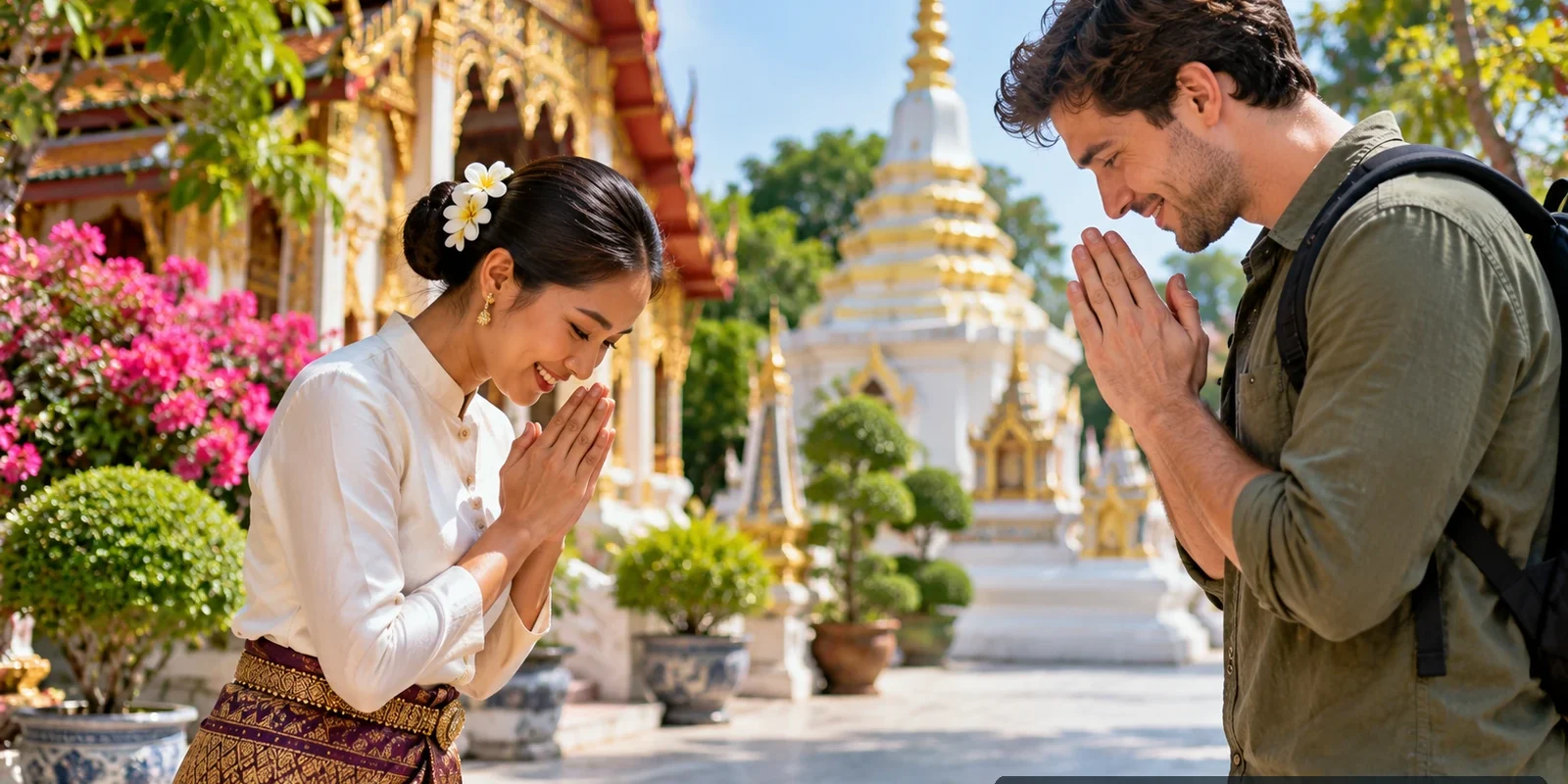
The wai is one of the most recognisable gestures in Thailand. A person brings their palms together in front of the body, often with a small inclination of the head, as a greeting or expression of respect. It is not simply a photo opportunity or a ceremony reserved for temples. You may see it when people meet relatives, thank someone, welcome a guest or acknowledge a teacher. The Thai government formally recognised the wai as an element of national identity in 2024, describing it as both greeting and display of respect. The details vary according to relationship, setting and social context.
How to make a simple wai
For an ordinary polite greeting, place your palms together with fingers pointing upward and hold them around chest level. Bow your head gently rather than turning the gesture into an exaggerated performance. Say sawasdee if you want to add a verbal greeting; the customary polite ending may differ by speaker. The gesture should feel natural and sincere, not theatrical. There are more formal forms of the wai used in certain religious and social settings, but visitors do not need to memorise an elaborate hierarchy for everyday travel.
When should visitors return one?
When someone offers you a wai, returning it with a warm smile is usually appreciated. You may see hotel reception staff, tour hosts and restaurant employees welcome guests with a wai. A smile and verbal thanks can also be perfectly reasonable in busy service situations. Thai social conventions are context-dependent; a visitor does not need to respond with the identical hand height every time. If you are unsure, a modest response is safer than trying to perform a formal ritual you do not understand.
Situations where a wai is not practical
Imagine carrying luggage, holding a hot drink or stepping out of a moving taxi. It is sensible to prioritise safety and acknowledge another person verbally or with a nod rather than dropping everything for a perfect wai. The same is true when your hands are occupied during a business transaction. Do not treat every service exchange as an etiquette test. What matters is a respectful attitude and attention to the other person, not rigid imitation of gestures.
Temple visits and respectful conduct
A temple is more than a tourist attraction. Follow posted dress requirements, remove shoes wherever required, keep your voice low and respect ceremonies or private areas. A wai may be used in religious settings, but visitors should not assume they know every ceremonial variation. If attending a formal activity, observe local participants or follow guidance from a host. Avoid mimicking rites for photographs or interrupting worshippers. A calm, attentive manner generally matters more than perfect technique.
Common mistakes to avoid
An old version of this article suggested that greeting staff with a wai could lower your social standing. That is not advice we recommend and it is not supported by the cited official source. Social hierarchy does influence some traditional etiquette, but dignity and courtesy toward workers should never be treated as a mistake. Other unhelpful habits include mocking the gesture, pressing hands aggressively against another person or assuming everyone must return your wai. Keep it simple, friendly and appropriate.
Learning naturally rather than overthinking
A few days in Thailand can teach you more than a rigid chart of hand positions. Watch how people greet family, colleagues and guests, and notice that a smile or a spoken greeting often accompanies the gesture. Cultural traditions change with age groups and settings, so there is no single formula that covers every encounter. If you make an awkward attempt, a sincere smile usually communicates good intentions. Practise the basics, stay open to correction and remember that respect is shown through your behaviour as well as your hands.
Frequently asked questions
Do I need to wai everyone? No. Use judgment, respond politely and respect local context.
Must I bow deeply? Not for an ordinary tourist greeting. A small inclination is enough.
Is the wai only for saying hello? No. It also communicates thanks and respect in different settings.
Sources and further reading
Editorial disclosure: Featured image is AI-generated and marked © PersonalThailand.com | AI-generated image. Sources were accessed during editorial research, but page availability and current advice must be checked at publication.