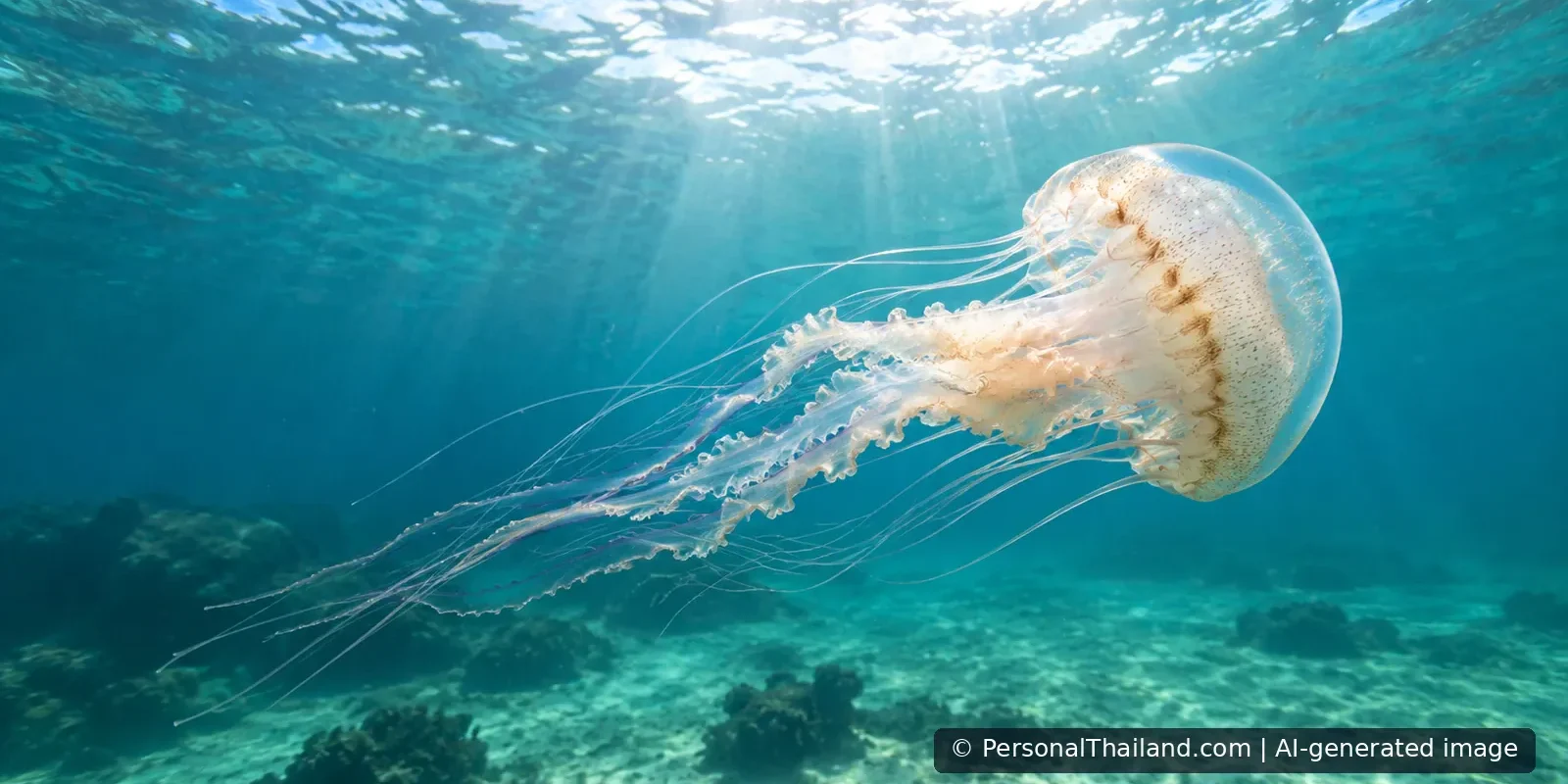
Jellyfish are part of the marine environment around Thailand’s islands, including the Andaman coast near Koh Lanta. Most encounters are not life-threatening, but some stinging marine animals can cause serious illness very quickly. The original 2008 report described the death of a child and speculated about the species and cause. Without reliable case documentation, those details should not be presented as an established diagnosis.
What swimmers around Koh Lanta should understand
Koh Lanta’s beaches can look calm while different hazards remain present. Visibility, tide, currents, weather and the presence of jellyfish all change with local conditions. The CDC’s 2026 Thailand travel guidance specifically tells beachgoers to pay attention to warnings about stinging marine life, including jellyfish. It does not say that every Koh Lanta beach is dangerous or that stings occur on a predictable daily schedule.
Do not assume a jellyfish is harmless because it is small, transparent or similar to one seen elsewhere. Conversely, do not infer that every rash after swimming was caused by a box jellyfish. Several marine animals can produce skin symptoms, and severe reactions require professional assessment.
Before entering the water
- Read warning signs and respect any temporary swimming restrictions.
- Ask lifeguards or knowledgeable local staff about today’s conditions, not last season’s.
- Avoid touching stranded jellyfish or loose tentacles, even when the animal looks dead.
- Keep children close to the shore and within active adult supervision.
- Consider protective swim clothing where stinging marine life is a known concern.
- Know where the nearest help point is before swimming at a remote beach.
Warnings can differ between islands and coasts. Advice for Koh Samui or the Gulf of Thailand should not simply be copied onto Koh Lanta in Krabi province.
Recognising a potentially serious sting
Sudden severe pain, rapidly worsening symptoms, breathing difficulty, collapse, confusion, or chest symptoms after contact with marine life should be treated as an emergency. Remove the person from the water without placing another rescuer at needless risk. Seek emergency medical assistance immediately. If the person is unresponsive and not breathing normally, follow emergency-dispatch instructions for CPR.
A mild-looking skin mark is not always a reliable measure of severity. For a child or a person with widespread symptoms, do not wait at the beach to see whether the reaction will settle.
First aid: why the species matters
The CDC Yellow Book’s marine-sting section explains that treatment choices depend partly on the animal and geographic location. Pouring fresh water over attached stinging cells may trigger further discharge, and folk remedies such as urine or alcohol are not recommended.
Vinegar can inhibit further firing from some Indo-Pacific species but can worsen discharge in others. Where local health authorities have posted a species-specific first-aid protocol, follow that protocol. Do not assume vinegar is the right treatment for every unidentified sting. If tentacles remain attached, avoid rubbing or handling them with bare hands; trained responders may use suitable tools or seawater as directed by the applicable protocol.
Emergency professionals can assess pain, breathing, circulation and whether ongoing observation is needed. This article is not a substitute for an emergency response plan or clinical treatment.
Planning a family beach day
Choose a beach with visible local safety information and a workable plan for contacting help. Keep a charged phone, note your beach name and landmark, and agree where your group will meet. If a warning flag or sign goes up, leave the sea even when other visitors continue swimming. A hotel pool can be a practical alternative on a day when ocean conditions are unclear.
The lesson from an old warning
A story from 2008 can remind us to respect marine hazards, but it cannot establish today’s jellyfish distribution or explain a named victim’s death. The useful, lasting lesson is to check local conditions, respond quickly to serious symptoms, and use modern species-appropriate advice rather than myths about what stings are supposed to be like in Thailand.