Power Outages in Thailand matters because small choices can make everyday travel or life in Thailand easier, safer and more predictable. The original PersonalThailand post described a particular experience many years ago; this updated guide replaces obsolete assumptions with practical steps and source-based advice.
Updated: October 2026.
Why a blackout feels different in a new country
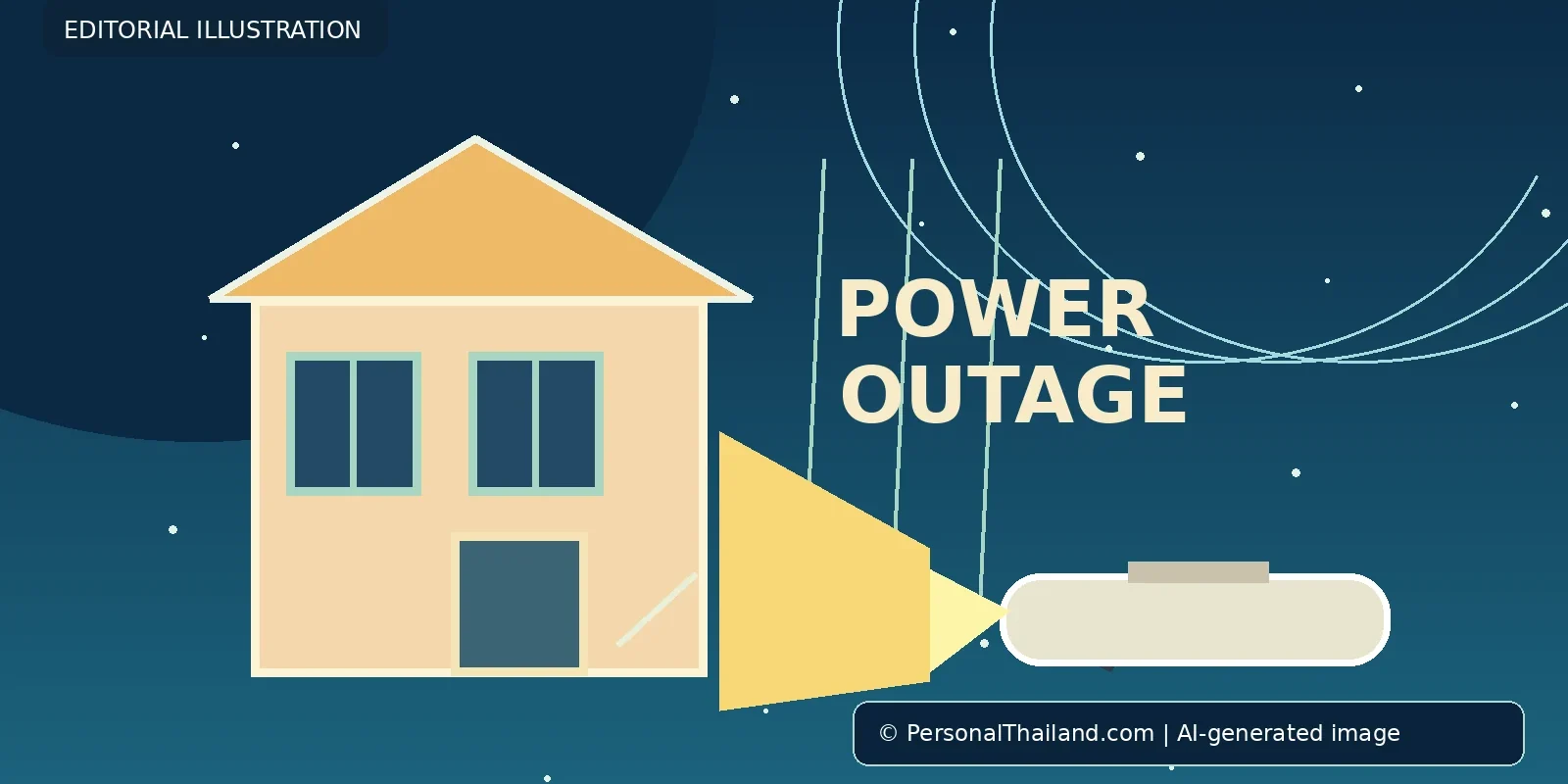
The first time the electricity fails in an unfamiliar house, the most difficult part may be not knowing whether the problem affects one room, your building or an entire neighbourhood. The original version of this article described a loud electrical failure during a rainy night in Bangkok in 2006. That is a personal experience, not a description of how Thailand’s power network works today. A sensible modern guide starts with preparation, safe observation and the correct electricity provider.
Brief interruptions can also happen during maintenance or after severe weather. That does not mean all districts have equally frequent outages, and it is not possible to predict repair time from a decades-old story. Stay away from damaged cables, cabinets and any electrical equipment surrounded by water.
Prepare an emergency kit before the lights go out
Keep a working torch, spare batteries or a charged rechargeable lamp in a place everyone can find. A small power bank can keep a telephone functioning, while a battery-powered fan may improve comfort during a warm night. Store drinking water, basic medicines and an emergency contact list in an accessible location. If a family member relies on electrical medical equipment, arrange a specific backup plan with the equipment provider and a clinician rather than depending on a consumer power bank.
Make a short household inventory of equipment that is sensitive to interrupted power. A surge protector is not the same thing as an uninterrupted power supply (UPS); the latter is designed to give compatible equipment a limited run time, depending on its load and battery. Neither protects against every electrical fault.
Check the immediate situation without taking risks
Look through the window to see whether nearby buildings and streetlights still have electricity. Check your own distribution board only if the area is dry, well lit and you know how to use it safely. If a breaker has tripped repeatedly, if there is a burning smell or if you hear arcing, do not keep resetting it. Call a qualified electrician or the building manager.
Never open a street transformer, communal utility cabinet or locked meter enclosure. The original story suggested that a neighbour kept a key for a common power box; visitors should not treat that as a safe or standard repair procedure. During flooding, keep well clear of submerged appliances and outlets.
Know whether MEA or PEA serves your address
The Metropolitan Electricity Authority (MEA) serves Bangkok, Nonthaburi and Samut Prakan and publishes the 24-hour contact centre number 1130. For many other areas of Thailand, the Provincial Electricity Authority (PEA) operates a 24-hour contact centre at 1129. Check the provider named on your electricity bill, because the correct channel depends on the actual property.
When reporting a failure, provide a precise address, nearest landmark, contact number, the time the interruption began and whether you have seen damaged equipment. Official websites and applications are preferable to unofficial phone numbers circulating in old travel blogs.
Protect food, phones and work during the interruption
Avoid repeatedly opening your refrigerator or freezer. The safety of refrigerated food depends on temperature and outage duration, not merely whether the power has returned. If food has become warm or you are uncertain it was stored safely, seek current food-safety guidance rather than relying on appearance or smell alone.
Switch off or unplug devices that could be damaged when electricity returns, especially equipment that was operating unsupervised. Keep one safe light ready; candles create an avoidable fire hazard, particularly around children and pets. Use torches rather than improvised flames whenever possible.
What to do when the power comes back
Wait until lighting is stable before switching on power-hungry appliances one by one. Check that fans, air conditioners and refrigerators are operating normally, and inspect any equipment that was exposed to leaks or rain. If an outlet or appliance is wet, leave it unused and have it inspected.
A surge, repeated tripping breaker or damaged wiring deserves professional attention even if the rest of the street has power. Photograph visible damage from a safe location, keep receipts for repairs and ask your insurer what documentation may be required. Do not assume every household policy covers electrical faults.
If you rent a condominium or house
Ask the manager how maintenance notices are distributed and whether the building has emergency lighting, lift procedures or a generator. A private generator may supply only selected systems; it is not proof that all apartments will have uninterrupted power. In a high-rise, know how to use stairs safely and do not try to force a lift door open.
If a blackout is limited to your unit, make contact with the building first. If the surrounding area is affected, use the utility provider’s official communication channels. Save the numbers while your internet connection is working.
Quick blackout checklist
Before an outage: charge a power bank, prepare water and a torch, and note the provider on your bill. During an outage: check conditions safely, avoid wet electrical systems, report a wider failure and conserve phone battery. Afterwards: restore devices gradually and have suspicious equipment checked.
This guide is general preparation advice, not an explanation of a live outage. For current service interruptions, follow the relevant electricity authority and local emergency services. The best time to prepare is before the next rainy evening.
Official sources and further information
Check these official organisations for current information. Rules and contact procedures may change after this October 2026 update: