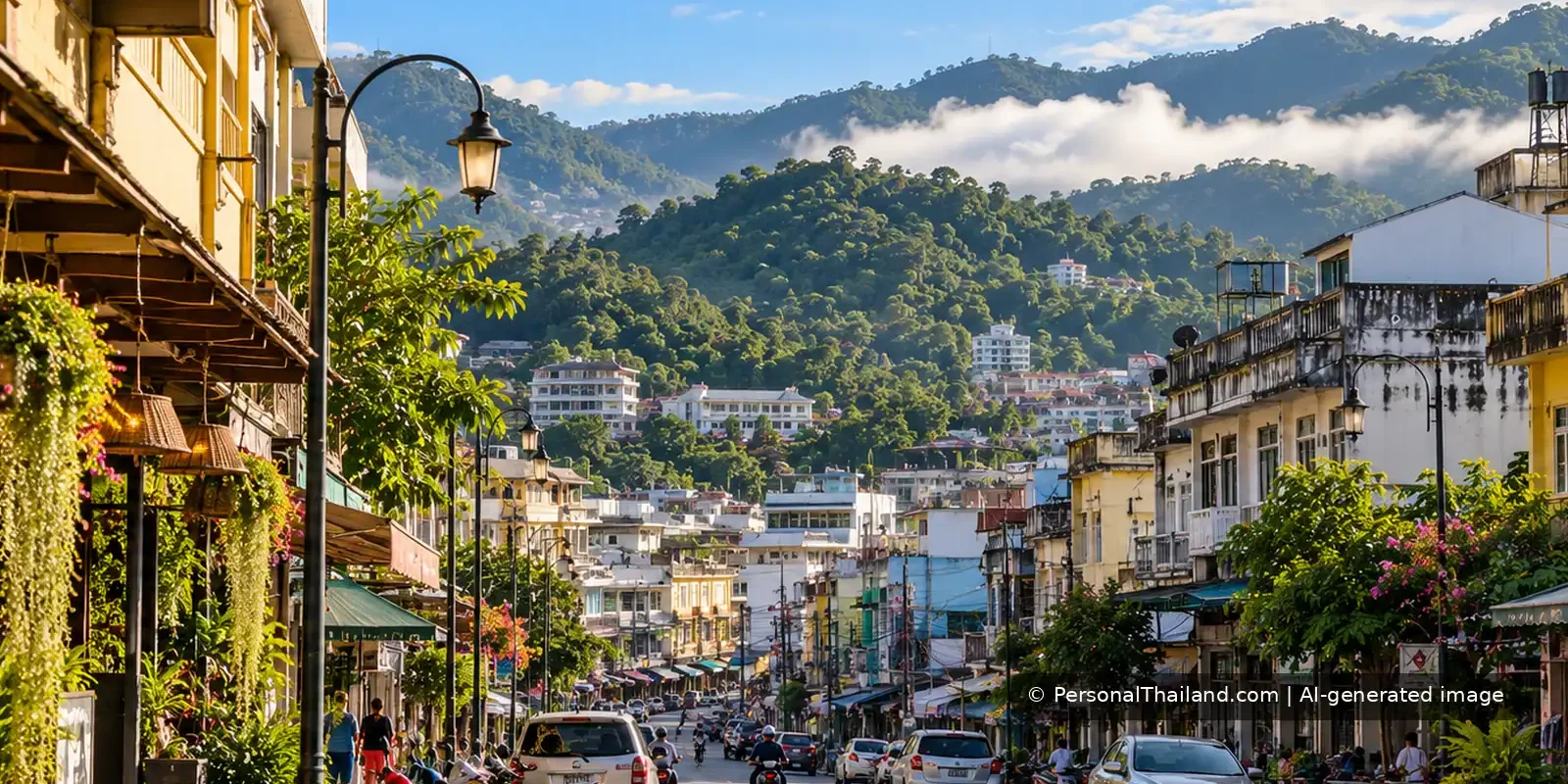
Yala is a province in Thailand’s far south, bordering Malaysia and offering a different picture of the country from the beaches and islands often featured in holiday brochures. Its landscapes, food and cultural traditions deserve attention, but so does the region’s security situation. A useful guide needs to explain both.
Where is Yala?
Yala lies in southern Thailand and has no coastline. Unlike nearby coastal provinces, its attractions are towns, hills, reservoirs, forests and local communities rather than beach resorts. The provincial capital, also called Yala, is a regional centre; Betong is a separate town farther south, known for its highland setting and cross-border connections.
It helps to distinguish the province from the city. An address in Yala province may mean an urban stop in the provincial capital, a visit to Betong or a more remote area. These are not interchangeable trips, and their road routes and local conditions differ.
What makes Yala culturally distinctive?
Thai Buddhist, Muslim and Chinese Thai communities have contributed to the region’s food, languages, places of worship and neighbourhoods. There is no single way to describe every Yala resident. Visitors should approach the province as a living community rather than as an exotic collection of traditions.
Food can be an accessible introduction. The Tourism Authority of Thailand’s Yala guide describes southern Thai, Chinese and Muslim food influences, along with regional specialities in Betong. Ask local hosts about ingredients and dietary requirements rather than assuming that every restaurant serves the same dishes.
When visiting religious or community spaces, dress appropriately, ask before photographing people and respect prayer times. Cultural variety is a reason to listen and learn, not to make assumptions about a stranger’s language, nationality or beliefs.
Betong, hills and forest landscapes
The Yala guide from Thailand’s tourism authority highlights places including Ay Yer Weng Sea of Mist, Bang Lang Dam and the wider Bang Lang area. Betong also has hot-spring attractions and a food culture shaped by its local communities. Conditions at viewpoints, parks or forest routes can change with weather, maintenance and security measures.
Ay Yer Weng’s misty hill scenery is an example of why visitors associate the far south with cool-looking mountain mornings rather than only coastal landscapes. But photographs are not proof that a viewpoint is open or accessible on a particular day. Confirm site access, local transport and whether a qualified guide is needed before planning a journey.
Dense forest and reservoirs require ordinary outdoor precautions: carry water, plan daylight travel, wear suitable footwear and keep weather changes in mind. Do not enter closed or restricted areas to reach a photo location.
Important: review the current security advice
Yala must not be recommended as an uncomplicated holiday destination. The UK Foreign, Commonwealth & Development Office advises against all but essential travel to Yala province, alongside specific other areas in Thailand’s far south, because of recurring attacks. Advice from other countries may differ, and the situation can change.
Before making any travel decision, consult the travel advisory issued by your own government, read local official notices and consider the consequences for travel insurance. A destination can have significant cultural interest while still carrying serious security risks. Describing its attractions is not a recommendation to ignore those risks.
If travel is essential, coordinate with trustworthy local contacts, check the exact route and destination rather than only the province name, and allow for checkpoints or changes to access. Follow local authorities’ directions. Do not assume that a route seen in an old blog post, or a map distance, proves that the road is suitable today.
How to research a visit responsibly
- Start with the advisory: check the latest government security guidance for Yala and neighbouring districts.
- Identify the exact destination: Yala city, Betong and remote forest locations require separate planning.
- Check current access: ask official tourism contacts about opening conditions, permits and local restrictions.
- Be considerate: respect cultural spaces, personal privacy and community customs.
- Keep plans flexible: weather, transport and security arrangements may change at short notice.
A more useful way to understand Yala
Older travel descriptions often reduced Yala to population percentages, annual festivals or a handful of tourist stops. Those details may have changed, and statistics without a reliable date can mislead. The enduring story is that Yala is a landlocked border province with cultural diversity, striking inland landscapes and practical travel considerations that deserve careful attention.
If you are researching Thailand’s south, use the province’s official tourism description for cultural and geographic context, and treat up-to-date security advice as a separate, essential decision-making source. Both perspectives matter.