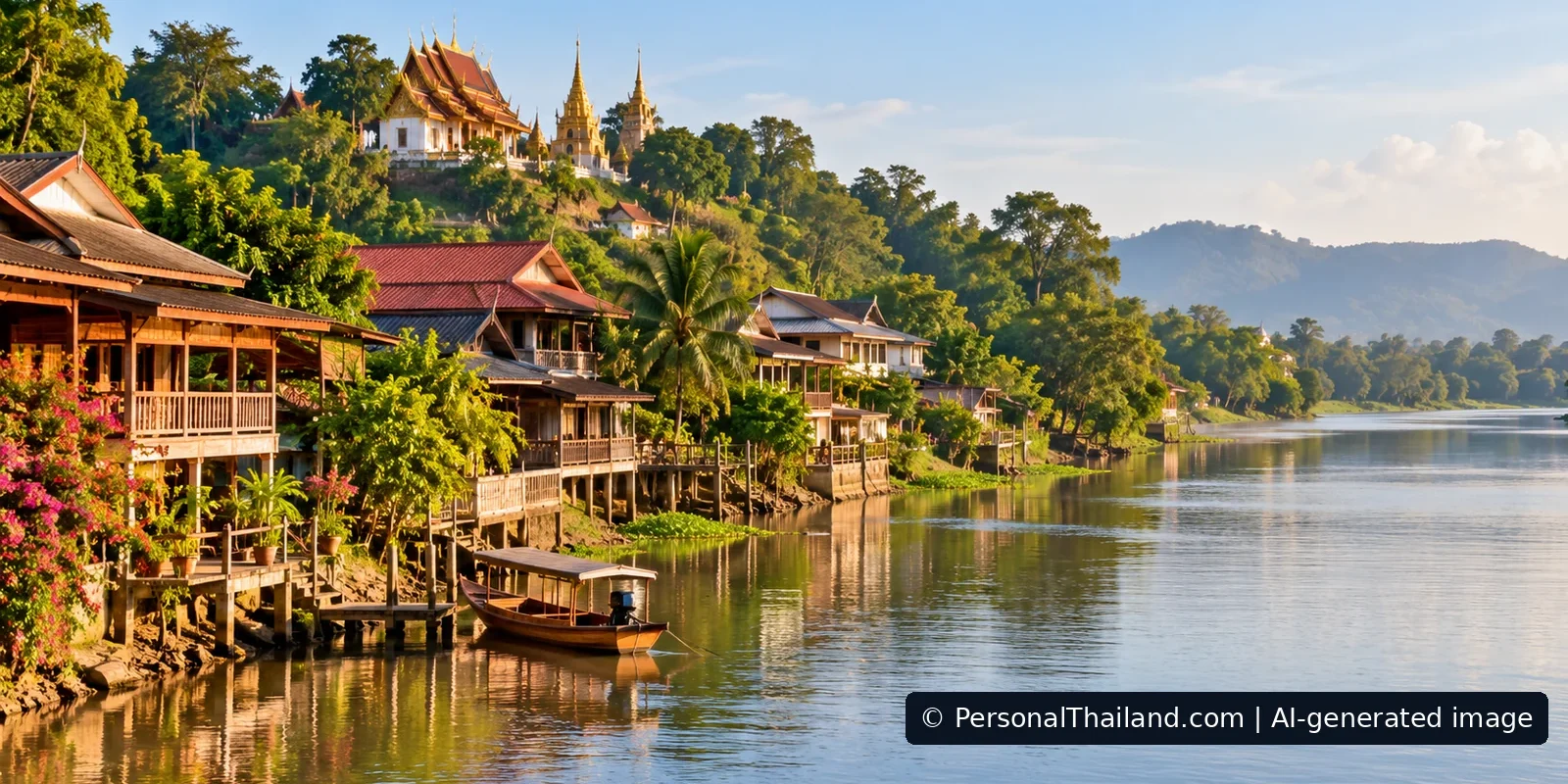
Uthai Thani is an appealing stop for travellers who want to see a quieter side of central Thailand. Rather than racing north on the main highway, spend time around the Sakae Krang River, traditional neighbourhoods and striking temples. The province also offers forest landscapes, but those require a different kind of planning from a casual city walk. An overnight visit is a sensible way to enjoy the town without reducing it to a quick photo stop.
The Sakae Krang River and the old town
The river is central to the character of Uthai Thani. Go for a gentle walk along accessible riverside stretches, look at the neighbourhoods and choose a local restaurant for a relaxed meal. Boats and riverside homes are part of the atmosphere, although a visitor should not assume that every waterfront structure is open to tourists. Ask before photographing people at work or entering private property.
Trok Rong Ya is another useful name to know. This older commercial lane is associated with traditional shophouses and a walking-street atmosphere. Markets and temporary stalls vary by day, so checking locally is wiser than promising that a particular stall or street event will be running. Even when the street is quiet, the area offers a reason to stroll and look at the town's everyday architecture.
Wat Tha Sung: a distinctive temple visit
Wat Tha Sung, also called Wat Chantharam, is among the province's best-known religious sites. Its elaborately decorated glass hall creates a very different visual experience from the stone ruins and outdoor stupas found elsewhere in Thailand. Allow time to appreciate the workmanship without blocking worshippers or treating the interior as a photography studio. Cover shoulders and knees where required, speak quietly and follow any posted restrictions on photos.
Pair the temple with Wat Uposatharam, a historic riverside monastery noted for its varied architecture. This makes a worthwhile cultural itinerary without excessive driving. Architecture and religious practice are better appreciated at a slower pace, especially during the heat of the day.
Views from Sakae Krang hill
Wat Sangkat Rattana Khiri and the Sakae Krang hill area are commonly associated with views over town. There are steps and slopes, so shoes with grip, drinking water and a modest pace are more useful than a rigid schedule. The view depends on weather and visibility. If temperatures are high, visiting early or late in the day can be more comfortable than climbing at noon.
Visitors interested in spiritual landmarks should remember that these are active places of worship. Avoid drone flights or other intrusive photography without permission, and check whether any parts of a complex are temporarily closed for ceremonies.
Forests, caves and longer excursions
To the west, landscapes become hillier and greener. Hup Pa Tat is known for a distinctive enclosed forest setting, while Wat Tham Khao Wong is associated with wooden architecture in a limestone landscape. These are different experiences from a town-centre temple visit, so plan realistic travel time rather than trying to squeeze every attraction into one afternoon.
The Huai Kha Khaeng Wildlife Sanctuary forms part of a UNESCO-listed forest complex. This is a protected conservation landscape, not a conventional open-access safari park. Visitor access may be limited to designated areas, with rules that can change for conservation or safety reasons. Contact the relevant park or conservation authority before planning a visit, and never approach or feed wildlife. Keep expectations realistic: wildlife sightings are never guaranteed.
How to plan your visit
For a one-night stay, use the first afternoon for the river and old town and the following morning for Wat Tha Sung and another nearby temple. With a second night, add a carefully planned cave, forest or hill excursion. Distances can appear modest on a map while local transport connections still consume time.
One misleading claim in older descriptions is that Uthai Thani town sits directly on the Bangkok–Chiang Mai main railway route. Do not plan on simply getting off an intercity train in the historic town. Check the actual station and onward road connection before buying a rail ticket. Travellers using their own vehicle can also make Uthai Thani part of a broader northbound journey.
Uthai Thani rewards a curious visitor more than a rushed checklist. Choose a few experiences, respect sacred places, use official information for protected areas and leave time for the unhurried daily life that makes the province memorable.
What makes a good river-town visit?
Leave room for ordinary sights: a morning market, small family businesses and the changing light beside the river. An itinerary built only around one famous temple can miss what distinguishes Uthai Thani from larger cities. Consider staying at locally run accommodation and asking staff about respectful ways to explore nearby neighbourhoods. If a riverboat trip is available, check the operator's arrangements in person and wear any required safety equipment; it is not necessary to take a boat to appreciate the waterfront.
Avoid trying to combine protected wildlife areas with a tightly scheduled city day. A sanctuary excursion may involve separate permissions and longer driving, while a river walk needs little preparation beyond sensible footwear and hydration. The slower plan usually delivers a better experience.