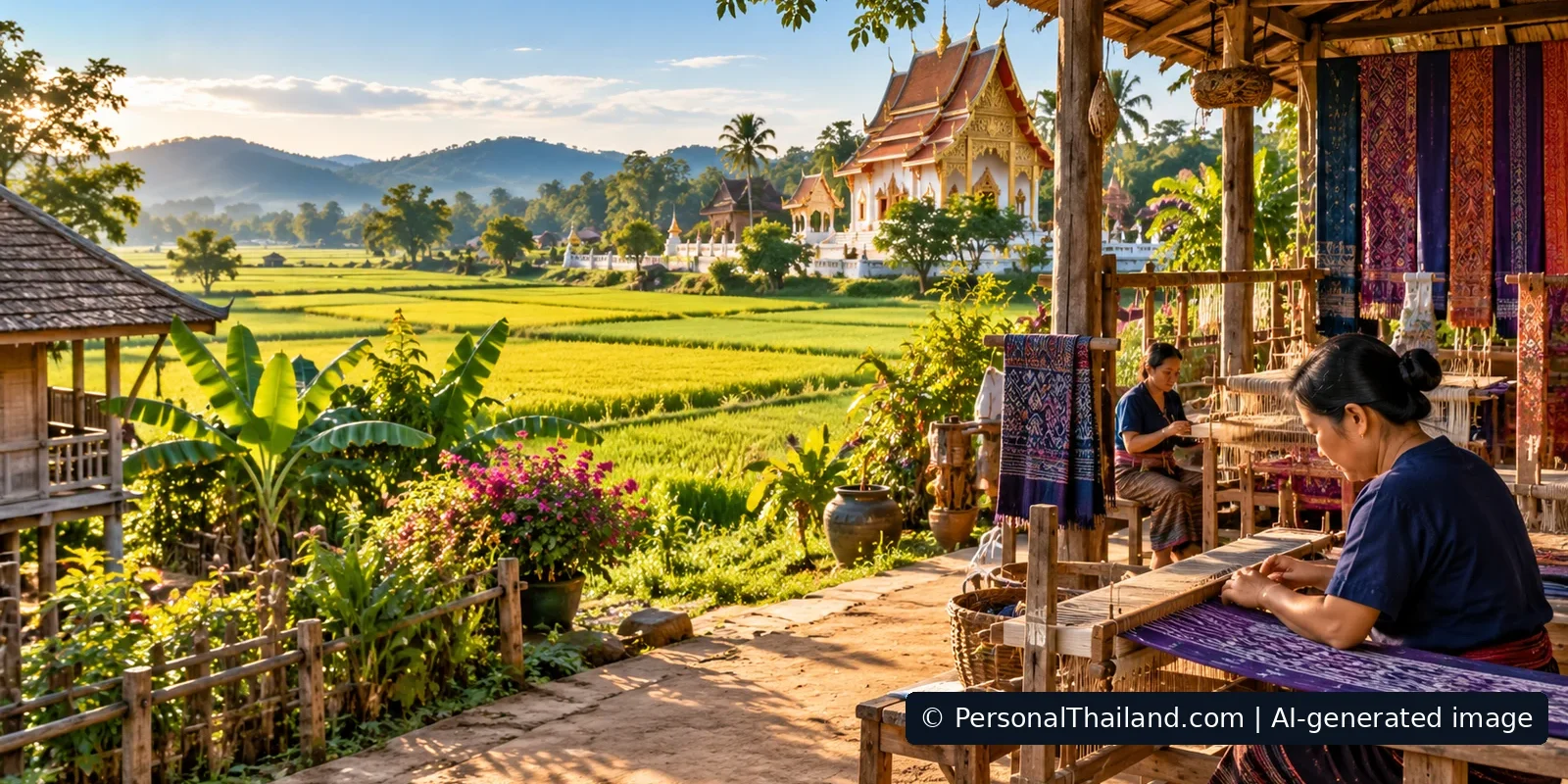
Amnat Charoen is a province for travellers interested in the quieter side of northeastern Thailand, known as Isan. It is not a place that needs to imitate a major resort destination. Its appeal lies in countryside journeys, Buddhist temples, craft traditions and the Mekong-side district of Chanuman. A visit works best for people willing to slow down and look beyond a small number of well-known tourist stops.
Understanding the province
Amnat Charoen sits in the eastern part of Isan near Laos. The landscape is a mixture of settlements, farmland, waterways and stretches of countryside. Villages remain living communities, not outdoor museums created for visitors. A polite greeting, a patient attitude and a little interest in the local language go a long way.
The Tourism Authority of Thailand describes Amnat Charoen as a place with spiritual landmarks, handicrafts and scenes of rural life. Those themes are more useful for planning than old population counts or claims that a certain district has never been visited by tourists. There is no need to exaggerate remoteness to appreciate a modest destination.
Temples and the 'Land of Dharma'
The province is often associated with Buddhist practice and the idea of a 'Land of Dharma'. Wat Phra Lao Thep Nimit is one temple worth researching before a visit, while the Phuttha Utthayan area and the Phra Mongkhon Ming Mueang image are other recognisable religious landmarks. Not every religious site offers the same visitor facilities, and some can be especially quiet outside ceremonies.
Dress appropriately, avoid walking into closed prayer areas and observe how local worshippers behave. The goal is not to collect selfies beside sacred images but to appreciate the artistic and community significance of each place. If a ceremony is taking place, ask whether photography is acceptable or simply observe respectfully from a distance.
Chanuman and the Mekong
Chanuman district offers opportunities to experience the riverine setting near the Lao border. Riverbanks, agricultural landscapes and local communities give a different impression from the interior towns. Water levels, currents and accessible viewpoints change with the season. This means the precise appearance of river rocks or rapids is not something a visitor should expect year-round.
If you encounter organised boat activities, confirm the operator's arrangements and inspect the available safety equipment before boarding. Do not assume that an informal riverside landing is safe for swimming. The border setting is also a reminder that sightseeing along the river and legally entering Laos are entirely separate matters.
Textile culture and local products
Handwoven fabric is one of the most rewarding topics for an Amnat Charoen visit. The province is associated with silk and patterned cloth, including weaving traditions in communities around Chanuman. Shopping directly from a maker or a reputable local cooperative can create a more meaningful souvenir than choosing a mass-produced item without asking where it came from.
Look at the pattern, fibre, weaving technique and care instructions. The time spent producing a handmade textile is part of its value. If a workshop welcomes visitors, ask before taking photographs, and never assume that demonstrations are scheduled daily. Small businesses may need advance notice or may be closed during farming and family commitments.
Food, transport and pacing
Use a local market to sample everyday Isan cooking, fresh produce and snacks. Ask about ingredients and chilli levels rather than assuming every dish will suit a specific diet. In smaller towns, restaurant opening times can be flexible, so a little planning makes evenings easier.
Private transport or a local driver can be practical when several temples and rural communities are spread across different districts. Check current bus connections for intercity travel and arrange return transport if visiting less central sites. Build in extra time for road conditions and unexpected closures.
A comfortable two-day plan might include temples and town markets on the first day, followed by Chanuman and a craft-focused stop on the second. This avoids turning a countryside visit into an exhausting succession of short drives.
Festivals without fixed-date promises
River-area boat racing and other community traditions are part of the province's cultural calendar, but dates and venues must be confirmed for the particular year. Treat old festival posters as historical evidence, not a valid schedule. If a visit happens to coincide with an event, follow local guidance about crowd movement and respectful photography.
Amnat Charoen is best approached as a place to discover slowly. Its temples, textiles and Mekong landscapes reward attention, provided you keep schedules flexible and treat local communities as hosts rather than attractions.
What to ask before visiting a weaving village
Small craft enterprises may not advertise tours in English or maintain regular opening hours. An accommodation host, community contact or official tourism office may be able to help arrange a respectful visit. Ask whether visitors are welcome, whether a purchase is expected and whether the makers can demonstrate their work. Be prepared to pay a fair price for time and expertise rather than seeing a craft demonstration as a free attraction.
When travelling near the Mekong, avoid interpreting a quiet riverside viewpoint as a supervised recreational area. Rivers can have concealed currents and rapidly changing conditions, especially during seasonal rises. The safer choice is to enjoy the scenery from suitable public places and obtain up-to-date guidance before any organised water activity.