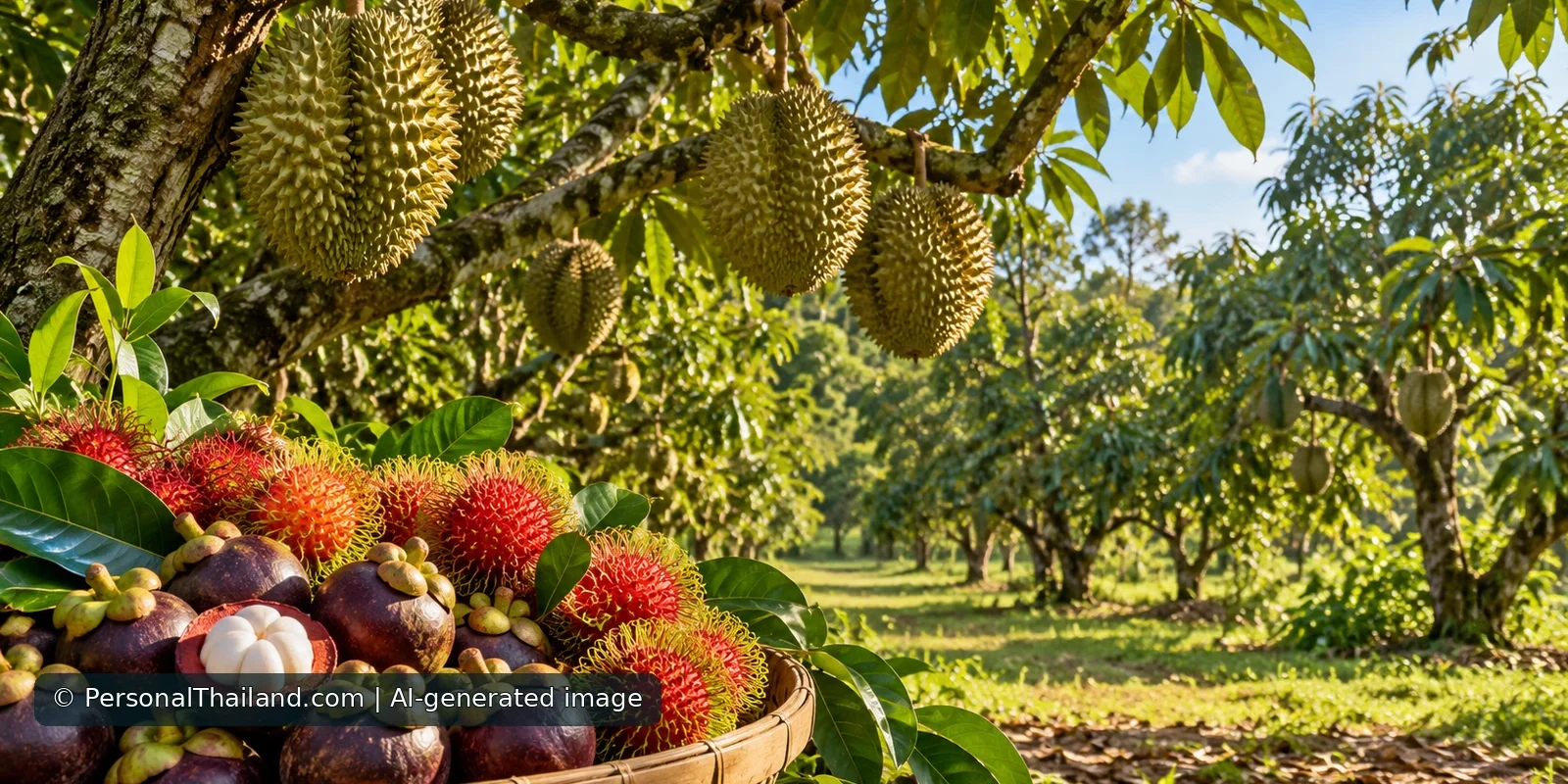
Rayong is more than a beach stop on Thailand’s eastern coast. Inland from the shoreline, fruit orchards offer a very different reason to visit: the chance to see how tropical fruit grows, taste varieties that rarely travel well, and meet the people who cultivate them. If you have only seen durian or mangosteen in a supermarket, a farm visit can be a memorable introduction to Thailand’s fruit-growing culture.
Why Rayong is a destination for fruit lovers
Rayong belongs to Thailand’s eastern fruit-growing region. Durian, mangosteen, rambutan and other seasonal fruit feature in the province’s tourism identity. The Tourism Authority of Thailand includes an orchard stop in its Rayong two-day itinerary, a useful starting point when planning a visit that combines agriculture with coastal sightseeing.
What makes the experience worthwhile is not simply eating fruit. On an orchard tour, visitors may see fruit still hanging from branches, learn why different varieties are harvested at different stages and discover why a ripe fruit can taste different close to the farm. Activities vary widely: some farms focus on guided walks, while others may offer tasting packages, tram rides or farm shops. Do not assume every orchard offers a buffet or a tour in English.
Which fruits should you try?
Durian: Thailand’s famous strong-smelling fruit
Durian is prized for its rich, creamy flesh and distinctive aroma. Different varieties can have noticeably different textures and sweetness. If it is your first taste, ask the farm which fruit is ready to eat and whether a small tasting portion is available. Do not try to handle or cut a large durian yourself: its shell is heavily spiked, and ripe fruit can be heavy.
Mangosteen: sweet and gently tangy
Behind a thick purple rind, mangosteen contains tender white segments. It offers a cooler, more delicate contrast to durian. The rind stains easily, so open it carefully and follow the orchard’s instructions if tasting fruit on site.
Rambutan, pomelo and other seasonal treats
Rambutan is easy to recognise by its hairy red or yellow skin, while pomelo is a large citrus fruit with firm segments. You might also encounter longan, jackfruit or salak, depending on what the particular farm grows and what is ready for harvest. A fruit grown locally is not necessarily available for picking on the day you visit.
When is the best time to visit?
The main orchard-tour season generally falls around late spring and the first part of the wet season, but dates are not fixed. The official tourism itinerary describes fruit at Suan Suphatthra around April to June, while other Rayong fruit-tour promotions have featured later harvesting. Different farms and varieties follow different schedules, and rain can affect access.
Before traveling, confirm directly with the orchard which fruits are in season, whether guided visits are running, how long the experience lasts and whether a reservation is required. An orchard that welcomes visitors year-round may not have all its headline fruits at every time of year. Avoid planning a long drive solely on an old festival calendar.
Where can you begin?
Suan Suphatthra appears in the Tourism Authority of Thailand’s Rayong itinerary as a fruit garden open to visitors. That makes it a useful name to investigate, not a guarantee about today’s admission price, opening hours or the availability of particular fruit. Use the official itinerary to identify the attraction, then obtain current details from the venue itself before setting off.
Other orchards may offer different experiences, from farm-gate purchases to seasonal tasting events. Choose one based on the activity you actually want: looking around an orchard, learning about cultivation, buying fruit or enjoying a guided tasting.
Practical tips for an orchard visit
- Wear comfortable shoes. Orchard paths can be uneven or muddy after rain.
- Bring drinking water and sun protection. Shade is not guaranteed throughout a tour.
- Ask before picking. Fruit that looks ready may still be growing or reserved for harvesting.
- Check for food allergies and sensitivities. Do not assume every tasting package can accommodate dietary needs.
- Leave space in your itinerary. Tropical weather, travel conditions and seasonal crowding can change plans.
- Check transport restrictions. Some transport operators and hotels place restrictions on carrying strongly scented durian.
Combine fruit tasting with the rest of Rayong
Rayong can reward a longer visit. The Tourism Authority of Thailand’s published itinerary pairs orchard tourism with coastal and nature stops such as Hat Saeng Chan and Khao Chamao–Khao Wong National Park. Treat that as inspiration rather than a promise that every attraction is accessible on a particular day; travel times, park restrictions and weather should be checked separately.
A fruit orchard visit works best when you allow it to be a genuine farm experience. Go for the taste, the trees and the conversation—not because a dated advertisement promises an unlimited buffet. It is a delicious way to encounter a quieter side of eastern Thailand.