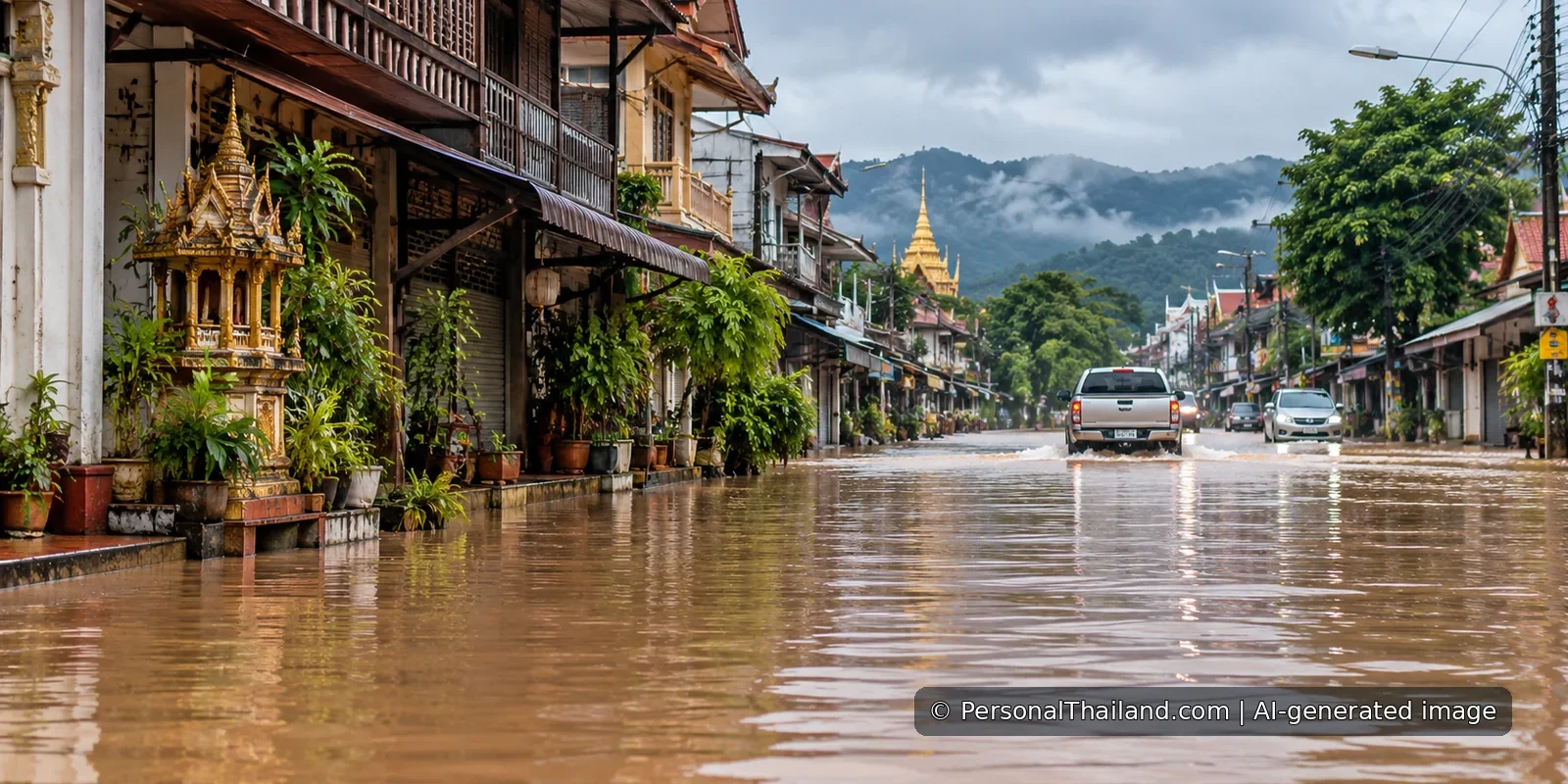
A short PersonalThailand travel notice from November 2008 warned that heavy rain had disrupted roads and rail services in Phrae, a province in northern Thailand. That warning described a particular moment, not a permanent condition. Travellers should never use an archived storm alert to decide whether a route is safe today.
Phrae is worth understanding on its own terms: a northern province with communities, historic buildings, rural roads and connections to neighbouring destinations. During periods of persistent rain, however, a route that looks straightforward on a map can become inconvenient or unsafe. The sensible response is to check the latest local warnings, ask transport operators about actual service changes and keep a flexible plan.
Why heavy rain can disrupt a trip to Phrae
Flood risk is not uniform across northern Thailand. Low ground near rivers, roads at the foot of hills and sections with inadequate drainage can be affected differently. Rain falling farther upstream may influence waterways after the rain has stopped where you are standing. The condition of an individual bridge or small road matters more than a general description of the province as wet or dry.
The Thai Meteorological Department’s warning centre is the starting point for checking severe weather. Its advisories distinguish affected regions and are dated. For example, a September 2026 warning about heavy rain in upper Thailand described possible flash floods, overflows and landslides. That document illustrates the type of danger officials monitor; it is not a forecast for today.
Check the particular route, not just the forecast
Look at the complete journey: where the bus or car begins, whether it passes through low-lying districts and whether the final accommodation can still be reached. A provincial warning may leave major roads usable while certain smaller routes are blocked. Conversely, fine weather near your hotel does not prove that a road several hours away is open.
- Ask the bus or rail operator whether your exact departure is running, delayed or diverted.
- Check official road and local-government updates on the day of travel.
- Confirm that your accommodation is accessible and ask for practical local directions.
- Keep booking references and a charged phone available if plans change.
- Allow extra travel time without relying on speculative detour routes.
What to do if you encounter floodwater
Do not drive or walk into moving or opaque floodwater. The depth can be deceptive, the road surface may be damaged and a current can make a crossing unsafe. Turn around to a clearly safe location and ask authorities or transport staff for the appropriate route. Do not treat other motorists crossing as proof that your vehicle can do the same.
If you are already in accommodation, follow local instructions rather than trying to reach a station at all costs. Move important documents and essential medication where they can stay dry. During an electrical outage, avoid standing water near exposed cables or damaged equipment. Children and older travellers may need additional time to relocate safely.
Railways and roads need separate checks
The 2008 notice referred to damaged railway infrastructure, but it did not establish that every rail service in northern Thailand had been cancelled. A train can also be delayed far from the affected area because a section of its route is unavailable. Verify the actual origin, destination and replacement-transport arrangements through the operator instead of assuming that a distant weather warning settles the question.
Road travel brings different concerns. Small bridges and slopes may be inspected or closed even after sunshine returns. Rental-car contracts and insurance may have conditions relating to flood damage or use on prohibited roads. The safest choice is to respect barriers and official instructions, even when taking a longer route is inconvenient.
Making a flexible northern Thailand itinerary
Plan overnight stops so that one disrupted connection does not force a risky late-night drive. Leave a little space around important onward flights, medical appointments or fixed bookings. Before setting out, save the accommodation’s contact details, the transport operator’s booking reference and offline information about your route.
There is no need to avoid Phrae indefinitely because of an old article. Equally, it would be irresponsible to promise that northern roads are always safe in the rainy season. A good travel decision uses the current, geographically relevant warning, the transport operator’s actual operating status and what people on the ground can verify.
What the 2008 warning tells us
The old post remains a snapshot of how quickly weather disrupted everyday transport. It should be read as history. Anyone planning a present-day trip should replace that snapshot with the latest official advisory and current route information. Preparedness is more useful than either panic or false reassurance.