Updated October 2026.
Cooking Thai food at home becomes much easier when you stop searching for one perfect “authentic” recipe and start understanding the ingredients and techniques behind everyday dishes. The older version of this article recommended a cooking website and newsletter back in 2006. Rather than pretend that an old directory is still the best place to learn, this guide offers a useful starting point for choosing recipes, shopping and preparing food safely.
Start with the flavors, not an enormous shopping list
Thai cooking often balances salty, sour, spicy, sweet and aromatic elements, but not every dish contains all of them. Fish sauce, soy sauce, lime, tamarind, fresh chilies, garlic, shallots, lemongrass and different types of basil each have a job. Coconut milk belongs in many curries and soups, but it is not a universal Thai ingredient. Begin with ingredients that match the dishes you actually want to cook rather than buying every paste and spice in the shop.
A small everyday kit might include jasmine rice, a neutral cooking oil, garlic, fresh lime, chilies, a suitable seasoning sauce and one fresh herb. For a vegetarian kitchen, check packaged sauces carefully: fish sauce and shrimp paste are common in otherwise vegetable-heavy meals. A product labeled “vegetarian” is a better starting point than assuming that a dish without visible meat contains no animal ingredients.
Three beginner-friendly cooking projects
Fried rice with egg and vegetables
Use cooked rice that has been cooled and refrigerated promptly, small-cut vegetables, egg and seasoning to taste. Have everything ready before turning on the heat. A hot pan and modest portion size help avoid steaming the rice. Cook the eggs completely, keep raw proteins separate from ready-to-eat food and return any refrigerated leftovers to a safe temperature without repeatedly reheating them. Add fresh herbs or lime only when serving if you prefer a brighter finish.
Pad kaphrao-inspired stir-fry
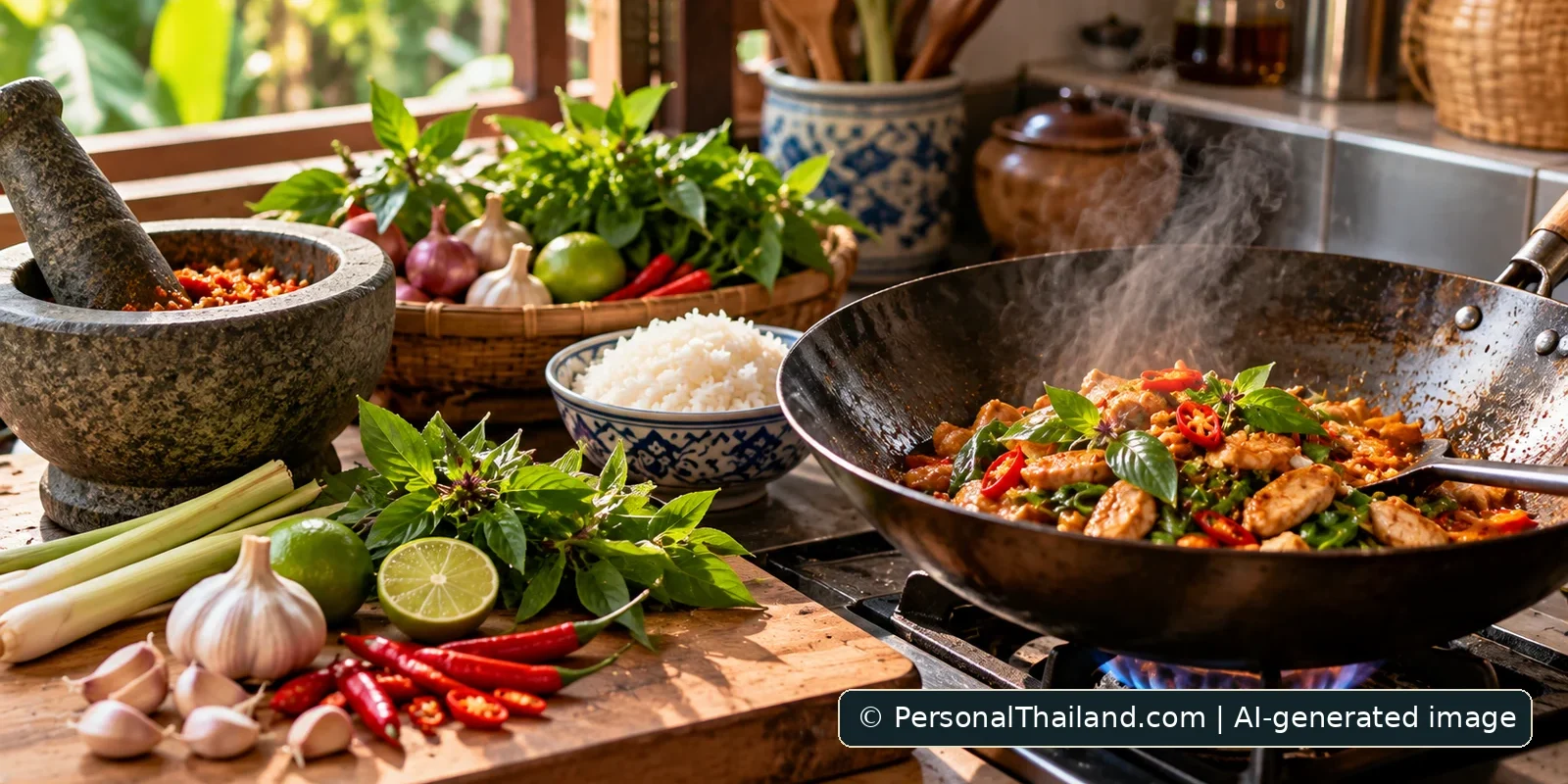
Prepare garlic, chilies and protein or mushrooms first. Stir-fry the ingredients over a suitable heat and add the basil near the end to keep the leaves fragrant. Holy basil is distinctive in the Thai dish known as phat kaphrao, although some shops abroad substitute Thai sweet basil. If you cannot find the exact herb, enjoy the alternative but recognize that the flavor will change. Serve with rice and, if desired, a fully cooked fried egg.
A simple hot-and-sour soup
Build a broth with aromatic ingredients such as lemongrass and galangal, then adjust its sourness and heat with lime and chili. Tom yum comes in several styles and can include mushrooms, seafood or other ingredients. Do not treat one restaurant’s recipe as the national standard. Taste the broth gradually; adding all the lime or chili at once makes correction harder. Seafood and meat must be handled and cooked appropriately.
Different regions bring different ideas
There is more to Thai food than pad Thai or green curry. Northern Thailand has noodle and herb-centered traditions, the Northeast is famous for sour, spicy salads and grilled foods, Central Thailand offers a huge variety of rice meals and stir-fries, and Southern menus may feature bold curries and seafood. These are starting points for exploration rather than rigid rules about every family kitchen. The Tourism Authority of Thailand’s food overview is useful for understanding the variety of eateries and dishes available across the country.
Shop intelligently for Thai ingredients
Wet markets, supermarkets and neighborhood food shops may all be useful, depending on where you live. Compare freshness and storage conditions rather than judging ingredients by whether the shop looks modern. Buy herbs in amounts you will use while fresh. Check dates, seals and storage instructions on bottled sauces, curry pastes and coconut milk. Keep chilled products cold on the way home, especially when traveling through Thailand’s heat.
Outside Thailand, an Asian grocery store can supply rice, noodles, sauces and some fresh herbs, but brands and formulations vary. Taste your dish before adding more sauce. A paste with an attractive picture may already contain shrimp, fish or allergens; inspect the ingredient panel rather than guessing.
Five food-safety habits that matter
Good food should also be safe to eat. The World Health Organization’s Five Keys to Safer Food encourage clean hands and surfaces, separation of raw and cooked food, thorough cooking, safe holding temperatures and safe water and ingredients. This applies to a home kitchen in Bangkok just as much as to one in Europe.
For example, rinse vegetables with suitable water, use separate utensils when handling raw meats, keep perishable ingredients chilled and avoid leaving cooked rice or other prepared food sitting in the heat. Taste with a clean spoon rather than returning a used spoon to the pan. If you cook for someone with allergies, do not assume that a dish is safe simply because it looks mild or meat-free.
How to judge recipes found online
An attractive cooking video can be inspiring, but look for quantities, ingredient substitutions, cooking sequence and clear information about raw ingredients. A recipe should explain when to add aromatics and how to tell whether a protein is properly cooked. A source that credits the cook and explains regional variation is usually more helpful than an anonymous clip promising the only authentic version.
Save two or three recipes you genuinely like, test one at a time and write down what you changed. This builds more confidence than switching to a new website after every meal. Cooking Thai food at home is an enjoyable way to understand the cuisine, whether you are living in Thailand or remembering a favorite trip.