
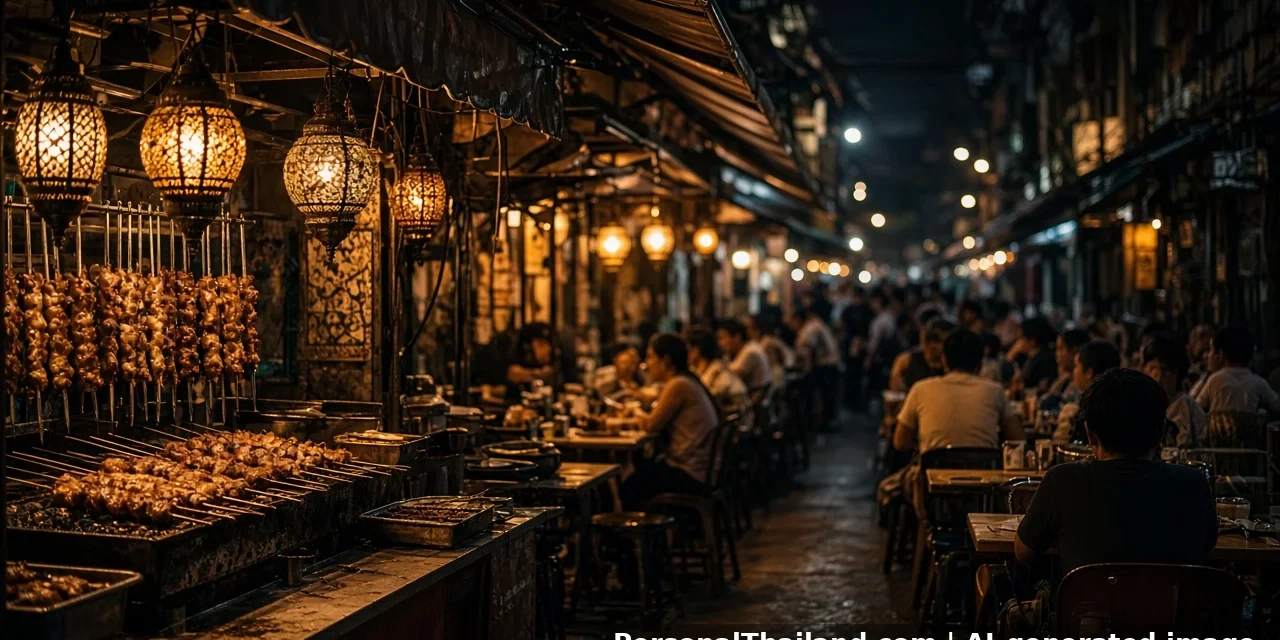
A different side of lower Sukhumvit
Soi Arab is the familiar nickname for Sukhumvit Soi 3/1, a short lane in Bangkok’s Nana area. It is known for Middle Eastern restaurants, Arabic-language signs and shops serving both residents and visitors. Unlike a staged tourist attraction, it is a working urban neighbourhood: people are here to shop, eat, meet friends and conduct ordinary daily business.
An older Personal Thailand post focused on unpleasant impressions from one visit in 2010. It contained sweeping accusations about the area and its people that should not be repeated as current facts. A helpful guide gives visitors the location, the reason to go and sensible expectations without treating an entire community as a stereotype.
Where is Soi Arab?
The lane is associated with the area between Sukhumvit Soi 3 and Soi 5, close to the Nana section of Sukhumvit Road. Travellers often approach on foot from the Nana BTS area or arrive by taxi. The precise best station exit and walking route should be checked on an up-to-date map because access and street works change.
The neighbourhood extends beyond a single alley: side lanes and the surrounding streets also have restaurants, markets and services. Keep your destination saved in Thai or on a map, particularly if you are meeting someone at a small establishment with an unfamiliar English spelling.
Food is one of the main reasons to visit
The variety is the attraction. Depending on the establishment, you may find grilled meats, flatbreads, rice dishes, stews, dips, sweet pastries or tea in different regional styles. A sign saying “Middle Eastern” does not mean every kitchen cooks the same national cuisine; Yemeni, Lebanese, Egyptian and other traditions have their own flavours.
Read the menu carefully, ask about spice, ingredients and serving size, and explain dietary requirements rather than guessing. If you follow halal dietary rules, look for the restaurant’s own confirmation rather than assuming every business on the street meets a particular standard. Published menus and restaurant ownership may change.
Shopping and street atmosphere
Alongside food, the surrounding area has long been associated with shops selling perfumes, garments, groceries and travel-related services. What is open on a particular evening will vary. Some storefronts are brightly lit after dark, while others may run different hours or close without a large online announcement.
Browsing is more comfortable if you keep walkways clear and do not photograph people inside shops without permission. Agree on prices for services before ordering, keep a receipt when appropriate and do not assume bargaining is customary at every establishment.
What to expect at different times
The lane may feel quite different on a weekday afternoon compared with an evening meal period. Restaurants can be busy, the pavements can feel crowded, and Bangkok traffic can make short car journeys unpredictable. None of these observations justifies describing the district as inherently dangerous.
Take the same common-sense precautions you would elsewhere in central Bangkok: use well-lit public routes, keep possessions secure, choose transport from familiar apps or licensed providers and move away from any situation that feels uncomfortable. Local conditions should be assessed on the day, not inferred from a sensational old blog post.
Respect the people who live and work here
A large city neighbourhood cannot be reduced to a single religion, nationality or nightlife label. Visitors, residents, merchants and medical travellers have different reasons for using this part of Bangkok. Approach it as a place where real people live and work, rather than as an opportunity to photograph “exotic” scenes.
If you enter a restaurant or shop, a polite greeting and patience with language differences go a long way. Ask whether photographs are acceptable. Avoid intrusive questions about somebody’s background, and respect any dress or conduct guidance displayed by an individual business.
Food choices for different travellers
If you travel with children, prefer a restaurant where your family is comfortable sitting and ordering, rather than choosing solely because a guide calls the street lively. Visitors with food allergies should ask about ingredients, shared grills and sauces; translations can help, but cannot guarantee the answer.
For people interested in photography, evening lights and busy shopfronts can be appealing. Keep a respectful distance from diners and staff and photograph the overall street scene rather than making strangers the subject without consent. This keeps a food excursion enjoyable for residents as well as visitors.
Is it worth visiting?
Yes, if you enjoy discovering urban food neighbourhoods and are happy to choose an individual place on its own merits. Soi Arab works better as an exploratory meal stop than as a destination with one famous monument and a fixed itinerary. Consider visiting while you are already in the Nana–Sukhumvit area.
Check current reviews for the particular restaurant, verify live opening details and allow time to walk rather than drive from one door to another. Its value lies in the many distinct cuisines and everyday encounters that sit alongside Bangkok’s larger tourism scene.







1 Comment