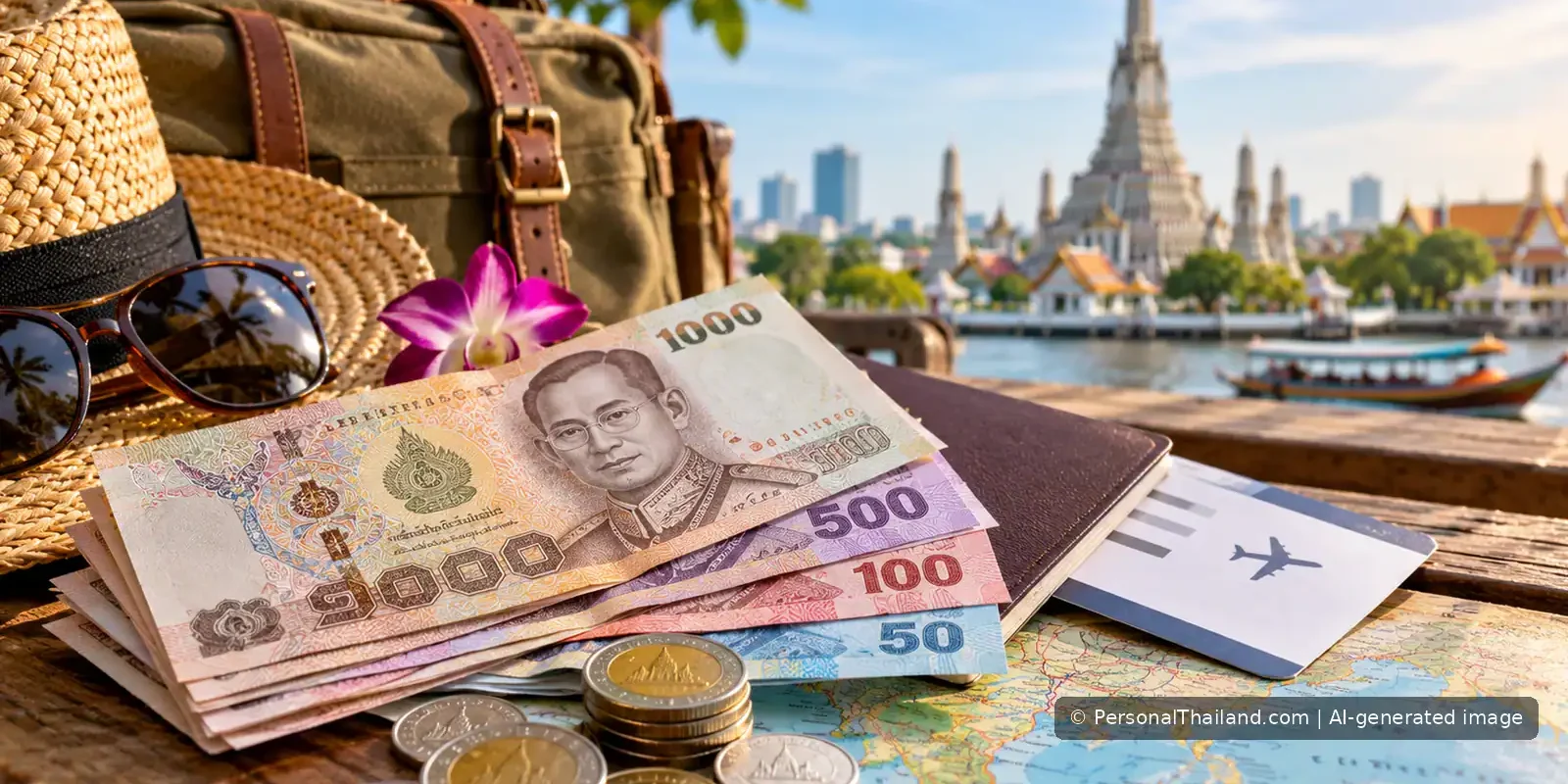
The Thai baht can be a quiet but powerful part of your travel budget. A hotel room may cost the same number of baht from one month to the next, yet become noticeably more or less expensive when you pay with dollars, euros or Swedish kronor. Exchange-rate headlines often make the change sound dramatic, but understanding what the rate means is more useful than following any one headline.
Back in July 2007, the original version of this article said the baht had reached its strongest level since 1997. That was a statement about the exchange-rate environment at the time, not a claim about the market in October 2026. Currency values move continually. A historical peak does not automatically describe the present exchange rate, and a single rate against the US dollar does not describe every other currency.
What does a strong Thai baht actually mean?
Imagine that one US dollar buys fewer baht than it did previously. That usually means the baht has strengthened against the dollar. A visitor paid in dollars receives fewer baht for the same amount of income or holiday savings. The reverse movement—a dollar buying more baht—means the baht has weakened against that currency.
For example, suppose your illustrative travel budget is USD 1,000. At a hypothetical exchange rate of 35 baht per dollar, that amount would equal 35,000 baht before fees. At 32 baht per dollar, it would equal 32,000 baht before fees. These are examples to explain the calculation, not live quotes or recommendations to exchange money at either rate.
That difference can affect accommodation, domestic transport, food and activities, even if local prices have not changed. It is especially noticeable for visitors booking a longer stay or paying rent from income earned overseas.
Who benefits, and who faces extra costs?
Visitors paid in foreign currency
If the baht becomes stronger against their home currency, tourists generally find baht-denominated expenses more costly in home-currency terms. A family that fixed its travel budget months earlier may have less spending room than expected. Planning a modest buffer can help avoid making every meal or excursion depend on exchange-rate movements.
People living in Thailand on foreign income
Retirees, remote workers and residents who receive money from abroad can face the same arithmetic every month. Receiving a fixed pension or salary in another currency while paying household expenses in baht creates exchange-rate risk. This is one reason to calculate housing, transport, utilities and insurance costs using more than one plausible exchange scenario.
Thai businesses and international trade
A stronger baht may make certain imports cheaper in baht terms while reducing the baht value of export earnings received in foreign currency. The actual effect on a business is more complicated because contracts, input costs, pricing arrangements and financial hedging all matter. Neither exporters nor consumers respond uniformly to a single currency movement.
Use the right exchange-rate source
For an authoritative reference point, see the Bank of Thailand’s daily exchange-rate information and historical series. The page distinguishes official published reference information from the actual prices that commercial banks or exchange counters offer customers. The rate you receive can be different from an indicative market rate.
Look carefully at whether the displayed quote is for banknotes, transfers or another transaction. A ‘buying’ quote and a ‘selling’ quote are not interchangeable. The provider’s spread, fixed charges, card fees and any additional conversion performed by a card network can all change the outcome.
How to exchange money more carefully
- Compare the final number of baht received, rather than advertising that says ‘best rate’ without showing fees.
- Choose established, properly authorised providers and check the current transaction terms.
- Keep receipts if you may need proof of exchange later.
- When an ATM or merchant offers to charge your card in your home currency, read the displayed conversion details before accepting.
- For large transfers, compare transfer fees and the exchange rate together, not in isolation.
Thailand’s central bank explains that foreign-exchange transactions are carried out through authorised foreign-exchange businesses, including qualifying banks, money changers and transfer providers. Visitors do not need to become currency traders, but they should avoid informal offers that are difficult to verify.
Should you wait for a better rate before travelling?
There is no reliable way to guarantee the next exchange-rate movement. Markets react to economic conditions, interest-rate expectations and news that may be impossible to anticipate. Delaying all of your holiday spending in the hope of a perfect rate introduces uncertainty of its own.
Instead, work out the baht amount you will realistically need, compare transaction methods and check current rates close to your departure. If you are relocating or paying regular bills in Thailand, consider the effect of a stronger and weaker baht on your ongoing budget. This is practical risk management rather than a prediction.
Remember the distinction between prices and currencies
A stronger baht does not necessarily mean local prices are rising. A meal can remain priced at 120 baht while costing more euros today than it did last month. Conversely, Thai inflation and changes in local prices can affect the cost of living independently of currency movements. To understand your actual spending, keep the baht price and the conversion rate as separate pieces of information.
The enduring lesson from a 2007 exchange-rate headline is to place every currency claim in its proper date and context. Before making a travel or transfer decision, check a current source and your provider’s final rate, not an old news article describing the baht at a past high.