Updated 17 October 2026. This article replaces older information with a practical, sourced guide. Verify changing requirements at the time you use them.
You arrive in Thailand, unpack your charger and discover that it does not fit the wall socket. Fortunately, adapters are widely sold in travel and electronics areas. The more important question is whether the accessory is simply changing the plug shape or also needs to handle electrical voltage safely.
Quick takeaway: Thailand commonly uses 220V, 50Hz electricity. Check your device’s input rating; a plug adapter is not the same thing as a voltage converter.
What plugs and voltage does Thailand use?
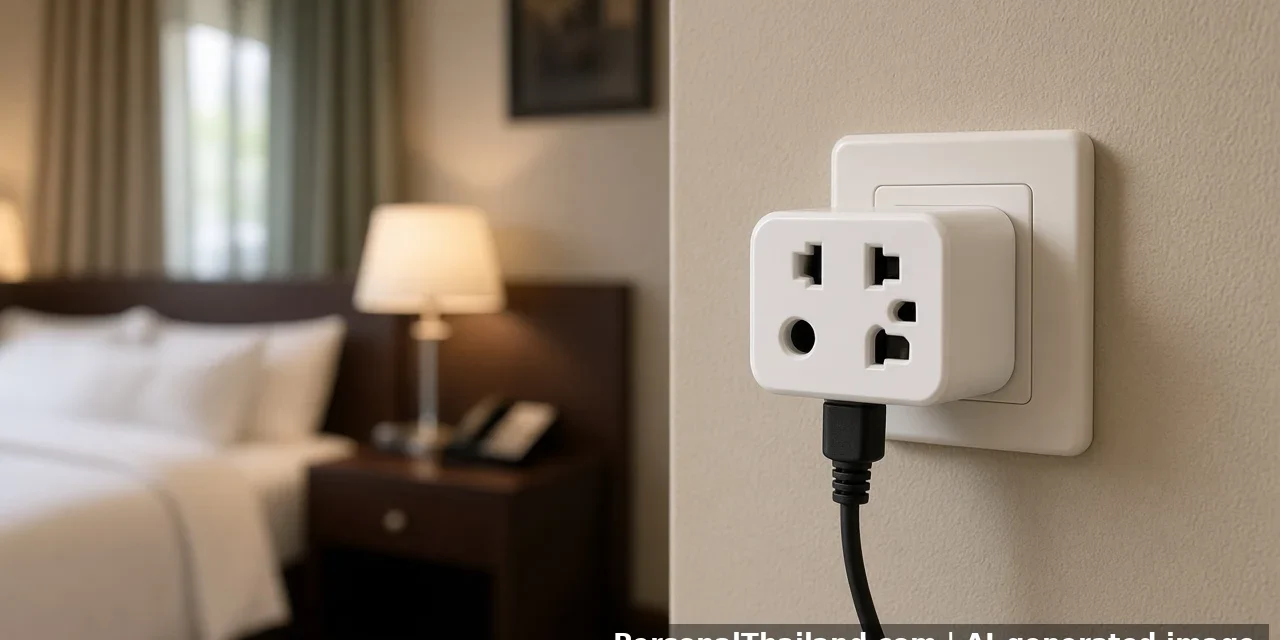
Official Thai travel information states that the domestic power supply is generally 220 volts at 50 hertz. Visitors may encounter wall sockets designed to accept several common plug shapes, including flat-pin and round-pin plugs. The exact socket configuration depends on the property and its wiring.
For travellers, that means you should check both the physical plug and the electronic device's label. Do not assume a charger is safe simply because its metal pins fit in a socket. An older building can also have different grounding arrangements from a recently renovated hotel.
Plug adapter versus voltage converter
A plug adapter changes the physical shape of the connection. It does not turn a 220V supply into 110V. A voltage converter, transformer or specially rated power supply may be required for a single-voltage appliance, but the correct solution depends on the device's power draw and frequency requirements.
Many modern laptop and phone power bricks say something like 'Input: 100–240V, 50/60Hz'. Those are designed for a broad voltage range, though you may still need a shape adapter. If the label says only 110V or 120V, do not plug it directly into a Thai socket without appropriate advice.
Where to buy an adapter after arrival
Hotel receptions, airport retailers, established electronics stores and shopping centres may carry universal travel adapters. Stock, quality and prices vary, so do not rely on an old claim that one named mall or floor is the only place to buy them. Ask the retailer to show the plug configuration and compatible ratings.
For a proprietary laptop charger or camera power supply, the manufacturer's authorised service network may be safer than an unbranded replacement. This is especially important when the accessory controls charging current rather than merely adapting a wall plug.
What to inspect before paying
Look for clear voltage and current ratings, supported plug types and a durable housing. A universal adapter should hold securely in the socket; loose pins, exposed wiring or suspiciously thin plastic are reasons to reject it. Check that any USB ports meet the power needs of the devices you plan to charge.
Do not mistake a row of country flags or attractive packaging for independent safety certification. If the product gives no useful ratings or seller information, choose another one. Keep a receipt in case you need to return a defective accessory.
Phone, laptop, hairdryer and medical devices
Phone and laptop chargers are often multi-voltage, but verify the label rather than guessing. High-power devices such as hairdryers, straighteners and kettles may have very different requirements, especially if brought from a 110V country.
If you rely on a medical device, check its documented electrical requirements, battery backup and manufacturer guidance before departure. A cheap universal adapter is not an adequate substitute for a compatible power supply or professional advice about an essential device.
Safe charging in hotels and apartments
Avoid overloading one outlet with multiple high-power appliances. Keep chargers dry and off bedding, particularly in humid rooms. If a socket sparks, feels loose or looks damaged, stop using it and tell the accommodation provider.
Grounding also matters. A multi-pin outlet does not automatically guarantee that an older installation has protective earth wired correctly. For equipment with a grounded plug, use accessories designed to preserve the grounding arrangement instead of removing the earth connection.
Buying online in Thailand
Online marketplaces may be convenient if you are staying long enough to accept delivery, but listings can be misleading. Match the input and output ratings, connector shape and model number to your actual device. Check delivery dates, return terms and reviews carefully.
Never follow an unexpected SMS link demanding a small shipping payment. Open the retailer or courier's official app directly to verify orders. For items that could damage expensive devices, the lowest listed price should not be the only deciding factor.
Frequently asked questions
Do I need a travel adapter for Thailand?
It depends on your home-country plug and the socket in your accommodation. Carrying a reliable universal adapter is convenient.
Is the electricity in Thailand 110V or 220V?
Official Thai visitor information states 220V at 50Hz.
Can a simple plug adapter power a US-only 110V hairdryer?
Not safely by itself. A plug adapter does not convert voltage; check the appliance’s label and seek a suitable rated solution.
Sources and further reading
- Official Thailand 2026 visitor information — electricity and plugs
- Tourism Authority of Thailand — electrical devices
Editorial note: This is general travel and consumer information. It does not replace official instructions or individual legal advice. No prices, deadlines or service outcomes are guaranteed.