
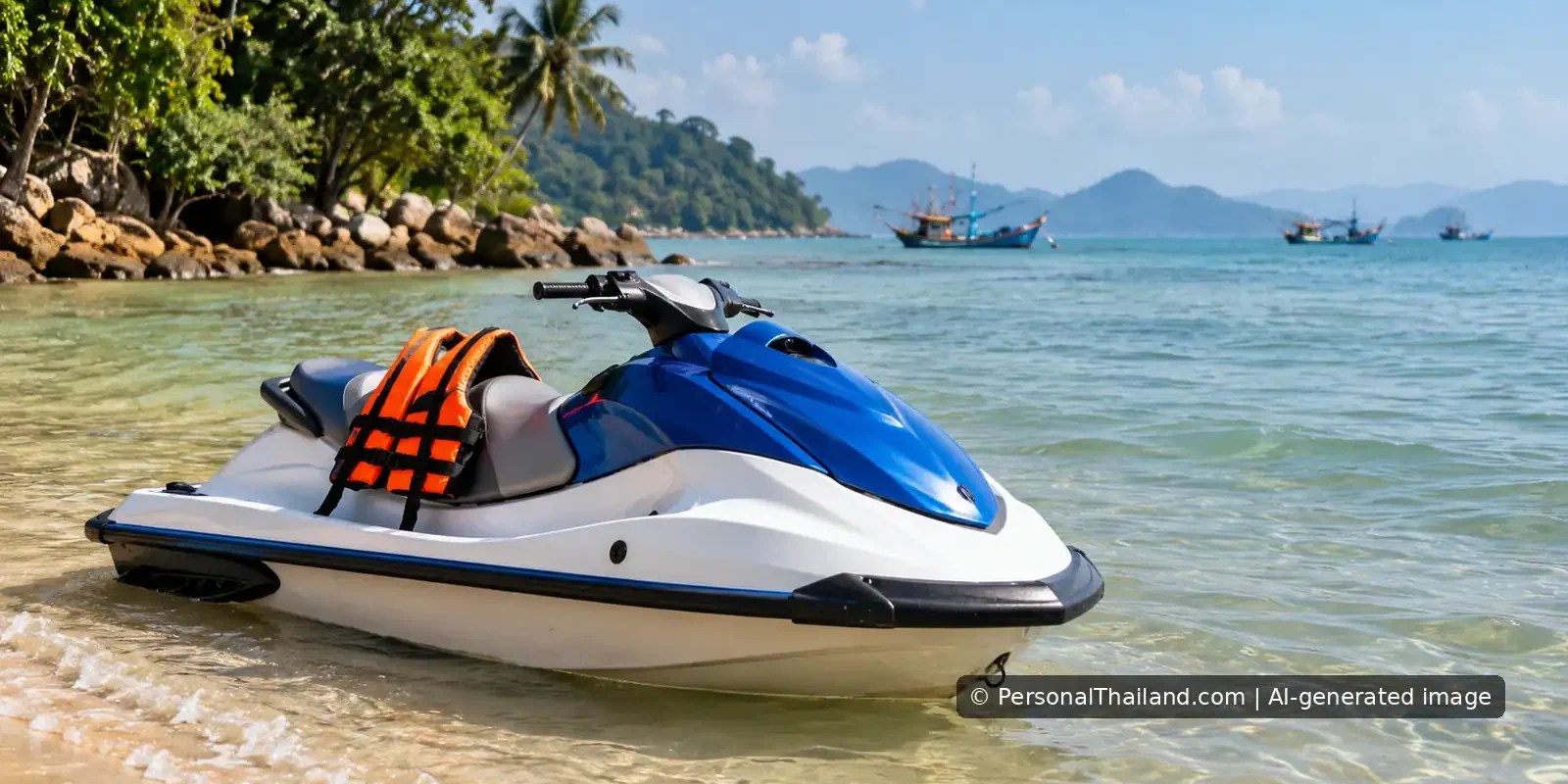
Renting a jet ski can be an exciting way to spend time at a Thai beach, but it is a motorised water activity with real safety, contractual and financial risks. Unlike a casual swim, a jet ski may move quickly and can cause injury or damage to another vessel if the rider loses control. A short ride also creates responsibilities that visitors should understand before paying.
In September 2009, PersonalThailand published a warning about alleged overcharging for damage to a rented jet ski in Phuket. The story included an unverified payment amount and absolute claims about what a rental operator could or could not do under Thai law. Those statements should not be used as current legal advice. The more useful question is how to choose a suitable rental, record its condition and handle disagreements through legitimate channels.
Choose the operator before choosing the jet ski
Do not rent simply because an operator calls out a low price on the beach. Ask where the business is registered, whether it is licensed for the activity and what insurance covers. Find out who supervises the operation, what the designated riding area is and whether staff provide a safety briefing.
The Tourism Authority of Thailand’s marine safety guidance recommends using reputable, appropriately licensed and insured water-sports operators, inspecting equipment for damage and insisting on training. That is sensible advice even where local rules, licensing procedures and insurance products have subsequently changed.
Inspect the machine carefully before departure
Walk around the craft with the operator and identify visible scratches, cracks, loose parts and damage to the hull. Ask about the seat, handles, tether and engine shut-off device. Make dated photographs or a short video of the exterior, with the operator’s knowledge, before the ride begins.
A checklist should record existing marks in writing. If the business claims that a pre-existing scratch appeared during your rental, a clear condition report can reduce misunderstanding. Photography is helpful evidence but is not a substitute for a contract and does not guarantee the outcome of a dispute.
Read the rental agreement and insurance terms
Ask what the quoted fee includes: rental duration, fuel, instruction, safety equipment and any required deposit. Understand how the operator assesses damage and whether the contract specifies an excess or deductible. Some cover may exclude reckless riding, incidents outside an approved zone or operation against weather warnings.
Do not assume that a sign saying ‘insured’ covers the rider’s medical treatment, every kind of hull damage or injury to another person. Request a plain-language explanation and, for a substantial sum, documentary confirmation before paying.
Keep your passport under your control
The UK government’s Thailand travel advice explicitly warns against leaving passports with motorcycle or jet-ski rental businesses as a guarantee. Australia’s Smartraveller advice gives a similar warning, noting that companies may retain passports while requesting payments for alleged damage.
Your passport is an essential identity and travel document. Discuss acceptable identification methods and deposit arrangements before signing. Never hand over the only document you need for immigration or departure merely because someone says the practice is common.
Safety on the water matters more than the price
Wear an appropriately fitted personal flotation device and follow the safety briefing. Understand how the throttle works, how to stop, what happens if the rider falls and how to keep clear of people swimming or other watercraft. Confirm whether the operator has a minimum age or other eligibility rule.
Do not ride after drinking alcohol or when tired. Keep to the designated area and respect marked swimming zones, flags, reefs and marine wildlife. Check the weather before going out, and stop if wind, waves or visibility make the activity unsafe.
Inexperienced riders should not be pressured into complicated manoeuvres or carrying passengers before they are comfortable. The operator should explain emergency signalling and what to do if the engine stops away from shore.
What if the operator alleges damage?
Return to the original condition report and ask for a clear description of the claimed defect. Compare photographs calmly. Ask for an itemised repair estimate, the contractual basis of the charge and a formal receipt for any payment. Avoid threats, aggression or trying to leave a genuine legal dispute unresolved.
Equally, do not assume every demanded amount is lawful. If you feel intimidated, seek assistance from the Thailand Tourist Police or another authorised official body. If the amount is substantial, obtain qualified legal advice rather than relying on internet claims that a case can never involve police or criminal law.
Should you rent at all?
A jet ski may not be the right choice for every traveller. If the craft appears poorly maintained, the operator cannot explain the rules, you cannot agree on a damage record or the sea conditions seem dangerous, walking away is a sensible decision. There are plenty of other ways to enjoy Thailand’s coast.
The older 2009 warning was motivated by concern for travellers, but its blanket instruction and legal certainty went further than the evidence justified. A modern checklist offers a more reliable approach: choose a reputable operator, inspect the machine, understand the contract, keep your passport and put safety first.




1 Comment