Last checked: 31 October 2026. Thai rules change often, so always confirm with the official source before you travel or apply.
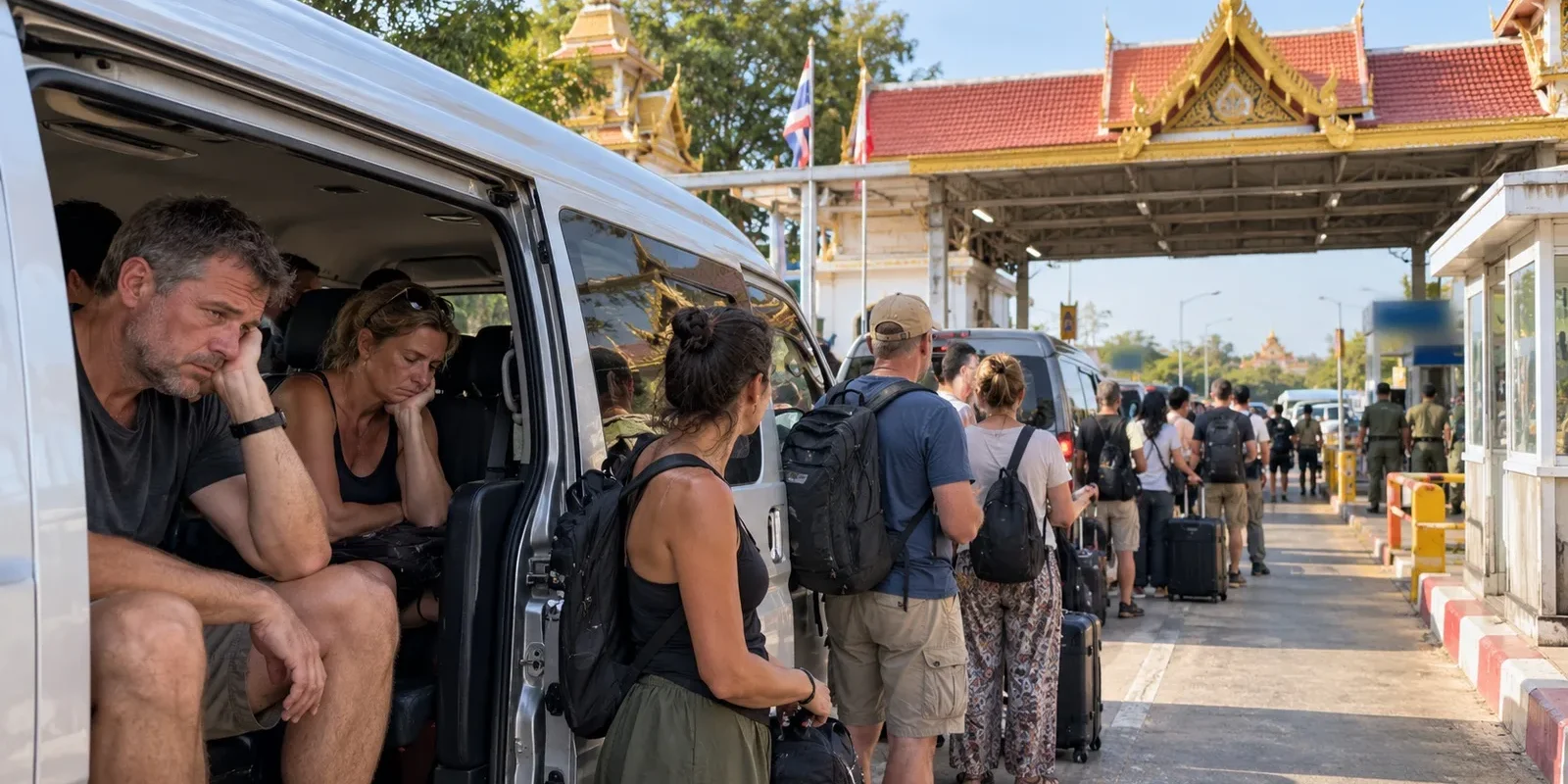
A border run from Pattaya can look like a simple transport booking until you ask what permission you will have when you return. I would answer that question before reserving a seat in a minivan. In 2026, the nationality in your passport, your current immigration status and the crossing’s operating conditions matter more than an old recommendation for a particular service. Any border run for a Thailand visa now starts with those checks.
Updated 31 October 2026: This page originally discussed an older visa-run service. Entry rules have since changed, including revisions effective 15 September 2026; the historic operator is not endorsed here. For our latest updates, follow @PersonalThai on X (Twitter). For decisions involving visas, laws or safety, also check the responsible authority.
What a border run for a Thailand visa means
The expression is often used for leaving Thailand and attempting to re-enter, sometimes on the same day. A visa run may instead involve travelling abroad to apply for a new visa at a Thai embassy or consulate. Neither phrase describes a single official immigration category.
Ask exactly what the proposed journey is meant to achieve. Are you using a valid multiple-entry visa, seeking a new visa-exempt admission, or applying for a visa abroad? The documents, risks and time required can differ. A transport company sells a journey; it does not grant permission to enter Thailand.
The old title of this page referred to a specific service. This updated guide does not confirm that operator’s current existence, licensing or reliability. Check any provider independently before paying.
The September 2026 change matters
Official Thai announcements state that revised visa-exemption arrangements took effect on 15 September 2026, replacing the previous broad 60-day scheme. The new arrangements include a 30-day scheme for eligible nationalities and other arrangements for particular passports. Do not assume that a stamp received earlier in the year predicts your next admission.
The permission already granted in your passport remains the starting point for your present stay. If you entered before a rule change, read your actual permitted-stay date rather than recalculating it from a headline. If the stamp appears wrong, seek clarification from immigration promptly.
For the history behind the changing advice, see my article on Thailand visa runs and changing entry rules. The useful habit is to check the date and scope of every rule you read.
Repeated tourist entries can attract questions
Current UK government travel advice explains that visa-exempt entries through land checkpoints are normally limited to two per calendar year for the travellers covered by its advice. It also warns that frequent tourist arrivals may lead to questions or refusal. Nationality-specific exceptions and other entry routes must be checked separately.
A lack of a simple numerical limit on another route does not create unlimited entitlement. If your pattern looks like living in Thailand rather than visiting, choose an immigration route suited to what you are actually doing. A series of short departures does not resolve a mismatch between purpose and status.
I would prepare genuine evidence of onward plans, accommodation and access to funds when required. Do not buy fabricated bookings or accept advice to give a false explanation. Your travel story should match the documents and your actual intentions.
Check the crossing, not only the destination country
Border operating conditions can change. Before travelling, verify that the particular crossing is open to your nationality and intended journey, and that you meet the neighbouring country’s entry requirements. A country being open to visitors does not prove that every land checkpoint is operating normally.
At the time of this update, the UK government reported that land borders and crossings between Thailand and Cambodia remained suspended after border clashes, so the traditional road run from Pattaya to Cambodia was not available. Check the current status before booking anything.
Check again close to departure. Ask the provider which crossing it will use and what happens if it closes or your onward entry is refused. A vague promise that the driver will sort everything out is not enough.
Allow for the possibility that you cannot return the same day. Keep access to money, medication, accommodation information and your phone. Do not leave essential belongings in Thailand on the assumption that the trip is guaranteed to last only a few hours.
Know what leaving does to your current permission
Before departing, ask immigration or a qualified adviser whether a re-entry permit is relevant to your existing permission. Do not assume that leaving and returning automatically preserves the same stay. Equally, do not assume that a re-entry permit grants extra time; understand what it preserves and what it does not.
If your current permission is close to expiry, resolve questions before the travel day. A breakdown, delay or refusal can leave you with fewer options than expected. Building a plan around the final permitted day is an avoidable pressure.
Check your documents after each immigration interaction. If the new stamp or paperwork is unclear, ask while you are still in a position to obtain an explanation.
Prepare the arrival card separately
Thailand’s Digital Arrival Card is an arrival-information requirement, not a visa or a promise of admission. The official Immigration Bureau service is free and requires a new submission for each entry. Follow the current submission window shown on the official site.
Use your real arrival details and accommodation address. Save the confirmation where you can retrieve it without depending entirely on mobile reception. If an agent charges for assistance, understand that the official form itself is free.
Compare an extension or suitable visa before booking transport
A border trip may not be the best solution to a longer stay. Check whether an extension is available for your circumstances or whether you should apply for a visa matching work, study, family or another genuine purpose.
Compare the whole cost: transport, neighbouring-country entry requirements, accommodation, time away and the consequences of refusal. A cheap advertised fare can become expensive if the plan depends on an assumption that turns out to be wrong.
For office-based alternatives, see finding the correct immigration service. Confirm the office responsible for your own location and application rather than automatically travelling to Bangkok.
FAQ
Does a border-run company guarantee re-entry?
No. Immigration authorities decide admission. Read the provider’s terms, but do not confuse a transport booking with immigration permission.
Will I receive the same number of days as last time?
Not necessarily. Check the rules applicable to your passport and entry route, including the September 2026 changes.
Can I keep living in Thailand through repeated tourist entries?
Do not rely on that as a long-term plan. Choose a lawful route matching your actual purpose and circumstances.
Is the digital arrival card a visa?
No. It is separate arrival information and does not replace any visa or other entry requirement.
More from Personal Thailand
If you enjoy practical reporting and personal perspectives on Thailand, you can support my work and explore member-only content through either platform:
- Subscribe to Personal Thailand on X — creator membership with access to applicable subscriber-only posts and benefits.
- Join or support Personal Thailand on Buy Me a Coffee — browse available memberships and support options.
These are separate services with different charges and membership benefits. Paid access may be required; subscribing on one does not automatically grant access on the other. The main information in this article is free to read above.