
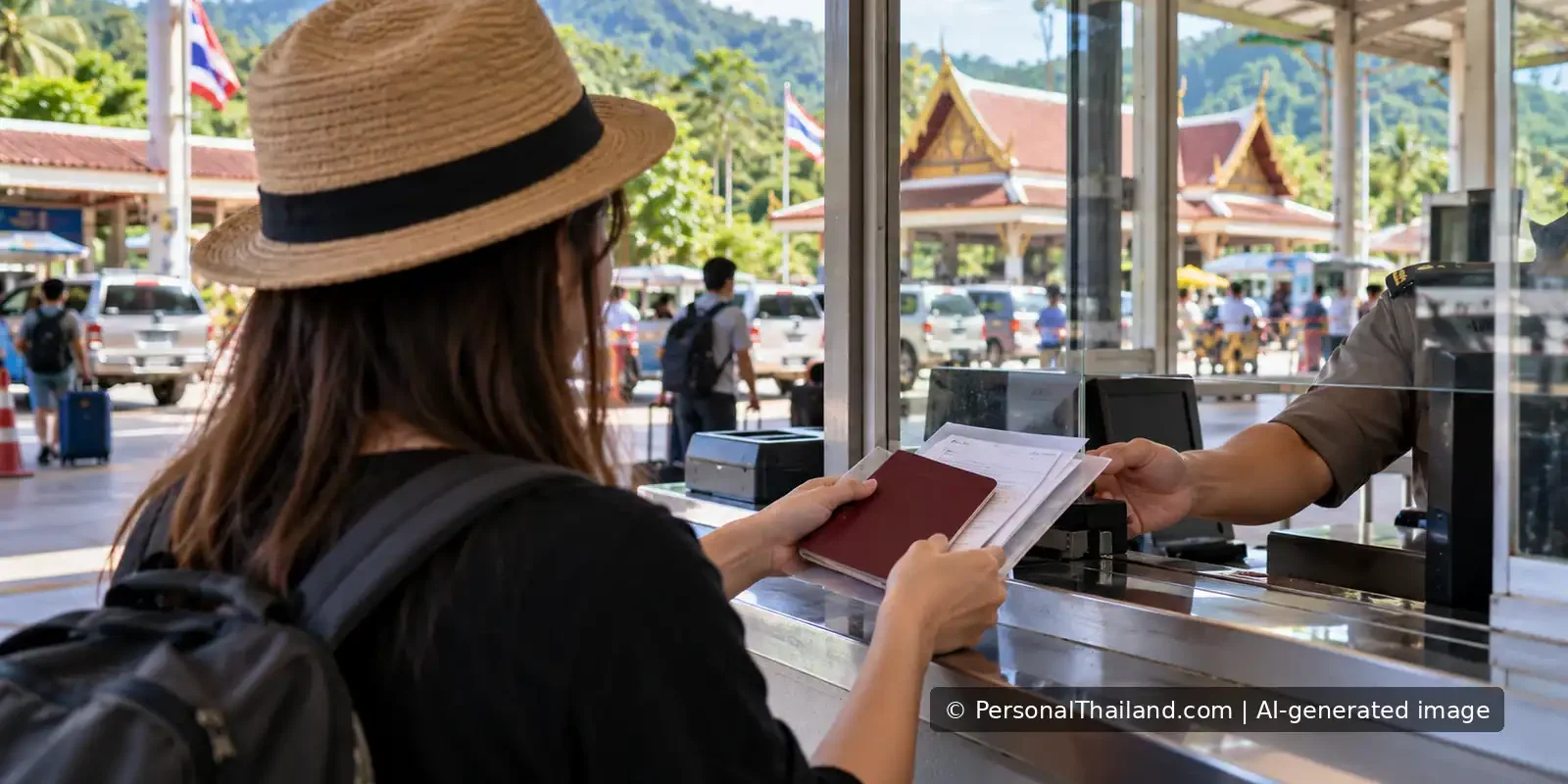
When PersonalThailand wrote about visa runs in December 2008, the discussion centred on a supposed shift from 30 days to 15 days after crossing a land border. That old story captures a familiar problem: travellers sometimes mistake permission to enter Thailand on one occasion for a reliable way to live in the country indefinitely. But the precise 2008 numbers should never be treated as today’s immigration rules.
Thailand’s visa exemption arrangements have changed repeatedly. A particularly important revision took effect in September 2026. Before booking flights or a border trip, travellers need to verify the requirements attached to their nationality, passport, purpose and date of entry, not rely on a decades-old visa-run article.
What is a Thailand visa run?
In everyday speech, a visa run means leaving Thailand and attempting to return in order to obtain fresh permission to stay. It may involve a land border, a flight or an application at a Thai embassy abroad. However, a new stamp on arrival, a consular visa issued overseas and an extension granted inside Thailand are three different administrative processes.
A short trip out of the country does not automatically create a right to another lengthy stay. Border officers consider the applicable category and an individual’s circumstances. Frequent exits and re-entries can prompt additional questions if a person’s actual activity looks different from short-term tourism.
The rules changed again in September 2026
The Royal Thai Consulate-General in Los Angeles published a notice for a revised visa-exemption system effective 15 September 2026. Official embassy guidance now distinguishes categories with different permitted periods and eligibility. The blanket 60-day exemption introduced in 2024 should not be assumed still to apply to every nationality.
The Royal Thai Embassy in Seoul maintains an updated country-list page distinguishing visa exemption, visa on arrival and bilateral arrangements. Because countries can fall under different schemes, avoid copying somebody else’s permitted stay into your own travel plan. The admission stamp and the conditions actually granted to you are crucial.
Why travel by land can require an extra check
Older travel forums often focus exclusively on how many days are stamped at a land crossing. That question is incomplete. You should also examine any limit on cumulative stays, requirements for onward travel and the rules applying to repeated entries. The Thai Embassy in Wellington publishes detailed exemption information, including conditions relevant to its listed scheme. It is useful official guidance, but the category has to match your passport and intended route.
A traveller should distinguish a land-border entry from an airport arrival, and an approved visa from visa-free eligibility. Do not assume a bus company, travel agent or past immigration stamp can guarantee admission. If a border journey fails, you may face a costly and inconvenient change of plans.
Prepare documents before your trip
- Verify passport validity against the current entry rules for your category.
- Check the nationality list on an official Thai embassy or consulate page updated for your travel date.
- Keep evidence of the real purpose of your trip, funds, accommodation and onward arrangements when required.
- Complete any applicable arrival declaration through the official Thailand Digital Arrival Card portal, rather than a paid lookalike.
- Allow for additional checks if you have a long history of frequent entries or previous overstays.
The digital arrival card is an administrative arrival form; submitting it is not a visa and does not guarantee that immigration will grant entry. Travellers should also avoid giving passport scans or banking details to an unknown border-run service without checking who is collecting the information.
Long stays need an appropriate status
Someone working, studying, running a business or genuinely residing in Thailand may need a different legal basis from that of a tourist. A tourist exemption must not be treated as permission for every type of paid work or commercial activity. The right approach is to identify the suitable visa and any separate work authorisation before undertaking the activity.
For families, retirees and people with Thai partners, requirements can also depend on individual circumstances. Getting personalised advice from an official consular channel or qualified professional is safer than attempting to build a long-term plan around repeated short entries.
How to handle conflicting information
Search results often continue to display archived guidance long after a rule changes. Compare the publication date, effective date and category in each document. If an older page says 60 days and a newer official notice says 30 days for your category, do not treat the two as equally current. If the guidance is ambiguous, ask the relevant Thai embassy or immigration office before travelling.
Keep a screenshot or downloaded copy of the official notice you used, while remembering that border authorities apply the rules in force when you arrive. A booking confirmation is not immigration permission, and the phrase “visa run” has no special protective status.
What the 2008 article still teaches
The lasting lesson of the original 2008 post is that entry rules can change abruptly and affect people who rely on repetitive border trips. Its dated claim about a universal 15-day rule, and its derogatory assumptions about travellers, do not belong in modern advice. In 2026 the answer is to check current official eligibility, use an appropriate immigration category and avoid promising yourself a new stay before it is actually granted.




Thai Immigration, ..due to thai mindset, and ..due to Police ‘seminars’ ..believes foreigners cannot be trusted.
The reality is more often, an older [retired] or younger
[refugee]…with limited assets [or exploited] attempts to ‘stay’ in an inexpensive locale. Being as such, to stay, many have to pay and pay to Thai Police.
The Foreigners’ own Embassy takes no interest in this
…the victim being victimized.