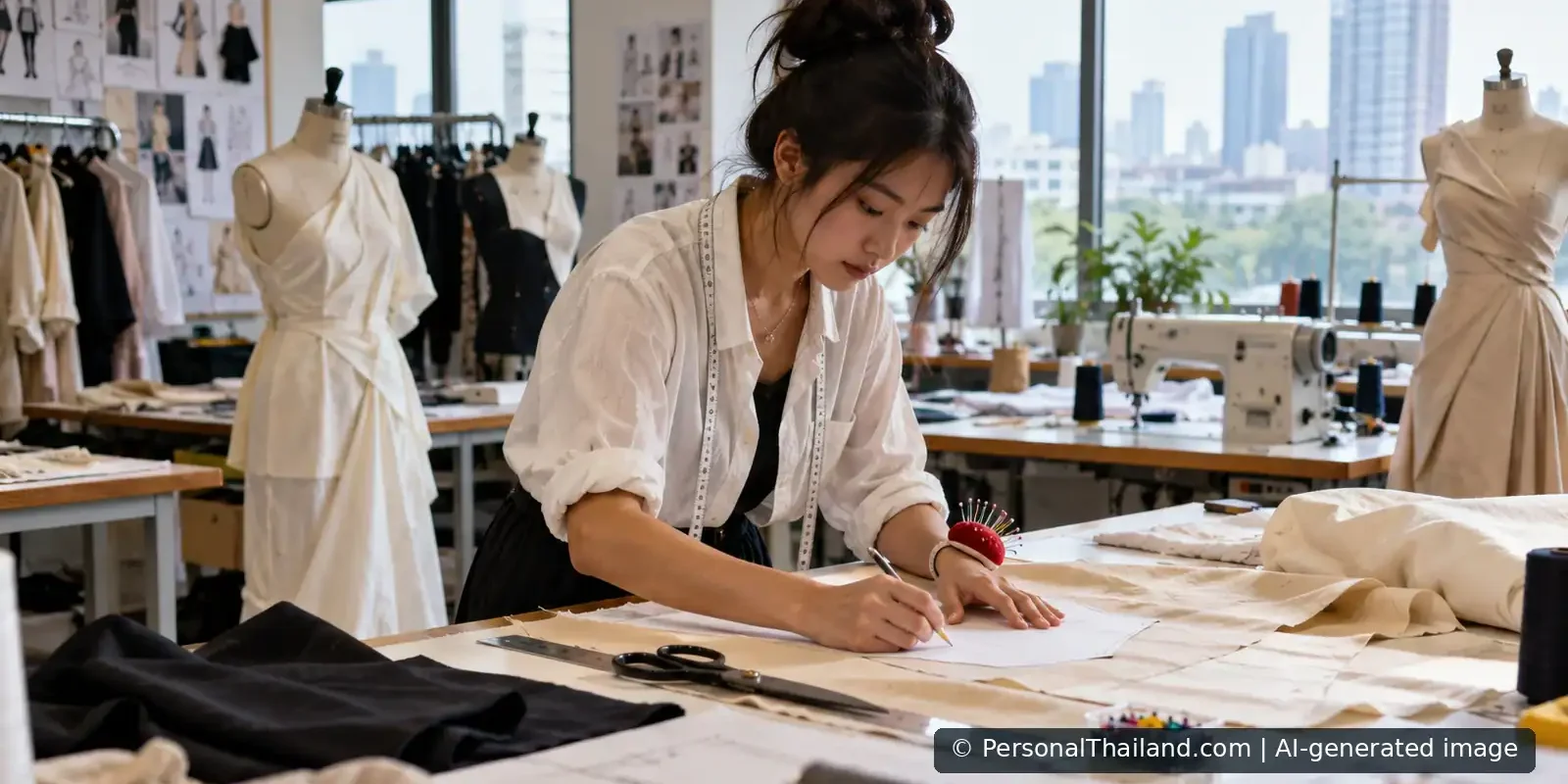
Thailand can be an interesting place to study fashion design, but a good education is not simply about choosing a famous-sounding fashion school. Students should compare recognised programmes, the practical work they produce, teaching language, industry links and the actual cost of completing a qualification. The original 2008 post focused on one international school and implied that its course would simplify later study in Italy; that should not be treated as a present-day visa benefit.
What does fashion design training actually involve?
Fashion education combines artistic thinking with technical discipline. Typical coursework can span drawing, textiles, colour, pattern making, garment construction, collection development, prototypes and presentation. A programme may also teach branding, digital design, photography or retail communication. The balance matters: a student aiming to cut and fit garments needs a different emphasis from someone interested in styling campaigns or merchandising.
For example, Rajamangala University of Technology Thanyaburi publishes details of its fashion-design programme that include design drawing, basic sewing, fashion theory, textiles, pattern development and prototype production. This is useful evidence of what a Thai university curriculum can contain, but it is not a promise that every school offers the same training.
Choose the kind of fashion career first
Ask what you want to make or manage. A designer developing physical collections needs experience with fabric behaviour, fittings and production costs. A pattern maker needs measurements, grading and technical accuracy. A fashion marketer studies consumers, distribution, pricing and digital campaigns. Stylists and content creators build visual narratives, portfolios and collaborative skills rather than necessarily producing garments from scratch.
Bangkok University also describes fashion-related pathways spanning design and creative communication. Its programme overview has been publicly indexed, although that page did not load completely during this review; admissions and current curriculum details should be confirmed directly with the university.
Seven questions to ask before paying a deposit
- Is this a degree, recognised diploma, short course or private certificate?
- Which institution awards the final qualification, and how can I verify that?
- What language will lectures, critiques and assessments use?
- How much studio time is genuinely hands-on?
- Which equipment, software and materials are included in the quoted costs?
- Will students produce a portfolio, garment samples or a final collection?
- What are the terms for withdrawal, refund, internships and overseas study?
Ask to see recent student work and talk with graduates if the school permits it. Showcases may look impressive, but a technical sample book often reveals more about fit, construction and individual skill. If a programme promotes overseas connections, request written details of the partner institution and whether transfer credit is actually available.
Make a portfolio before you apply
A beginner portfolio does not need to be a professional lookbook. Include sketches that show how you think, images of material experiments, a small finished project and notes on why designs changed during development. If you sew, photograph the inside as well as the outside of the garment. If your focus is fashion communication, show a coherent visual story supported by a short explanation.
Originality matters more than copying luxury labels. Admissions reviewers can learn a great deal from a small, carefully documented idea developed through several iterations. Keep digital copies and respect copyright in reference imagery.
Studying in Thailand as an international student
Check the language of instruction explicitly; a programme described in English online may teach primarily in Thai. Ask the institution how it handles admission for overseas qualifications and what documents it provides for the appropriate education-visa process. A school admission letter does not itself guarantee immigration approval in Thailand or an easier visa for a third country.
Budget for far more than tuition: samples, fabric, pattern paper, printing, software, equipment, transport and housing can add up. Some costs may change from year to year. Do not use an old blog’s endorsement, a single advertised semester fee or a promised international career as your financial plan.
From classroom to first job
Students can begin with internships, sample making, small commissions, alterations, styling assistance and carefully scoped collaboration. Learn how to write a production specification, communicate revisions, photograph a finished garment and estimate material waste. These skills travel well between studio work and business roles.
Thailand’s design scene includes independent makers, universities, local textiles and commercial retail; the best route depends on whether you want to create, produce, sell or tell stories about clothing. A course is useful when its projects build demonstrable ability—not merely because its brochure describes a glamorous industry.