Car theft in Thailand is a problem nobody wants to think about at the rental counter. A few practical checks before you drive away can make it easier to secure the vehicle and to explain what happened if it goes missing.
The old post described a reported theft in Phuket and made claims about the people involved and their condition. I have not independently verified those details, so I have removed them. A vehicle can be stolen regardless of the driver’s nationality, and the responsibility for theft lies with the thief.
Car theft in Thailand: before renting
Choose an operator you can identify and contact. Ask for the rental agreement, an itemised price and a receipt. Check who is authorised to drive, where the car may be taken, what to do after a theft and which number is available outside office hours. Save a copy of the agreement separately from the car.
Inspect the vehicle with the provider and record existing marks. Confirm the registration details on the contract and keep the registration number and contact information in a secure place. Do not share identification documents more widely than necessary, and ask how any copies will be stored.
Check the conditions for keys and unattended vehicles. A rental agreement may contain exclusions or charges if a key is lost or the vehicle is left unlocked. Ask the company and insurer how their terms apply rather than assuming that an expensive rental automatically includes every risk.
Understand the insurance
Ask which policy covers theft of the car, damage, third-party liability and belongings left inside it. These may be different kinds of cover. Find out the deductible, exclusions, reporting deadlines and whether you must call a particular emergency number before arranging recovery or a replacement.
Your personal travel insurance and the rental company’s motor insurance are separate. A travel policy may cover some belongings or medical costs but not the car itself. Check the wording and confirm the conditions with the insurer, including any requirements about licences and authorised drivers.
UK travel guidance advises renters in Thailand to check that insurance covers them and that they have the required driving documents. What is required depends on the driver and vehicle. Ask your rental company and insurer before your journey; the right to rent a car does not automatically prove that every driver is insured.
Keep the keys with you
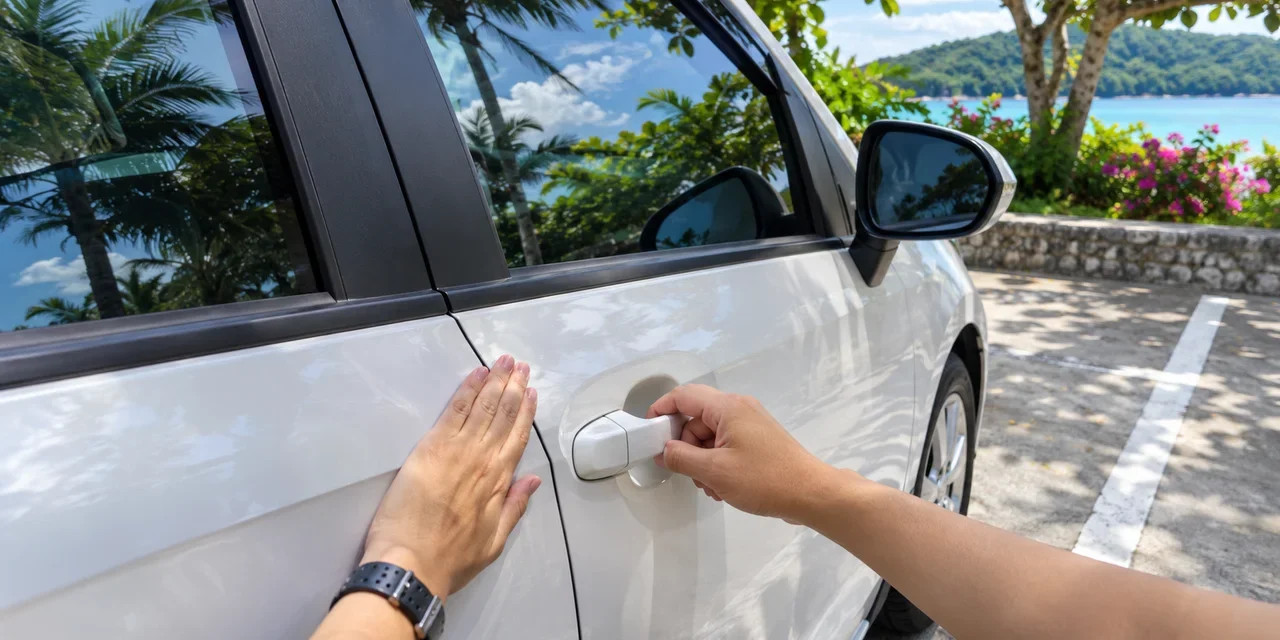
Turn off the engine, take the keys and lock the vehicle when you leave it, even for a short stop. Use a well-lit, managed parking area when available and avoid leaving valuables in sight. Do not leave the rental contract and the only copy of the company’s contact number in the glove box.
If several people use the car, agree who has the key and who will check that doors are locked. Keep a secure record of the registration number, insurance details and rental company’s emergency contact on your phone and somewhere you can reach if the phone is lost.
These steps reduce avoidable problems but cannot guarantee that a theft will not happen. If a car is taken, seek help rather than blaming the person who had it last. Policy conditions and responsibility should be examined using the facts.
If the car is missing
First check that it has not been moved, towed or collected under a parking rule. Ask the location’s staff or the rental provider how to verify this. Do not go looking for a suspected thief or attempt a confrontation. If you believe a crime is in progress or anyone is in danger, call police on 191.
Contact the rental company and the insurer promptly, follow their reporting instructions and ask whether they need a police report. Tourist police can be reached on 1155 for assistance. Record the time and place, the vehicle registration, the circumstances and the reference numbers provided by officials.
Ask for a copy of the police report or a record of your report and check what the insurer needs for a claim. Do not invent an exact time or description if you do not know it. If your passport, bank card or phone was inside the car, contact the relevant providers as well.
If the company asks for payment
Request a written explanation of the charge, a copy of the relevant agreement and details of any insurance claim. You can seek independent legal advice if a dispute cannot be resolved. Avoid signing a settlement in a language you do not understand; ask for an interpreter or translation.
For related travel decisions, see our guide to watercraft rental disputes and our guide to Thai driving licences. Each vehicle and policy has its own requirements, so check the documents for your car.
A record that helps later
Before taking the car, store the rental agreement and emergency contact in an account you can access from another device. If a vehicle disappears along with your phone, that backup can save time. Keep identification details private and do not post a copy of your contract publicly.
When making a report, explain what you observed rather than guessing who took the vehicle. Note whether you still have both the key and any spare supplied by the provider. Your insurer or the police can tell you what additional information is useful for the case.
FAQ
Does travel insurance automatically cover a stolen rental car?
No. Check the motor policy, your travel policy and any exclusions with the relevant insurers.
Who should I call if a rental car disappears?
Contact the rental company and insurer promptly and report a suspected theft to police. Tourist police can assist on 1155.
What should I do with the keys when parking?
Take them with you, lock the vehicle and follow the terms in your rental agreement.
What details should I keep if a rental car goes missing?
Keep the registration number, rental agreement, insurer and rental-company contacts, the time and location, and any police reference number. Follow the provider’s reporting instructions.
More from Personal Thailand
If you enjoy practical reporting and personal perspectives on Thailand, you can support my work and explore member-only content through either platform:
- Subscribe to Personal Thailand on X — creator membership with access to applicable subscriber-only posts and benefits.
- Join or support Personal Thailand on Buy Me a Coffee — browse available memberships and support options.
These are separate services with different charges and membership benefits. Paid access may be required; subscribing on one does not automatically grant access on the other. The main information in this article is free to read above.