
Editorial update: 17 October 2026. This modern travel guide replaces an older historical article; opening hours, admission, transport schedules and weather may change.
Mae Hong Son is a northern Thailand province shaped by mountains, valleys and long, winding roads. Travellers often arrive for Pai and then discover that the wider province offers tranquil lakes, temples with distinctive architecture, markets and communities with their own traditions. It rewards a slower itinerary much more than an ambitious list of destinations crammed into a single afternoon.
An older version of this article made broad claims about ethnic populations and used language that reduced people to tourist attractions. This guide focuses instead on places you can visit, the practical distances between them and how to approach local communities respectfully. Natural scenery and cultural encounters are both reasons to stay longer.
At a glance: Plan a Mae Hong Son visit with Pai, Pang Ung, temples, mountain roads and respectful community experiences in northern Thailand.
Start with the mountain setting
Mae Hong Son town sits amid rugged terrain and is different in pace from Chiang Mai. Roads twist through hills, and journeys that look short on a map can consume an unexpected amount of time. Travellers who get motion sickness should consider the driving style, request breaks and leave room in the day for slower sections. Scenic travel can be enjoyable without treating the road itself as a race.
Pang Ung and peaceful lakeside scenery
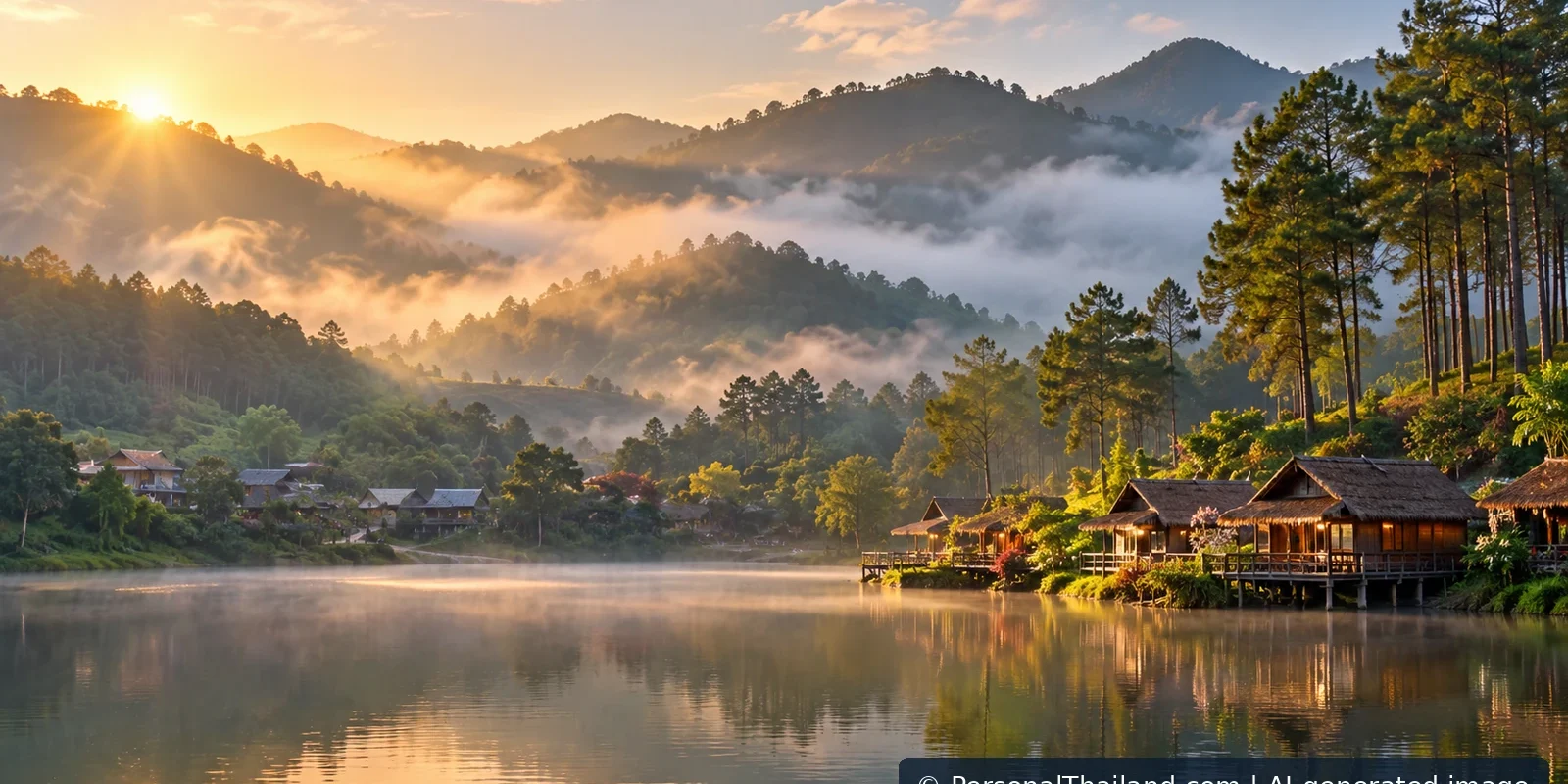
The Tourism Authority of Thailand includes Pang Tong Royal Development Project 2, commonly called Pang Ung, in a suggested Mae Hong Son itinerary. Pine-lined water and morning mist explain why it appears in so many travellers’ plans. Treat photographs as inspiration rather than a weather promise: fog, water levels and site access vary. Check the current rules for entering or staying at the project, and avoid building a tight schedule around a precise sunrise photograph.
Temples in Mae Hong Son town
The official itinerary pairs Wat Chong Kham and Wat Chong Klang as a cultural stop. These temples are part of the town’s character, rather than merely dramatic photo backdrops. Dress modestly, speak quietly, remove shoes where indicated and ask permission before photographing ceremonies or worshippers. When visiting in the evening, allow time to walk around town rather than arriving for a few hurried images.
Pai: markets, food and a slower pace
Pai is popular for cafés, scenery and its small-town atmosphere. Pai Walking Street is an established visitor experience on Chaisongkram Road, listed by the Tourism Authority of Thailand. Traders and activities vary by season; do not assume an old schedule applies to every night of your trip. Food stalls can be enjoyable places to try northern flavours, but ask about ingredients if you have food allergies or avoid meat or fish sauce.
People and cultural experiences
Northern Thailand is home to communities with different languages, identities and traditions. Community tours should be arranged through reputable local hosts who can explain consent, photography and how fees support residents. Do not assume a community exists for tourists to inspect or that one person represents everyone from the same background. If you visit a craft workshop or village, ask before taking close-up photos and buy products only when you genuinely want them.
Hiking and outdoor activities
The province offers trekking, riverside activities and hill viewpoints, but the suitability of a route depends on weather, fitness and whether local guides or permits are necessary. Plan around daylight, carry drinking water and avoid hiking onto unfamiliar trails simply because other visitors did so in a social-media video. Road and trail closures can be temporary, so local information is more useful than a years-old blog recommendation.
A sensible three-day plan
With limited time, spend your first day in Mae Hong Son town, including the paired temples and a local meal. Set aside another day for a planned lakeside or mountain visit, allowing room for a change in conditions. Use a final day for Pai only if the transfer makes sense for your route; otherwise explore the province at a gentler pace. A few meaningful stops are better than several rushed long-distance trips.
Where to sleep and how to get around
Consider whether you want a room near Mae Hong Son town, a rural retreat or accommodation in Pai. Each supports a different kind of holiday. If you rent a vehicle, confirm the correct driving licence and insurance, then allow extra time on bends and mountain roads. If arranging a driver, clarify the total route, waiting time and return plan before departing. Public transport can connect towns without necessarily serving every remote attraction.
Before departure
Check conditions at any remote attraction, current accommodation check-in procedures and the weather forecast. Keep your phone charged but do not rely entirely on mobile data in mountainous areas. The featured image is an AI-produced scene inspired by Mae Hong Son landscapes, not proof of the current appearance of Pang Ung or another named viewpoint. Official visitor pages support the destinations, while individual access details still require checking.
Frequently asked questions
Is Mae Hong Son the same place as Pai?
No. Pai is a town and district within Mae Hong Son province, not the provincial capital.
Can I visit everything in a day?
No realistic single-day trip covers the main towns, mountain roads and quieter sites comfortably.
Are cultural tours appropriate?
They can be when residents consent and local hosts explain respectful visiting practices.
Official sources and further reading
These verified source pages establish the location and attractions described. Always reconfirm changing visitor details with the destination or operator before travel.
- Tourism Authority of Thailand — Mae Hong Son, Tak and Sukhothai itinerary
- Tourism Authority of Thailand — Pai Walking Street
Image disclosure: © PersonalThailand.com | AI-generated image. Featured imagery is an illustrative interpretation and should never be presented as a documentary photograph of a named site.


1 Comment