Editorial update: 17 October 2026. This modern travel guide replaces an older historical article; opening hours, admission, transport schedules and weather may change.
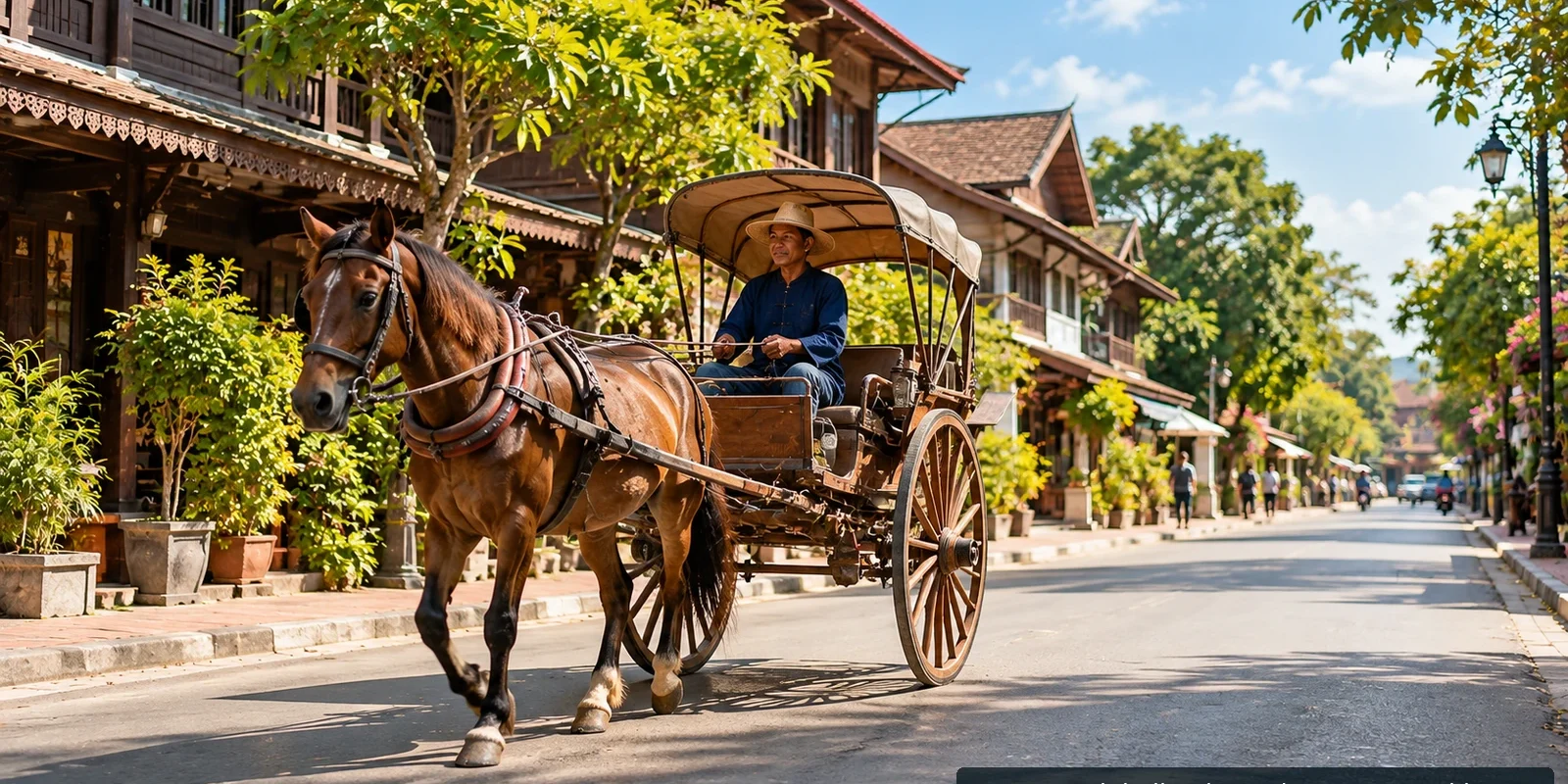
Lampang is a northern Thai destination worth more than a transfer stop. It has a slower urban rhythm than some better-known northern cities, a long association with horse-drawn carriages, wooden buildings, ceramics and temples shaped by Lanna traditions. Its position by the Wang River gives a visit a pleasant walking-and-exploring character.
The original PersonalThailand post focused on geography and old rankings that do little to help today’s visitor. A useful Lampang guide starts with the old trading streets, allows time for the temples and treats heritage activities as something to experience thoughtfully rather than assuming every service is available all day.
At a glance: Discover Lampang through Wat Phra That Lampang Luang, the Wang River, heritage streets, local ceramics and practical northern Thailand travel tips.
Why the Wang River matters
The Wang River runs through Lampang and helps give its older streets their character. The Tourism Authority of Thailand highlights the Ratsadaphisek Bridge, often nicknamed the White Land Bridge, and the Kad Kong Ta area as markers of local history. A stroll here makes the city’s trading past easier to imagine than a drive directly from one sightseeing stop to another. Look for the older buildings and smaller shops without blocking residents or street traffic.
Kad Kong Ta and the old commercial quarter
Kad Kong Ta is often described as Lampang’s heritage commercial area. Visitors come for architecture, small shops and the sense of an older trading route. If you are hoping for a market, verify which hours or dates particular vendors operate; the street itself and temporary events are not the same thing. Enjoy cafés and locally made goods, and take care when photographing homes or private businesses.
The horse-carriage tradition
Horse-drawn carriages are part of Lampang’s tourism identity, but they should not be treated as an automatic service included with a visit. If you choose a ride, ask about the route, price and treatment of the animal before boarding. Avoid operators if an animal appears unwell, distressed or overworked. Walking or cycling can be an equally enjoyable way to appreciate the old streets, depending on weather and traffic.
Wat Phra That Lampang Luang
This major temple in Ko Kha district is one of Lampang’s best-known landmarks. The Tourism Authority identifies its distinctive old architecture and long cultural importance. Go with enough time to look at the arrangement of buildings rather than hurrying through a single photograph. As at other functioning temples, dress conservatively, remove shoes in the appropriate places and respect areas reserved for prayer.
Other temples and heritage buildings
Beyond the headline attraction, Lampang has city temples, wooden buildings and regional architecture worth exploring. Wat Phra Kaew Don Tao and older neighbourhood sites are part of the provincial tourism descriptions. Some are active religious compounds with ceremonies that may affect access. A local walking route and one major temple outside town can make a better day than trying to visit every temple on an unsorted online list.
Ceramics and shopping
Lampang has a strong association with ceramics, including familiar rooster-bowl motifs. Shops and workshops offer a chance to see a different side of the province’s culture. Ask whether an item is locally made rather than assuming all souvenir ceramics are produced nearby. If you plan to take fragile pieces home, check the packaging and your airline baggage allowance; the cost of safely transporting a large bowl may exceed the souvenir itself.
Nature outings beyond the town
The provincial tourism guide mentions hot springs and other countryside attractions, including the Chae Son area. These can be rewarding, but rural journeys require more time and may depend on conditions. Check any park or bathing rules with the relevant site before setting off, and do not assume a posted temperature or access price from an old blog remains valid. Choose comfortable footwear for wet or uneven ground.
How to plan two days
Spend a first day exploring the old quarter, riverside bridge, food and a heritage walk. On the second, visit Wat Phra That Lampang Luang and, if time permits, a pottery or crafts stop. This itinerary gives the temple the attention it deserves and leaves room for travel between districts. Book transport with a clear return arrangement instead of assuming vehicles will wait at isolated attractions.
Food, accommodation and practical checks
Stay near the city if your main interest is walking, food and older architecture. Rural accommodation can be relaxing but may involve extra driving. Local eateries are good places to try northern dishes, and staff can sometimes help explain ingredients if you have allergies. When you book, compare location and cancellation policies as carefully as the headline room rate. Confirm current attraction hours separately before leaving for a specific stop.
Frequently asked questions
Is Lampang only a place to pass through?
No. The old town, temples, ceramics and slower pace make it suitable for an overnight visit.
Where is Wat Phra That Lampang Luang?
It is in Ko Kha district, outside central Lampang city.
Can I always find a horse-carriage ride?
Do not assume availability; ask a local operator about welfare, routes and cost.
Official sources and further reading
These verified source pages establish the location and attractions described. Always reconfirm changing visitor details with the destination or operator before travel.
- Tourism Authority of Thailand — Lampang province
- Tourism Authority of Thailand — Wat Phrathat Lampang Luang
Image disclosure: © PersonalThailand.com | AI-generated image. Featured imagery is an illustrative interpretation and should never be presented as a documentary photograph of a named site.