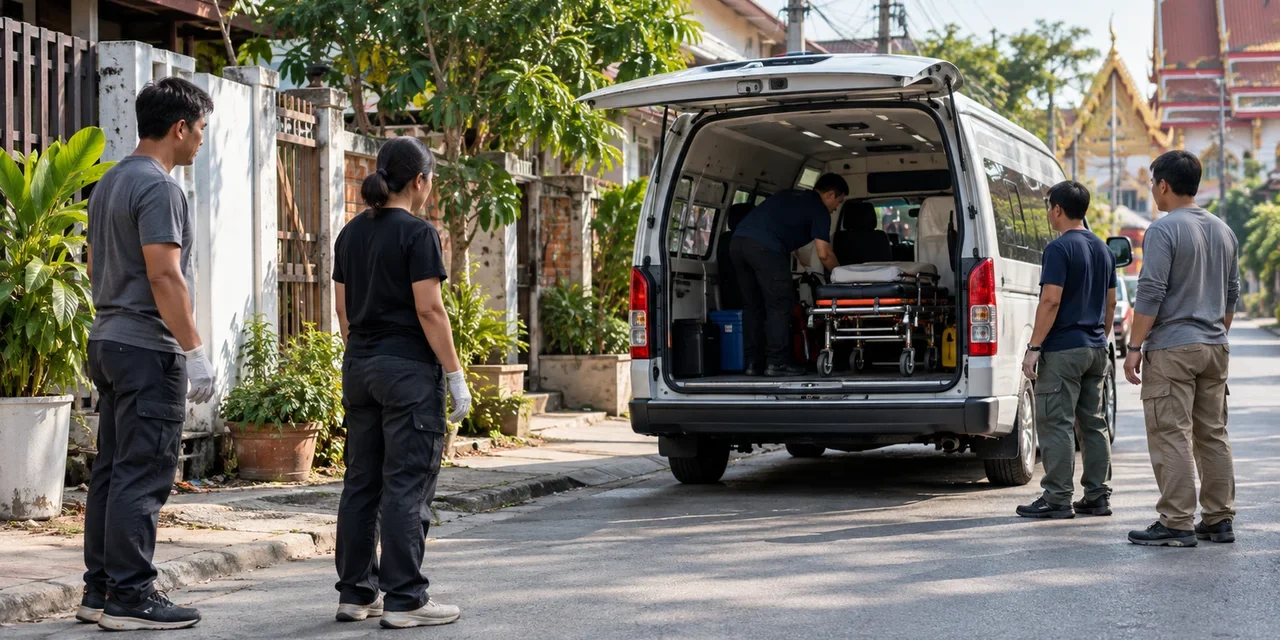
Thai crime scene media coverage was the target of this page’s original satire, particularly intrusive photographs and the treatment of victims’ identities. The concern about dignity was valid, but sweeping accusations about reporters, police and rescue volunteers were not a responsible way to express it. I want this update to explain what a witness or family member can do without turning someone else’s worst day into a public spectacle.
Thai crime scene media coverage and public interest
A report can tell readers that an incident occurred without showing a person’s face, identity card, home address or grief. Ask what each detail contributes to understanding the event. If removing it changes nothing except the reader’s ability to identify a private person, there is a strong reason to leave it out.
The old post suggested that poor practice was routine and deliberately encouraged. I cannot establish those general allegations from the material supplied. This update therefore treats privacy, access and evidence handling as standards to ask for, rather than declaring every responder or journalist guilty of misconduct.
Public interest and public curiosity are different tests. Accountability may require reporting on an official response, delays or documented failures. It does not automatically require broadcasting a victim’s last moments or a relative’s reaction. A restrained image and a clear explanation can convey the seriousness of a story without exposing someone unnecessarily.
Rescue foundations have a wider role
Thailand has charitable rescue foundations whose work extends beyond the scenes that attract cameras. Poh Teck Tung Foundation’s own public material, reviewed in 2026, describes rescue, disaster relief, community medical services and other assistance. That is a useful correction to the old article’s dismissive label for volunteers.
A uniform or vehicle does not make every person at a scene responsible for the same task. Police, medical personnel, volunteers and reporters have different roles. If you need information, ask who is coordinating the response and which person can answer your specific question. Do not assume that the nearest person knows the medical or investigative position.
I would judge conduct by what actually happened, documented carefully, rather than by a nickname applied to a whole organisation. If you believe someone behaved improperly, record the time, place and observable action for a complaint. Avoid embellishing the account with assumptions about motives or supposed connections.
If you arrive as a bystander
Keep yourself safe and leave access clear for responders. Do not cross barriers or move belongings to obtain a better view. If help has not been called, explain the location and what you can observe from a safe position. Follow the dispatcher’s instructions rather than trying an intervention you are not equipped to perform.
As verified for this 2026 update, medical emergencies can be reported on 1669 and police emergencies on 191. Give a street name, landmark and callback number. If you are in a building, explain the entrance and floor. One accurate caller can be more useful than a crowd making partial reports from different assumptions.
Put the phone camera away unless there is a genuine evidential reason to record something from a lawful, safe position. Even then, do not livestream a victim or upload the material for reactions. If you witnessed something relevant, tell the investigating officer and preserve the original file privately for appropriate handling.
A witness account needs boundaries
Write down what you directly saw or heard as soon as you can do so calmly. Separate that from what another bystander said. If you arrived after the event, say so. Being honest about a limited view is more helpful than trying to complete the story from conversation around you.
Do not coordinate accounts with other witnesses to make them match. Ask for the appropriate contact if you later remember something relevant. Keep your notes in their original form and record when a later addition was made. A private factual record is different from a polished social media narrative.
The same care applies when a friend asks what happened. You can say that an incident is being dealt with without naming a person or assigning a cause. Our article on reading crime information carefully explains why a report, an allegation and an established finding should not be treated as the same thing.
If a relative or friend is involved
First establish a verified contact with the hospital, police unit or other responsible organisation. Avoid relying solely on a photograph circulating in a group chat. Ask what information can be confirmed and what remains unknown. If you are abroad, your embassy or consulate may help explain available routes for assistance, but ask about its actual role.
Choose one trusted person to organise updates if that suits the family. Keep a log of calls, names, reference numbers and the next agreed contact. This can reduce the burden of answering the same question repeatedly. It also helps avoid one uncertain message becoming a family-wide statement of fact.
I would keep copies of identity documents in a secure place and send them only through a verified route when requested for a legitimate purpose. A stranger asking for passport pages through a public comment thread is not enough. Check the recipient independently before sharing anything sensitive.
Handling reporters and published images
You can ask a reporter who they work for, what they want to publish and how to contact the editor. You do not have to fill silence with information while deciding whether to speak. A brief statement that the family is seeking privacy may be all you wish to provide. Do not feel obliged to speculate because someone has a deadline.
If an intrusive image appears, save the URL, publication time and a screenshot for your private record. Ask the publisher or platform to remove or obscure identifying material and explain the concern clearly. If necessary, obtain legal advice about the available options. I cannot promise that every request will succeed or that every publication has the same legal position.
Avoid spreading the offending image while asking others to complain. That can increase the very exposure you want to stop. A link sent privately to the responsible editor may be enough. If several relatives are involved, agree who will communicate with the publisher so requests are consistent.
Better reporting starts with small decisions
As the woman behind this site, I want our own updates to meet the standard we ask of others. That means no private names where they are unnecessary, no graphic illustrations and no invented certainty. An AI-generated image must be clearly labelled and must never be presented as documentary evidence of the incident.
Our guide to sharing Thailand experiences responsibly applies beyond crime reporting. A story can be honest, critical and useful while still protecting the people caught in it. Checking a detail, removing an image or waiting for confirmation are editorial decisions with real consequences for families.
FAQ
Are rescue volunteers the same as reporters?
No. People present may have very different responsibilities. Ask who is coordinating the response and direct your question to the appropriate person.
Should I post a crime-scene video to help identify someone?
Avoid public identification attempts. Preserve potentially relevant material privately and provide it through an appropriate official channel.
Can a family ask for an intrusive photograph to be removed?
Yes, a family can request removal or obscuring from the publisher or platform. The outcome is not guaranteed; legal advice may be useful if the problem continues.
What should a witness do first?
Stay safe, leave access clear and contact emergency services if needed. Give a factual account of what you directly observed without adding other people’s theories.
More from Personal Thailand
If you enjoy practical reporting and personal perspectives on Thailand, you can support my work and explore member-only content through either platform:
- Subscribe to Personal Thailand on X — creator membership with access to applicable subscriber-only posts and benefits.
- Join or support Personal Thailand on Buy Me a Coffee — browse available memberships and support options.
These are separate services with different charges and membership benefits. Paid access may be required; subscribing on one does not automatically grant access on the other. The main information in this article is free to read above.