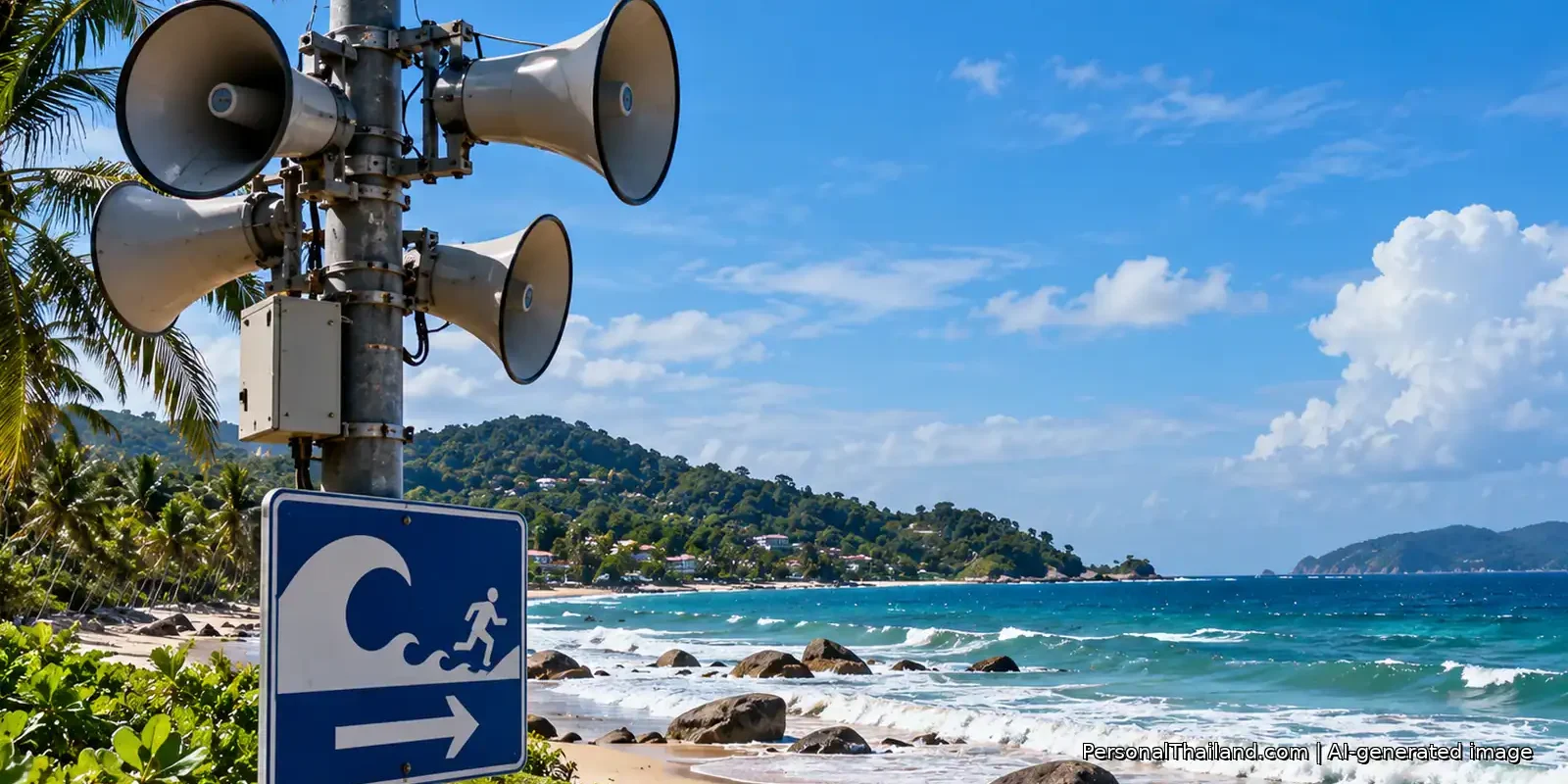
A holiday beside the Andaman Sea is usually about beaches, boats and watching the sunset. It is also worth knowing what a tsunami warning means before you arrive. In a coastal emergency, being familiar with an evacuation sign and knowing when to move inland may matter far more than the latest social-media update.
This page originally reported on a September 2007 earthquake in the wider Indonesian region and a tsunami alert affecting Thailand. That was a historical report, not a warning for today. The useful lesson is how travellers and residents can prepare for a rare but potentially serious coastal hazard.
Which parts of Thailand need tsunami awareness?
Thailand has coastlines on the Andaman Sea and the Gulf of Thailand, but their tsunami hazards are not identical. The country’s devastating 2004 Indian Ocean tsunami affected the Andaman coast, including communities in Phuket and Phang Nga. An evacuation plan should be based on the precise beach or district where you are staying, rather than a general statement about all of Thailand.
Before booking coastal accommodation, look for locally posted evacuation maps and ask your hotel how guests would reach a safe location. Routes on a beachfront island may differ from those in a city, and a sign for one resort cannot be assumed to cover a neighbouring beach.
Recognise warnings that require immediate action
According to the National Oceanic and Atmospheric Administration’s tsunami preparedness guidance, natural warning signs can include an earthquake that feels strong or lasts a long time, a loud roar from the sea, or an unusual, rapid rise or retreat of ocean water. You may notice only one of these signs.
If you are close to the shore and experience a strong or prolonged earthquake, protect yourself from the shaking first. As soon as you can move safely, head for high ground or well inland. Do not stand on the beach to watch what happens, and do not wait for an official message when natural warning signs are clear.
The Thai Meteorological Department’s guidance likewise tells people near a coast to move away from the shore towards higher ground after significant shaking, without waiting for an announcement.
Prepare before anything happens
- Identify a route: Find the nearest posted evacuation direction and a secondary way to leave the waterfront if the first is obstructed.
- Know your meeting point: Travelling groups should agree where to meet after reaching safety rather than turning back to search on the beach.
- Keep essentials accessible: Have shoes, your phone, necessary medication and a small bag where you can reach them quickly, but do not delay evacuation to collect possessions.
- Ask local staff: Your hotel, diving operator or boat company should know its location-specific emergency arrangements.
- Note mobility needs: If anyone in your party uses a wheelchair or needs assistance, discuss a realistic evacuation option in advance.
Where should you check official information?
The Thai Meteorological Department’s warning and earthquake section is a starting point for official Thai information. Follow announcements from local disaster authorities and instructions delivered on site. If the mobile network is overloaded, radio broadcasts, hotel staff and local officials may be more useful than continuously refreshing an app.
Do not assume that a screenshot circulating in a chat group is genuine or current. Check the time, issuing agency, affected area and whether an alert has been cancelled or replaced. A headline from a previous earthquake can be shared again years later and cause unnecessary alarm.
What if you are already on a boat?
Boating risks depend on distance offshore, the vessel and the instructions from maritime authorities. Do not attempt to devise a universal rule from an internet article. Tell the crew what warning you received, follow their established emergency procedures and pay attention to official marine instructions.
On land, avoid heading towards ports, rivers and beachfront roads once evacuation is underway. Narrow roads may fill with traffic; follow marked pedestrian routes if local authorities direct you to do so. Do not drive into a coastal hazard zone to collect luggage or friends.
When is it safe to return?
One unusual wave is not necessarily the end. Tsunami activity can involve multiple surges, changing currents and dangerous debris. Stay in the safe area until the responsible local authorities announce that you may return. Looking at a calm-looking beach from higher ground is not a substitute for the official all-clear.
After an emergency, watch for damaged roads, electrical hazards and contaminated water. Let authorities assess whether accommodation, transport and utilities can be used safely. A travel insurer and your accommodation provider can help with the practical implications once everyone is safe.
Prepared, not alarmed
Most trips to Thailand’s coast pass without any tsunami warning. Knowing the natural signs, understanding your local escape route and using official sources can help you respond sensibly without treating every earthquake headline as a disaster. Check live alerts before travel.