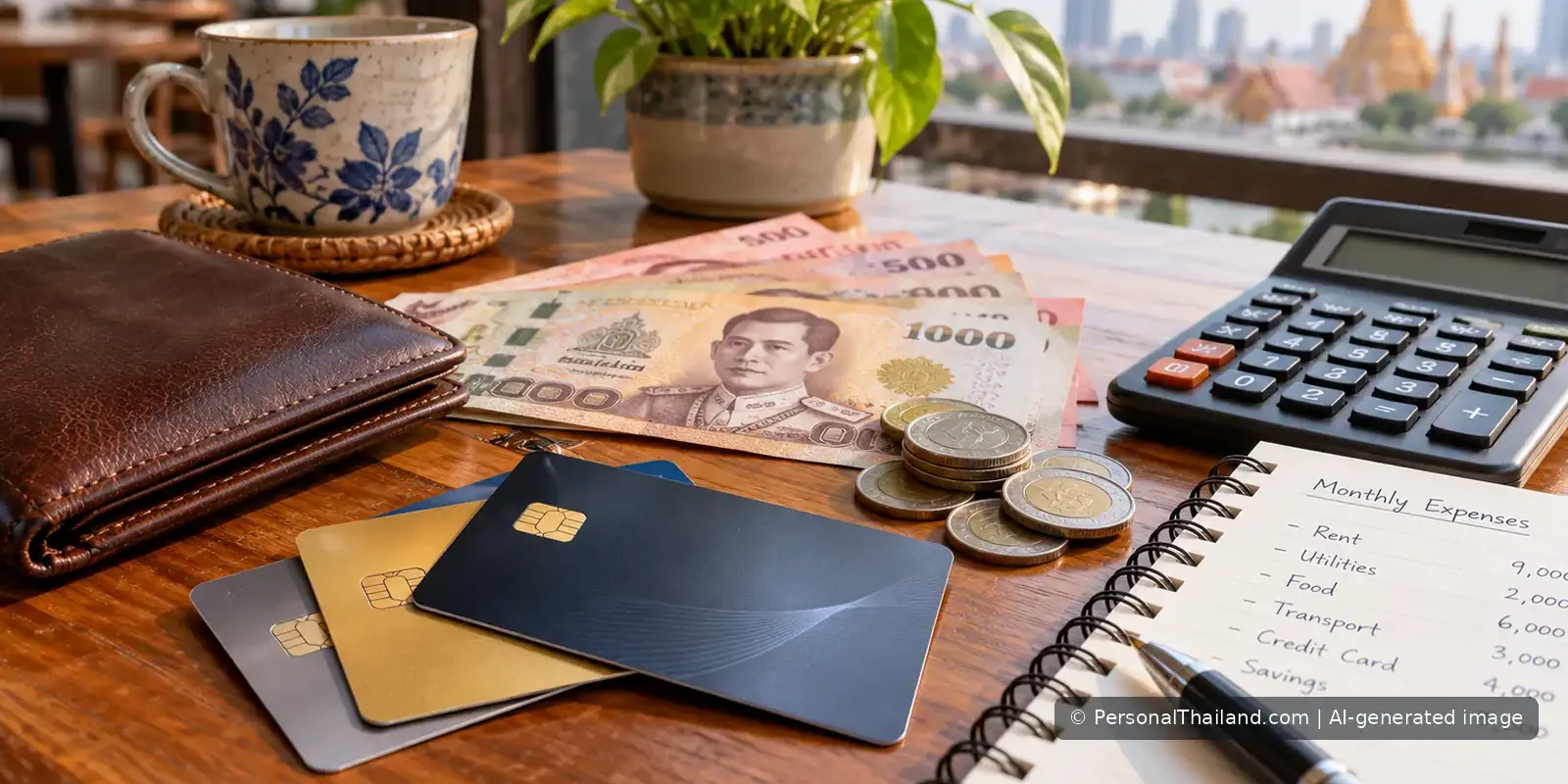
Credit cards are common financial tools in Thailand, but they require the same care as anywhere else. A card can make online purchases, hotel reservations and unexpected expenses more convenient. It can also become expensive when a balance is carried for months, payments are missed or the owner treats an available credit limit as additional income.
A Personal Thailand article from August 2007 criticised the spread of credit cards and blamed Thai consumers collectively for overspending. That judgment was unfair and is not an explanation of household debt. Borrowing decisions depend on income, product design, financial education, lender practices and individual circumstances, not nationality. The useful question today is how to choose and use credit without losing control of the cost.
How credit cards work in Thailand
A bank or other authorised card issuer sets a credit limit and issues a statement showing purchases, fees, repayments and any outstanding balance. A cardholder may avoid certain purchase-interest charges by paying eligible statement amounts in full and on time, subject to the agreement. Paying only the minimum can leave an interest-bearing balance that takes much longer to clear.
Not all cards have identical rules. Annual fees, promotional offers, cash-advance charges, instalment plans and foreign-exchange conversion terms can vary between products. Before applying, read the issuer’s latest product terms and the actual cost of the transactions you expect to make. Do not rely on a friend’s old card statement or an advertisement that omits exclusions.
Compare more than rewards and welcome gifts
Rewards can be appealing, especially for people who travel or spend regularly on household essentials. But an attractive sign-up bonus has little value if annual fees or financing costs exceed the benefits. Compare the full terms instead of focusing on a headline rebate:
- Interest and repayment rules: Check when interest starts, how it is calculated and what changes when you miss a due date.
- Fees: Look for annual, late-payment, cash-advance, cross-border and foreign-currency charges where applicable.
- Eligibility: Requirements for income, identity, residence and employment differ by issuer and applicant category.
- Security: Look for transaction alerts, card-lock controls and a clear process for disputing unauthorised charges.
- Service: Find out how to reach the issuer and replace a lost card, particularly if you travel overseas.
Promotional cashback rates and eligibility rules change. Check the full current offer and its expiry date directly with the issuer before making a spending decision.
Why the minimum payment deserves attention
A credit card statement may show both the total due and a smaller minimum payment. The minimum is not a recommendation for how much you should ideally pay. If you carry a balance, interest may continue to build under the applicable contract. A series of small payments can make an apparently manageable purchase considerably more expensive.
Thailand’s minimum-payment rules have also been adjusted at different times. For example, the Bank of Thailand debt FAQ describes temporary arrangements that applied during 2025. Do not use an older published percentage as a guarantee of the minimum required on your next statement. Follow the terms shown by your current issuer and seek clarification if something does not match your agreement.
A practical habit is to review statements every month, set payment reminders and pay the full amount when financially feasible. If that is not possible, stop adding optional purchases until you understand the cost of the outstanding debt.
What responsible lending means for customers
The Bank of Thailand’s responsible-lending policy emphasises clear information when credit is offered, transparent terms during repayment and appropriate assistance when borrowers experience difficulties. It also encourages repayment practices that reduce persistent interest costs.
The policy is about both sides of the transaction: financial institutions must explain products fairly, while customers should assess whether payments fit their income and essential living expenses. A large approved limit is not proof that using all of it is affordable. Similarly, one rejected application does not prove that all banks reject people in the same circumstances.
Everyday precautions when paying by card
Use reputable payment channels and keep your card in sight when possible. Check the amount and currency before confirming a purchase. For overseas websites or travel reservations, examine any dynamic currency conversion choice rather than assuming that a displayed amount in your home currency is automatically cheaper.
A transaction alert can help identify unexpected charges early. If something looks wrong, contact the card issuer through its official app, website or the number printed on the card—not a number supplied by an unsolicited message. Never share one-time authentication codes or banking passwords with someone calling to “verify” a refund.
Keep receipts for higher-value purchases and review refunds after a booking cancellation. A merchant may process a refund before it appears on the card statement, and the payment provider’s dispute rules and time limits can vary. Ask the issuer about its official process rather than assuming all disagreements result in an automatic chargeback.
If debt becomes difficult to repay
Early action is usually more helpful than ignoring bills. List what you owe, the required payments, the interest and fees, and the amount realistically available after essentials. Contact the lender directly to discuss repayment options and whether a restructuring arrangement is appropriate. Ask for any agreement in writing, including its cost and consequences.
Do not take a second expensive loan simply to cover the minimum payment on the first without checking whether it makes the overall debt worse. Be cautious about companies that promise to erase debt instantly in exchange for upfront fees or account access. For information on rights and debt-assistance measures, start with the Bank of Thailand and your financial institution.
What about foreign residents?
Some foreign residents use Thai-issued cards, but approval should not be assumed. Each issuer assesses applicants according to its current product policies, which may include acceptable identification, local income, residence evidence, employment history and existing liabilities. A work permit by itself is not a universal guarantee of approval.
If you are new to Thailand, it may be sensible to establish a documented banking history and compare whether a debit card, local credit card or international card is best suited to your needs. Always consider exchange-rate fees and the ability to handle disputes when overseas.
The lasting lesson from the 2007 debate
Credit is neither proof of prosperity nor evidence that a whole society cannot manage money. The important measure is whether the product is transparent and affordable for the person using it. Read the statement, compare costs, repay deliberately and seek help before a manageable balance turns into a prolonged problem.