Thailand’s halal food hub ambition was questioned in a 2007 Personal Thailand post. The subject was food production and exports, but the old article also linked Muslim identity to unrelated violence and made unsupported claims about food safety. Those connections were misleading and have been removed.
Thailand’s halal food hub ambition
Halal food is food prepared and handled in accordance with applicable Islamic dietary requirements. For a food business, the relevant questions can include ingredients, sourcing, production, handling and certification. A product is not automatically halal simply because it was made in Thailand or served in a Thai restaurant.
The original writer was sceptical of the word “hub.” A policy target is an ambition, not by itself proof that an industry has achieved a particular ranking. In 2024, Thailand’s government public relations department described a goal of developing the country’s halal industry as an ASEAN hub by 2027. That is a dated government objective; this article does not claim that the target has already been met.
The Central Islamic Council of Thailand publishes information and documents about halal certification. Certification requirements and recognition can depend on the product, production process and destination market. A producer seeking to export should check the current requirements with the relevant certifying bodies and the authorities in the destination country rather than relying on a general description in a blog.
For customers: ask about the actual food
If certification matters to you, ask the business about the specific product, ingredients and preparation. A restaurant’s menu, a packaged product and a manufacturing facility can involve different questions. A logo or claim should be checked against the relevant certifying body’s current information, especially if the status or scope is unclear.
Vegetarian-looking food is not automatically proof that every ingredient, cooking utensil or preparation step meets a person’s requirements. Conversely, a broad assumption about a country tells you little about a specific certified product. Speak to the business about your needs and make your own decision based on reliable information.
A useful policy question
When an official describes a country as a hub, ask what is being measured: certified businesses, export value, market access, jobs or another outcome. These measures are not interchangeable. Compare the stated target with dated evidence and check whether a result is a forecast, a plan or a completed outcome.
Our article on Thailand’s use of the word hub looks at the broader policy language. The aim here is to understand food certification and the industry without making assumptions about people based on religion.
Certification and the export market
A food producer may need to understand both the requirements of a Thai certifying body and the rules or recognition arrangements in the country receiving the goods. These are not always identical questions. Ask which products and production sites a certificate covers, its validity and whether the destination authority recognises the relevant certification.
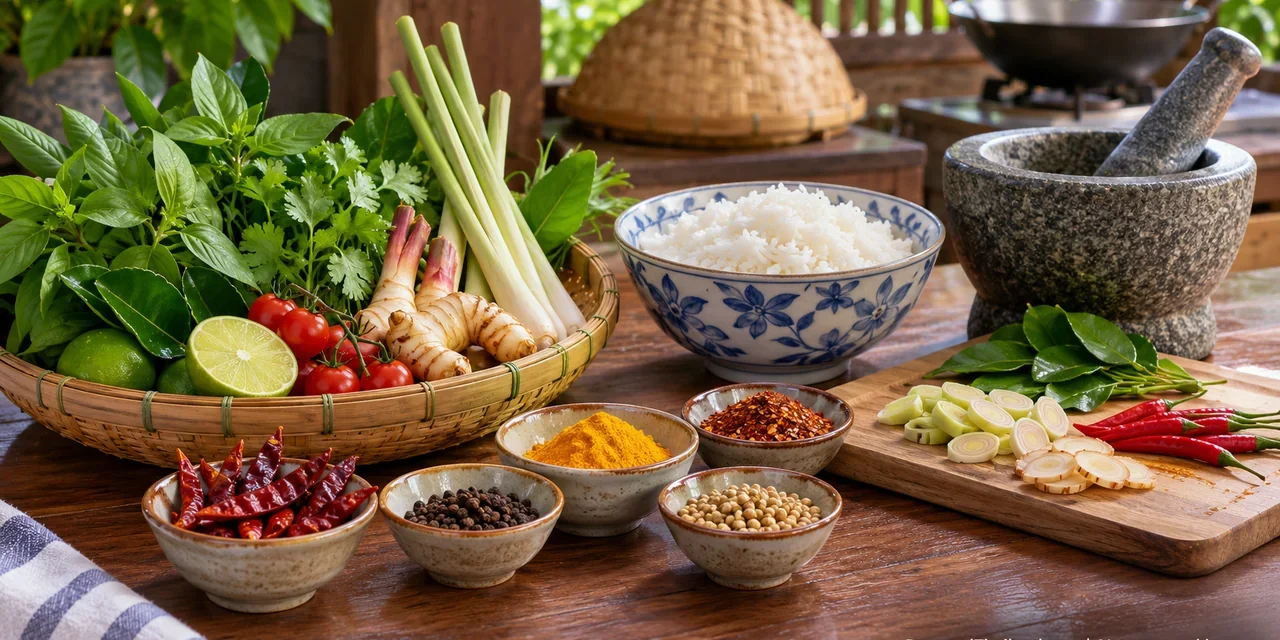
Consumers can ask similar questions on a smaller scale: does a certificate cover this product or this outlet, and is it current? If a business cannot answer, contact the appropriate certifying body. Do not invent or reproduce a certification mark based only on a photograph, and do not assume an image of ingredients demonstrates that a real kitchen is certified.
FAQ
Is every Thai restaurant automatically halal?
No. Ask about the particular food, preparation and certification relevant to your needs.
Does a government goal prove Thailand is already a regional hub?
No. An ambition and a measured outcome are different things.
Who publishes halal-certification information in Thailand?
The Central Islamic Council of Thailand publishes certification information and documents; check the relevant current details directly.
Does this article verify a particular restaurant or product?
No. No individual restaurant, product or certificate was assessed.
More from Personal Thailand
If you enjoy practical reporting and personal perspectives on Thailand, you can support my work and explore member-only content through either platform:
- Subscribe to Personal Thailand on X — creator membership with access to applicable subscriber-only posts and benefits.
- Join or support Personal Thailand on Buy Me a Coffee — browse available memberships and support options.
These are separate services with different charges and membership benefits. Paid access may be required; subscribing on one does not automatically grant access on the other. The main information in this article is free to read above.