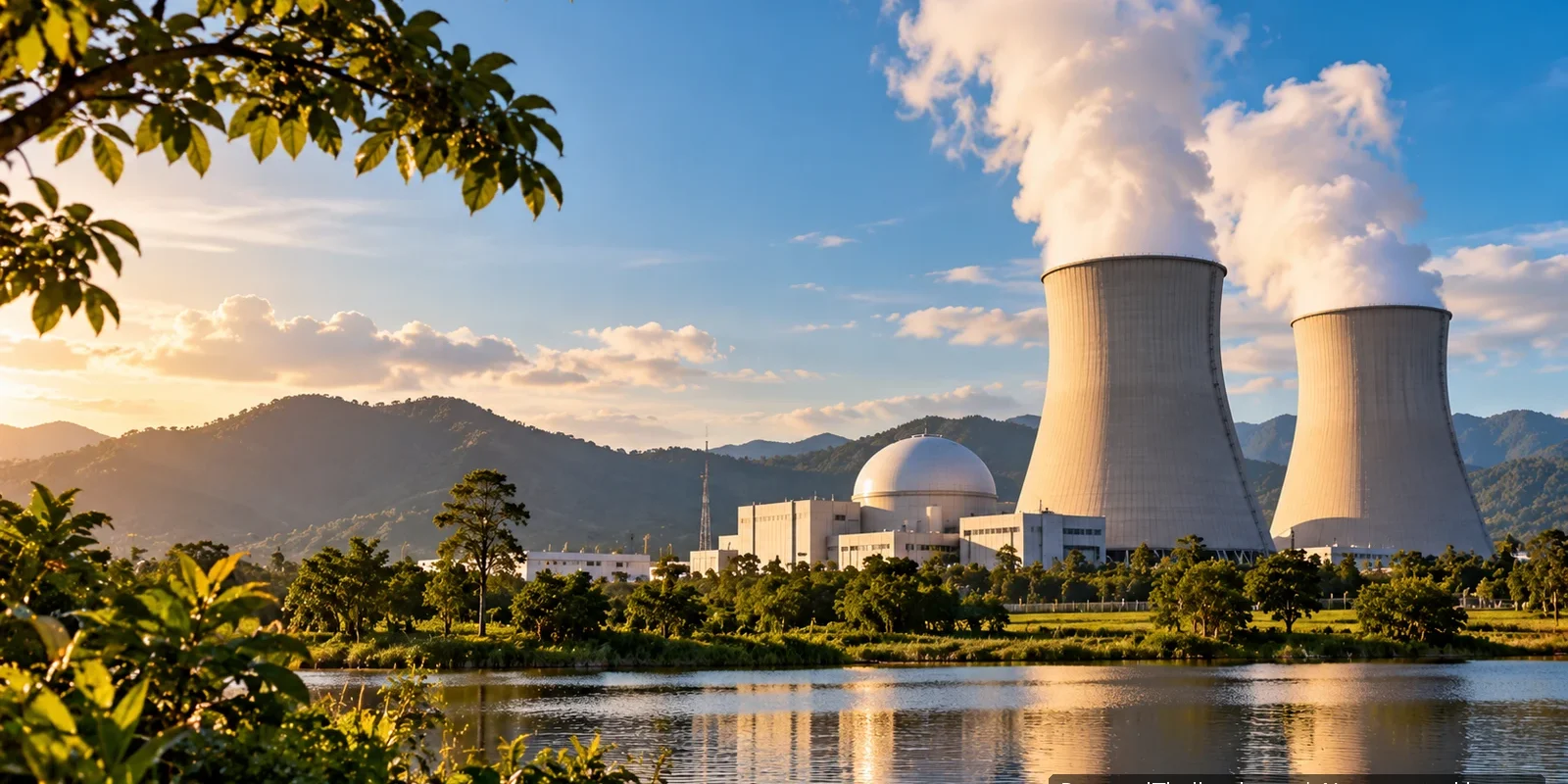
Could Thailand generate electricity using nuclear power? The question has appeared in public debate for many years. It involves energy security, the cost of building and operating a plant, environmental questions, waste management and public confidence. An article published by PersonalThailand in November 2009 shows that many of these concerns were already being discussed then.
The old post referred to resistance in Nakhon Si Thammarat and asserted that a specific nuclear site was planned. It also made broad allegations about the national electricity utility’s environmental record without supporting documentation. Such claims should not be repeated as established facts about a current project. Official information now focuses largely on preparation for possible small modular reactors.
Why was nuclear power debated in 2009?
Electricity planners must consider more than the power required on an average day. They must account for rising demand, available fuels, reserve capacity, climate policy and the reliability of the grid. Nuclear energy was one possibility raised in that broader discussion, but a policy debate does not mean construction approval has been granted.
Residents can reasonably ask where a facility might be located and what protections would apply. Questions about emergency preparedness, cooling water, monitoring and long-term waste are substantive matters requiring independent technical and regulatory assessment. Public consultation is not simply a public-relations task performed after decisions are made.
What is a small modular reactor?
A small modular reactor, often called an SMR, is a nuclear reactor concept generally designed around smaller power units and modular construction compared with many traditional large nuclear power stations. Proposed designs vary significantly. Not every design has the same operating experience, licensing path, emergency-planning needs or economic assumptions.
An SMR would still require rigorous safety regulation, safeguards, security, waste management, trained staff and transparent public oversight. Describing it as smaller does not remove those responsibilities. Nor is an SMR the same as a small research reactor used for medical or scientific work.
What do Thailand’s official agencies say?
In a December 2025 statement, the Electricity Generating Authority of Thailand, or EGAT, discussed preparations for potential SMR development, including the skills, institutions and infrastructure needed under the International Atomic Energy Agency framework. The update mentioned a possible combined capacity of 600 megawatts in planning documents.
Thailand’s Office of Atoms for Peace reported a further meeting with EGAT in May 2026. It focused on preparedness, cooperation, regulatory issues, public information and the peaceful use of nuclear technology. It did not announce that a commercial nuclear plant had opened.
Does Thailand have a fixed completion date?
It is important to read the date and status of planning documents. An EGAT annual report covering 2024 discussed a draft Power Development Plan (PDP2024, covering 2024–2037) that included 600 megawatts of SMR capacity within the plan period. A later 2025 EGAT communication described broader 2050 energy goals. Those references come from different planning stages and must not be combined into a definitive, approved commissioning schedule.
A proposed target can change through feasibility reviews, grid studies, government policy, licensing, environmental assessment, financing and public engagement. Without a verified project-level permit and construction programme, an exact date would be speculation.
Safety, waste and independent oversight
Nuclear planning requires clear answers about accident prevention, physical security, emergency planning and radioactive material management. A reactor’s financial case should include long-term expenses such as maintenance, safety upgrades, fuel management and eventual decommissioning—not just the cost of construction.
Public confidence depends on access to credible information and independent oversight. Residents should be able to ask how environmental and seismic risks are assessed, who would regulate a plant, what monitoring would be available and how emergency information would reach local communities. These questions matter whether someone supports or opposes nuclear energy.
How nuclear power compares with other energy options
Thailand can consider gas-fired generation, solar power, hydro resources, imported electricity, energy storage, demand management and other options. Each has different costs, operational limitations and environmental effects. A decision about nuclear capacity belongs in a transparent comparison of the wider electricity system rather than in a simple argument that one technology is always best or worst.
The Energy Regulatory Commission’s information about Power Development Plans explains that these plans cover long horizons and are reviewed periodically. Demand forecasts and assumptions can change. A new generation project should therefore be evaluated against the current plan and regulatory decisions, not a 2009 newspaper headline.
What should interested residents watch next?
- Publication and government approval status of the relevant power development plan.
- Any formal site-selection or environmental review, rather than rumours about one province.
- Announcements from the Office of Atoms for Peace on regulatory capability and licensing.
- Consultation arrangements and opportunities for affected communities to ask questions.
- Independent discussion of costs, grid integration, fuel and long-term waste responsibilities.
From a 2009 argument to a 2026 planning discussion
Thailand’s nuclear conversation has not disappeared. Official agencies continue to examine potential future technology, particularly SMRs. But preparation is not construction, a draft date is not a guarantee, and an old allegation about a proposed location is not proof of a modern site decision. Keeping those distinctions clear is the responsible way to follow the debate.