
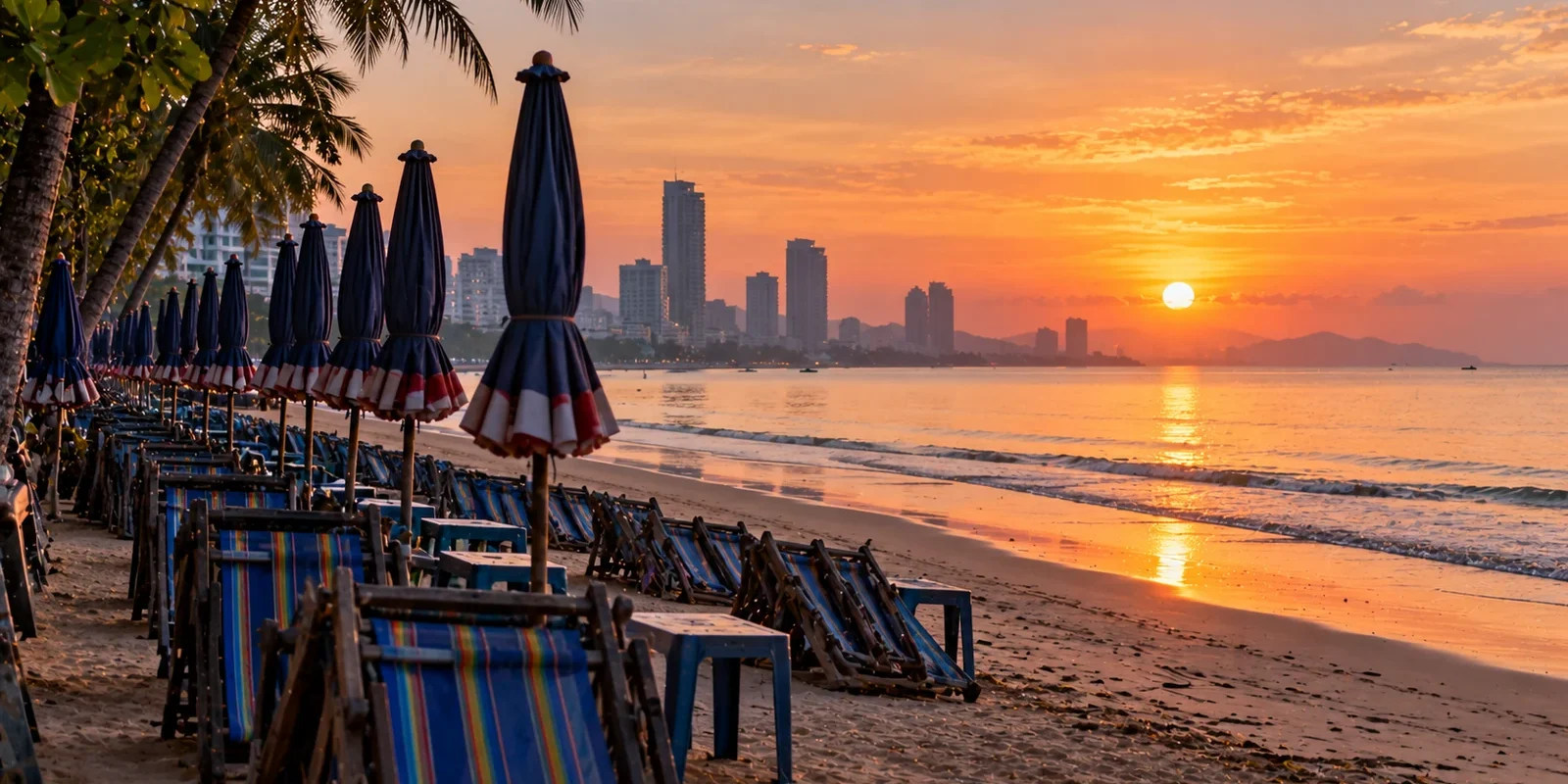
Jomtien beach safety deserves a calmer conversation than the one preserved in this old post. It began with the deaths of two Russian women and turned into criticism of cruel speculation on a travel forum. As a woman writing about life in Thailand, I want to keep the victims’ dignity at the centre while offering practical advice for an evening by the sea.
Why this older story still matters
Contemporary reporting places the killing of two Russian tourists on Jomtien Beach in February 2007. This is a historical case, not a new warning about an incident today. I am not repeating names, descriptions of the bodies or theories about the people responsible.
The original post challenged comments that invented explanations from the victims’ nationality and gender. That concern remains relevant. A stranger’s occupation, private life or reason for travelling is not something a commenter can establish from a photograph or a short news item.
An old crime report also cannot measure your risk on a particular evening in 2026. It can prompt sensible questions about surroundings, transport and access to help. It cannot support a claim that every part of Jomtien is dangerous, or that a tragic outcome must mean someone made a bad choice.
Jomtien beach safety after dark
Before setting out, decide how you will return to your accommodation. Save its location and address where you can find them without searching through old messages. If you are meeting friends, agree on a practical meeting point rather than a vague instruction to meet somewhere along the beach.
Choose a route with people, lighting and an easy way to leave. Conditions can change over the course of an evening as businesses close and crowds move elsewhere. A stretch that felt comfortable earlier may feel different later; you are allowed to change your plans without defending the decision.
Avoid making a quiet or isolated place your only option while waiting for transport. If something feels wrong, move towards a staffed business or another place where you can ask for assistance. These are precautions, not guarantees, and they never transfer responsibility for violence to the person harmed.
Plan the journey home before you need it
A small amount of preparation can prevent a late-night argument about where you are going or what was agreed. Confirm the destination and the fare or charging method before the journey. Keep enough phone charge to contact your accommodation or someone you trust.
If you become separated from companions, use the agreed meeting point or contact them directly. Avoid posting your exact live location publicly. A private message to a trusted person is more useful than announcing to strangers that you are alone and unsure how to get home.
For the broader journey, our Pattaya bus station safety guide covers luggage and local transport considerations. I would apply the same basic habit at the beach: keep essential belongings under your control while leaving yourself free to move.
Respond to a problem without escalating it
If someone is threatening you, concentrate on reaching safety rather than winning the argument or recording a dramatic video. Leave belongings behind if retrieving them would expose you to immediate danger. Ask a nearby staff member to help explain your location when language is a barrier.
As checked in 2026, Thailand’s published assistance numbers include police on 191, medical emergencies on 1669 and Tourist Police on 1155. Describe what is happening, where you are and whether someone needs urgent medical help. A nearby building or clear landmark can help the person receiving the call locate you.
If you witness an incident, separate what you actually saw from what someone else told you. Make notes once you are safe. Give relevant information to the authorities rather than testing a theory in a comment thread or sharing identifiable images of someone in distress.
Do not turn uncertainty into an accusation
Online discussion often rewards the quickest confident explanation. That is a poor standard for discussing a death. A question framed as a suspicion can spread the same harmful claim as a direct accusation, particularly when other readers repeat it without the original uncertainty.
I would ask three things before sharing a report: when was it published, what does the source actually establish, and does the detail help anyone? An old headline recirculated without its date can frighten people unnecessarily. A private photograph can harm a family even when the person reposting it says they meant well.
Nationality is not evidence of criminal involvement. Nor does being a woman travelling in a nightlife destination justify assumptions about work or relationships. Respect should not depend on proving that a victim fits someone else’s idea of a respectable traveller.
Keep useful safety advice separate from blame
It is possible to suggest travelling with a companion or choosing a busier route without claiming that everyone who travels alone is reckless. People have different routines, abilities and options. Advice is more useful when it gives them choices instead of a lecture about what they should have done.
If a friend tells you about a frightening experience, begin by listening. Ask what support they want and whether they need medical attention, help reporting or a quiet place to stay. Avoid making them repeat the story to a succession of curious acquaintances.
Our guide to safety in Thailand puts individual concerns into a wider travel-planning context. For Jomtien, I would keep the practical approach modest: check your surroundings, organise transport, know how to get help and treat other people with the dignity you would want for your own family.
FAQ
Is this a report of a new crime on Jomtien Beach?
No. The case discussed here is historical, with contemporary coverage from February 2007. This rewrite explains why the old forum reaction was harmful and offers general precautions. It does not claim to provide a live crime alert or a current crime-rate assessment.
Does walking with someone guarantee safety?
No precaution provides a guarantee. A companion may help with decisions, transport and getting assistance, but responsibility for an offence remains with the offender. Choose arrangements that suit you and change them if the surroundings no longer feel comfortable.
What should I do with a disturbing video of an incident?
Do not circulate it for curiosity or commentary. If it contains information relevant to an investigation, ask the appropriate authority how to provide it securely. Consider the privacy of victims, witnesses and relatives before sending anything to a group chat.
Who can help if I cannot explain my location in Thai?
Tourist Police on 1155 may assist, while urgent police and medical calls should go to 191 and 1669 respectively, as listed in 2026. You can also ask a nearby staff member to help describe your location without handing over unnecessary private information.
More from Personal Thailand
If you enjoy practical reporting and personal perspectives on Thailand, you can support my work and explore member-only content through either platform:
- Subscribe to Personal Thailand on X — creator membership with access to applicable subscriber-only posts and benefits.
- Join or support Personal Thailand on Buy Me a Coffee — browse available memberships and support options.
These are separate services with different charges and membership benefits. Paid access may be required; subscribing on one does not automatically grant access on the other. The main information in this article is free to read above.







“-You have to see this with your own eyes
Our program is created for those who want to improve their financial condition, but do not have economic education and are not the financial experts. This builds trust and let our member be at ease even if they recommend us to their friends.”
Laura Kauffmann (SOIC)
Scammers everywhere.
http://www.flickr.com/photos/21533131@N06/