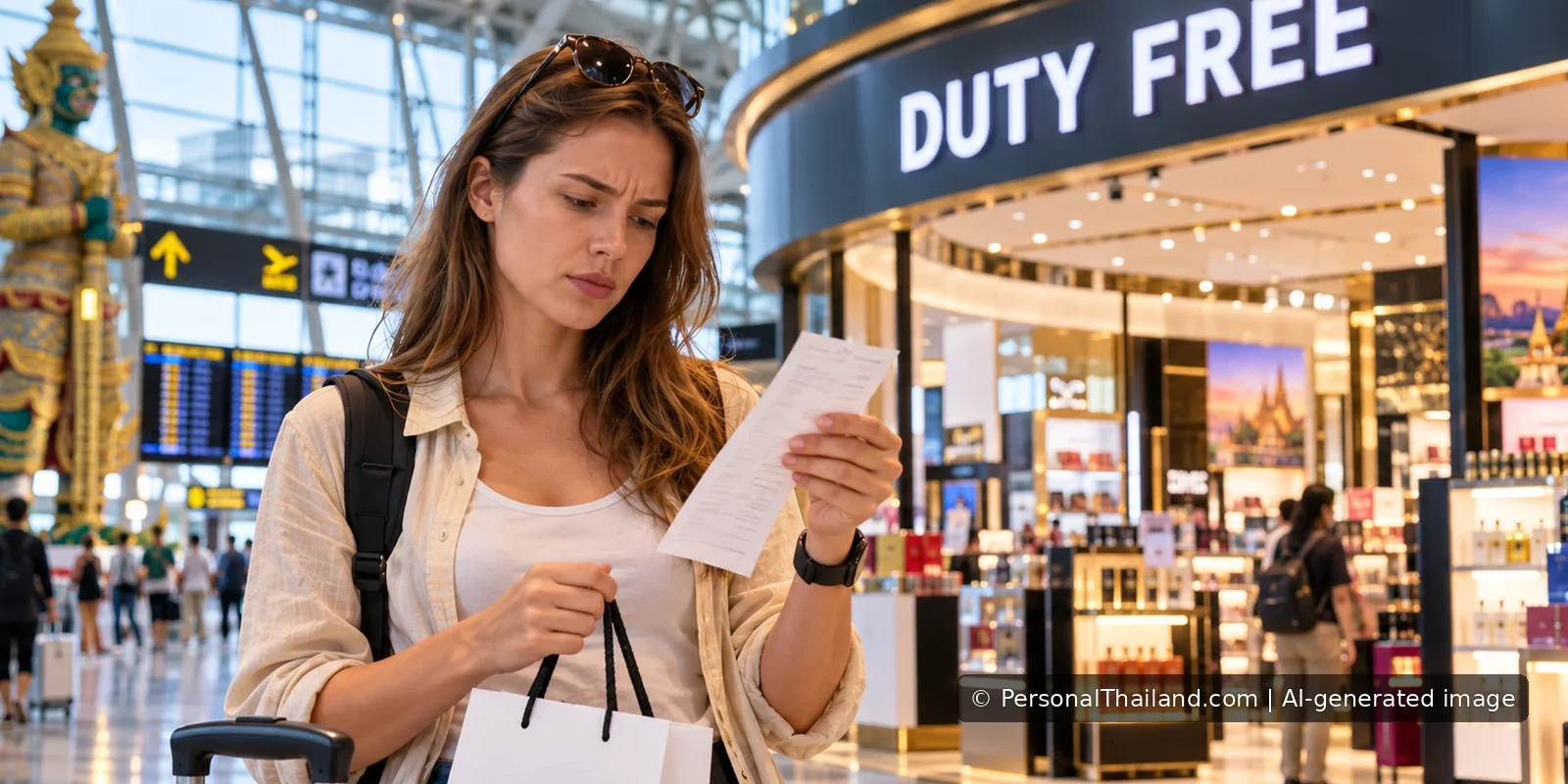
Bangkok’s Suvarnabhumi Airport is a place where travellers often make their final purchases before boarding. Duty-free shops, souvenir displays and electronics counters can be convenient, but a crowded airport is also a place where shoppers should pay attention to receipts, merchandise and the time remaining before a flight.
In June 2009, PersonalThailand published a strongly worded travel warning following allegations about shoplifting accusations and demands for money at the airport. Contemporary reporting shows that such allegations were publicly discussed and disputed; it does not establish that every shop, officer or employee acted improperly. The practical issue today is how a traveller can shop carefully and obtain legitimate assistance if a disagreement occurs.
Why the 2009 airport controversy mattered
Reporting from that period described complaints made by travellers who said they had been accused of theft at Suvarnabhumi. A Business Traveller report from July 2009 discussed responses by authorities to alleged airport scams, including unlicensed services and duty-free disputes. The claims attracted concern because an allegation made shortly before departure can leave someone frightened, unable to travel or unsure whom to trust.
However, an old accusation is not evidence that a named operator or agency continues an illegal practice in 2026. Nor should a published story about one dispute be treated as proof that all duty-free purchases are unsafe. Travellers deserve practical advice rather than a permanent suspicion of people working at the airport.
Before making a duty-free purchase
Check that the shop is clearly identified and that prices, currencies and any collection arrangements are explained. Ask whether a product is eligible for duty-free sale on your itinerary, particularly when it will pass through another country. Rules on liquids, alcohol and customs allowances depend on the destination and transit arrangements.
Handle display merchandise carefully. If you are unsure whether an item is part of a promotion or a sample, ask a member of staff before opening or moving it. Avoid carrying another passenger’s purchases through security without understanding what is in the package. These are ordinary shopping precautions, not assumptions that anyone is trying to deceive you.
Keep receipts and payment records together
After paying, check that the receipt identifies the product and price. Match the purchased item against the transaction and confirm where it should be collected. Keep the receipt until the journey is complete, especially for expensive goods, warranties or tax documentation. Digital receipts can be useful, but do not rely on a phone that may lose power or network access.
If you see an unfamiliar card charge, check the banking app and contact your card provider through its normal official channels. Do not share your PIN, one-time codes or full banking credentials with anyone claiming to resolve a store dispute.
What if a disagreement occurs at the counter?
Stay calm, ask precisely what is being alleged and request an explanation from the duty manager. If the issue concerns a purchase, present the receipt and identify the item. Do not sign a document in a language you do not understand without obtaining suitable interpretation or independent advice.
If security officers are involved, ask for their identification and the basis for the procedure. Co-operate with lawful directions while making it clear when you need an interpreter or consular contact. Avoid making private payments to a stranger who promises to make a legal matter disappear. Record what happened when it is safe and lawful to do so, but do not secretly film restricted airport areas.
Official help for visitors in Thailand
The Thailand Tourist Police publishes official contact details and offers assistance to visitors. If you are threatened, detained or unsure whether someone represents an authority, seek help from recognised police channels and notify your embassy or consulate as appropriate. Serious allegations belong with official investigators, not an informal mediator who asks for immediate cash.
If your departure is imminent, ask the airline about your boarding deadline. Staff at the information counter can help you identify official airport or police services. A boarding pass does not override immigration or police procedures, but knowing whom to contact can reduce confusion.
How to respond to requests for payment
There is an important difference between a documented purchase or administrative fee and an unexplained demand to transfer money to a private person. Request an official written record, an itemised amount and the identity of the responsible agency. Never assume that a demanded payment is lawful merely because the person claims to have contacts at the airport.
Photographs or copies of relevant paperwork may help with a later complaint, subject to local security restrictions. Keep copies of receipts, flight details and any formal case number. If a dispute could have legal consequences, qualified local legal advice is more reliable than a social-media comment.
The lesson for today’s passengers
The duty-free allegations of 2009 remain part of the history of tourism at Suvarnabhumi. They should be read with their date, responses and unresolved details in mind. Today a sensible approach is to check the price, retain the receipt, know the official reporting channel and treat airport workers and fellow passengers fairly.
It is possible to enjoy shopping without assuming danger everywhere. The aim is a clear record of purchases and a calm plan if something goes wrong, not a false promise that every disagreement can be solved before boarding.