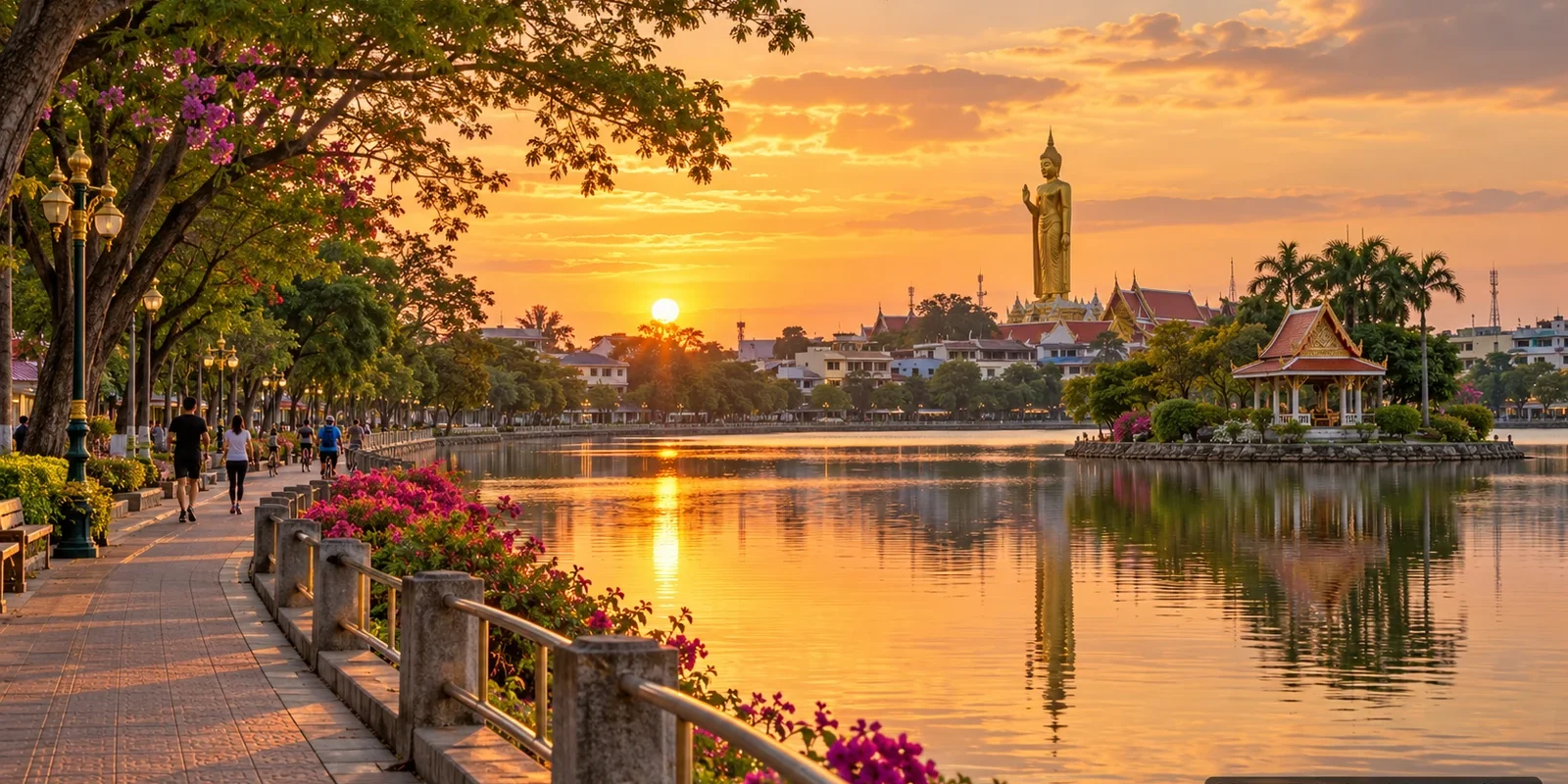
Roi Et is a friendly introduction to the everyday culture of northeastern Thailand. Rather than concentrating on resort facilities, a visit can revolve around its town lake, significant religious sites, regional food and the landscapes of Isan. Some attractions are easy to combine in town, while important historical places lie farther out. Planning for both will give you a fuller picture of the province.
Start with Bung Phlan Chai
Bung Phlan Chai is a well-known urban lake at the centre of Roi Et town. The public space around it is a useful place to begin exploring, especially when the temperature is more comfortable in the morning or late afternoon. Walking, people-watching and stopping for a drink can be an enjoyable way to orient yourself before venturing into other districts.
A town lake is not automatically a swimming area. Treat promenades, islands and landscaped features according to posted local rules, and keep young children away from unprotected water edges. If you visit during a public gathering, expect that some paths or entrances may have temporary restrictions.
Buddhist landmarks around town
Wat Buraphaphiram is known for its towering standing Buddha image and is among Roi Et's recognisable religious sites. Nearby temples offer different artistic and devotional experiences. The Tourism Authority of Thailand also names Wat Klang Ming Mueang among provincial attractions.
Temple etiquette is simple but important: wear clothing appropriate for a sacred place, avoid interrupting ceremonies and ask before photographing people engaged in worship. A site may be temporarily closed to casual visitors during events, so it is sensible to have a second nearby activity in mind.
Khmer heritage at Ku Kasing
Ku Kasing provides a connection to a different historical layer. This Khmer-era sanctuary is outside the main urban area, making it a better half-day excursion than an impulsive stop between two city cafés. Its weathered structures are archaeological remains, not a playground; keep off fragile masonry and respect any barriers.
History at such sites deserves careful language. An older travel article may give a single precise construction date even when experts discuss broader periods of use or restoration. Read current interpretation signs and official heritage material rather than relying on an unsourced date from the internet.
Food, weaving and regional crafts
Roi Et is also connected with rice-growing communities, traditional textiles and local crafts. A market visit is an opportunity to see what people actually buy and eat in the area. Look for fresh food prepared hygienically, ask about chilli levels and check ingredients if you have dietary restrictions.
Handmade cloth may be a meaningful souvenir. Ask where it was woven and learn about patterns or dyeing methods when sellers have time to explain them. This approach shows more respect for craft traditions than treating every textile as an interchangeable tourist product.
Festivals and the meaning of the name
The province appears in descriptions of Isan rocket festivals and other seasonal celebrations. Local calendars vary; a festival commonly associated with a particular month should never be taken as proof of the exact date in the year you travel. Official organisers' announcements are the best starting point for event planning.
Roi Et's name is often rendered as 'one hundred and one'. There are different historical explanations for the name and its association with older city traditions. A responsible travel guide can mention the meaning without pretending that a complex historical story has one uncontested interpretation.
A manageable itinerary
Use the first day for the lake, town landmarks and food. On a second day, arrange transport to Ku Kasing or another outlying area that interests you. The order matters: a remote temple or heritage site should not be squeezed into the end of a day without confirming the return journey.
Roi Et can be reached as part of a broader Isan trip. Check current bus or air connections where applicable, and ask accommodation providers about reliable local transport rather than assuming that every district has an on-demand car service.
The best way to experience Roi Et is to combine a calm urban stroll with one purposeful excursion. Give enough time to heritage, meals and local encounters, and the province will feel more substantial than a list of temple names.
A quieter alternative to rushed temple-hopping
Try grouping visits by theme rather than counting how many landmarks you can see. A town-centre morning might include the lake, a market and one active temple. The afternoon can then be used for food, textiles or a rest before sunset. A separate day for outlying Khmer heritage gives space to read signs and appreciate why the monuments matter.
If you travel during the rainy season, allow additional time on rural roads. Ask locally about weather and temporary access restrictions rather than relying on average seasonal descriptions. There is no need to take risks with flooded tracks to complete an itinerary. Roi Et is rewarding precisely because a visitor can enjoy everyday town life while leaving more distant excursions for suitable conditions.